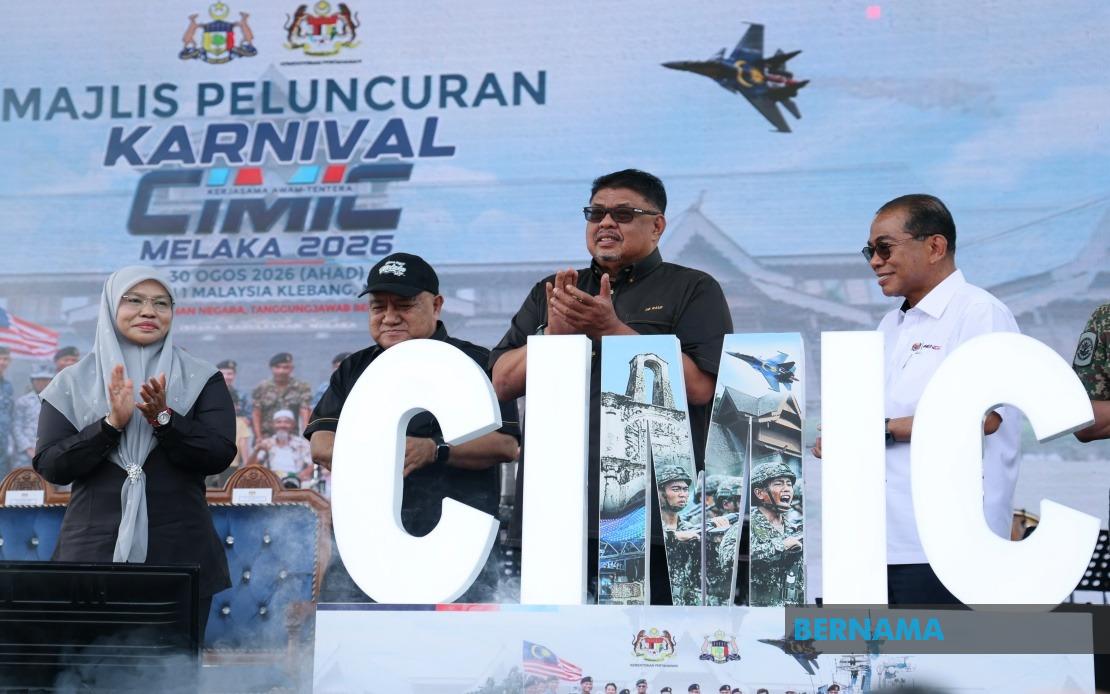
The Malaysian government is seriously considering shifting the prestigious Langkawi International Maritime and Aerospace Exhibition (LIMA) to Melaka in coming years, Defence Minister Datuk Seri Mohamed Khaled Nordin announced on Friday. Speaking at the Civil-Military Cooperation Carnival (CIMIC) in Klebang, he outlined how the state could serve as a viable alternative to Langkawi, though only after substantial public investment in port and transport infrastructure.
The strategic reconsideration of LIMA's venue reflects practical concerns about accessibility. Mohamed Khaled highlighted Klebang's geographic advantages, noting its proximity to Batu Berendam Airport and its suitability for berthing naval vessels. The current Langkawi location, while internationally recognised, poses attendance challenges for many Malaysians due to its remote northern position. Relocating to Melaka would democratise participation, allowing defence enthusiasts, industry professionals, and the general public from across the peninsula to attend more easily.
The Melaka state government has signalled openness to hosting the biennial event, contingent on careful evaluation of local capacity and tangible returns. Chief Minister Datuk Seri Ab Rauf Yusoh acknowledged that while Melaka possesses strategic geographic credentials, infrastructure readiness and financial feasibility require thorough assessment before any commitment. He emphasised that both state and federal authorities must align on whether hosting LIMA aligns with broader development and economic objectives. The possibility now enters intergovernmental discussions rather than remaining theoretical speculation.
This proposal emerged organically from practical military considerations. The participation of six Royal Malaysian Navy ships in Melaka's National Day celebrations this year demonstrated both the state's logistical capacity and its maritime infrastructure capabilities. These recent operations essentially provided a real-world test case, convincing defence planners that Melaka possesses sufficient port facilities and operational depth to accommodate a major international exhibition. The Navy's successful coordination highlighted that Melaka could handle complex maritime coordination requirements.
The relocation conversation carries significant implications for Langkawi's economic future. The exhibition has become a cornerstone event for the island's tourism and aerospace sectors, generating substantial revenue and international visibility. However, the government's willingness to explore alternatives suggests that strategic accessibility increasingly outweighs attachment to established venues. Langkawi would retain LIMA only if it remains deemed suitable; no guarantee exists for permanent retention. This creates potential transition challenges for businesses dependent on the exhibition's regular revenue cycle.
Melaka's historical significance as a maritime trading hub adds symbolic resonance to hosting LIMA. The state's centuries-old connection to seafaring commerce and international trade creates natural continuity with a maritime and aerospace exhibition. Positioning Melaka as a modern defence and aerospace showcase would reinvigorate its economic diversification beyond heritage tourism, potentially attracting technology companies, aerospace contractors, and naval manufacturers to establish regional bases.
The infrastructure investment threshold looms large in this equation. Mohamed Khaled explicitly stated that substantial government capital expenditure remains prerequisite to any relocation. Klebang would require port expansion, improved road networks linking to the airport, enhanced exhibition facilities, and accommodation infrastructure. These requirements represent significant financial commitments, requiring Cabinet approval and budgetary allocation. The Defence Ministry must justify investment costs against expected returns, both financial and strategic.
From a broader Southeast Asian perspective, moving LIMA to Melaka could enhance regional connectivity within defence and aerospace networks. Melaka's central peninsular location positions it as a natural hub for regional delegations from Indonesia, Singapore, Thailand, and Brunei. Enhanced accessibility might increase international participation, elevating LIMA's status as a truly regional showcase rather than a Malaysia-centric event. This geographic repositioning aligns with growing emphasis on maritime security cooperation and defence partnerships across Southeast Asia.
The CIMIC carnival itself demonstrates civil-military engagement strategies that accompany such infrastructure considerations. By bringing Malaysian Armed Forces closer to civilian populations through interactive displays and educational programming, the government builds public support for defence initiatives, including major exhibitions. This grassroots engagement complements top-level planning discussions about venues and investment.
The timeline for any transition remains unspecified. Both defence and state authorities framed this as a long-term exploration rather than an imminent decision. Feasibility studies must precede formal announcements, and Langkawi's viability requires continuous assessment. Federal-state coordination mechanisms must be established to handle complex issues surrounding venue ownership, financial responsibility, and operational management.
Transforming Melaka into LIMA's home would represent significant repositioning of Malaysia's defence infrastructure showcase strategy. The proposal reflects pragmatic assessment that modern exhibition logistics benefit from peninsula-wide accessibility rather than island isolation. Success depends on whether government budget processes can absorb substantial infrastructure outlays while delivering tangible returns that justify the investment to taxpayers and economic stakeholders across affected regions.

