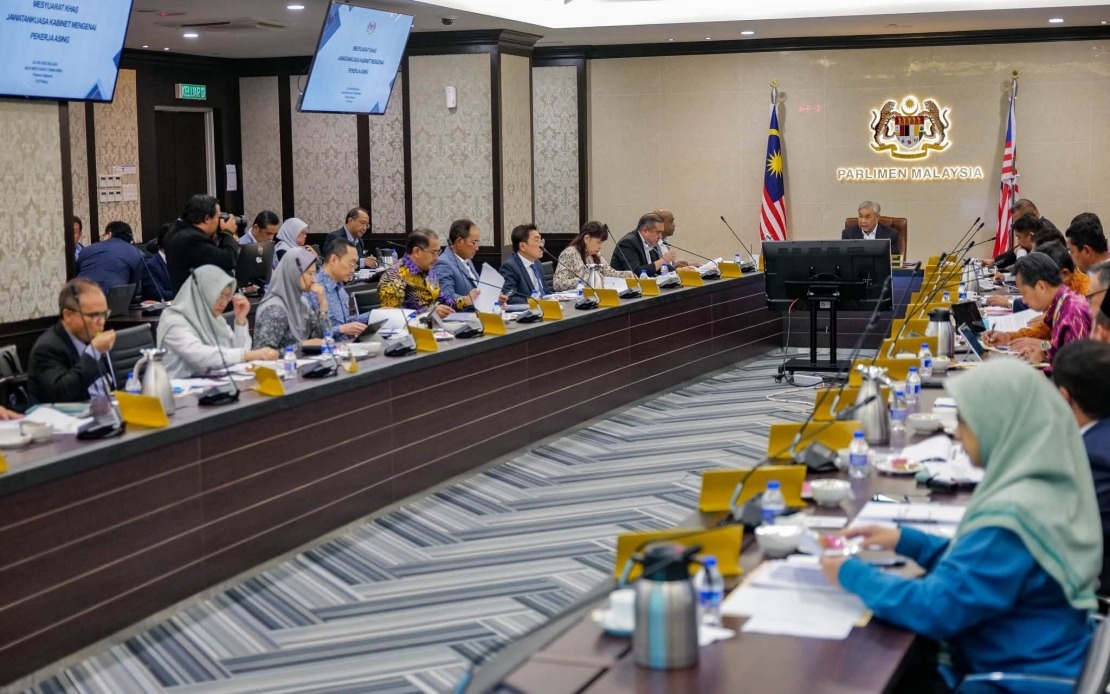
Deputy Prime Minister Datuk Seri Dr Ahmad Zahid Hamidi has announced a comprehensive restructuring of Malaysia's foreign worker management system, signalling the government's intention to create a more streamlined and effective approach to managing the nation's foreign labour force. The announcement emerged from a special Cabinet Committee meeting on Foreign Workers held at Parliament, where key decisions were made to address longstanding inefficiencies and better align migrant labour policies with actual industry requirements.
The centrepiece of the restructuring initiative involves establishing the One Stop Centre for Foreign Worker Management under the direct purview of the Ministry of Human Resources. This consolidation represents a significant shift from the previous fragmented approach, where foreign worker oversight was distributed across multiple agencies and departments. By centralising authority within a single ministry, the government aims to eliminate bureaucratic redundancies and create a unified framework for processing applications, managing compliance, and coordinating between employers and regulatory bodies.
Ahmad Zahid emphasised that the restructured system would prioritise three concurrent objectives: operational efficiency combined with institutional integrity, economic development that respects industry needs, and the protection of national security interests alongside job opportunities for Malaysian workers. This balancing act reflects the complex tensions inherent in Malaysia's approach to foreign labour, where rapid economic development has historically created demand for migrant workers even as unemployment and underemployment persist among local populations. The government's stated commitment to maintaining these competing priorities suggests an attempt to address both business community concerns and public anxieties about foreign workers.
A critical component of the restructuring involves a more rigorous and strategic assessment of foreign labour requirements across different sectors. Rather than responding reactively to employer requests, the government plans to base approvals on comprehensive industry analysis that accounts for sectoral growth projections, automation potential, and genuine skill gaps that cannot be filled domestically. This signals recognition that previous foreign worker approval processes may have been insufficiently scrutinised, potentially perpetuating an over-reliance on migrant labour that discouraged local workforce development and wage improvements.
The Cabinet Committee also made adjustments to the membership and terms of reference of its oversight body, although specific details remained undisclosed in the announcement. These institutional changes likely reflect lessons learned from implementation of previous foreign worker policies and aim to enhance the committee's capacity to coordinate across relevant ministries including human resources, home affairs, agriculture, and labour.
Parallel to its foreign worker restructuring, the government reiterated its broader strategy of reducing Malaysia's dependence on migrant labour through domestic workforce development initiatives. This includes targeted programmes to boost local workforce participation rates, investment in technical and vocational training to develop skilled workers in sectors where Malaysia currently relies heavily on foreign labour, and accelerating industrial automation to reduce labour intensity in manufacturing and service sectors. Such measures represent a long-term approach to addressing the root causes of foreign worker demand rather than merely managing the symptom of labour shortages.
For Malaysian employers and industry associations, the restructuring presents both opportunities and challenges. Streamlined administration through a single coordinating centre could reduce processing times and administrative burden, potentially making the foreign worker application process more predictable and efficient. Conversely, stricter scrutiny of labour requirements and reduced approval quotas could necessitate faster adoption of automation, upskilling of existing workforce, and wage improvements to attract local talent—developments that would raise operational costs across multiple sectors.
The timing of this restructuring coincides with ongoing regional labour market shifts, including increasing competition among Southeast Asian nations for both domestic and foreign workers, rising wages and improved working conditions in regional rivals, and growing international attention to migrant worker welfare and exploitation. By projecting an image of coordinated, efficient foreign worker governance, Malaysia seeks to maintain its attractiveness to legitimate employers while addressing international criticism regarding worker protections and compliance enforcement.
For Malaysian workers, particularly those in sectors directly competing with foreign labour such as manufacturing, construction, and hospitality, the restructured system holds potential benefits if implementation succeeds in genuinely prioritising local hiring and skills development. However, realisation of these benefits depends heavily on accompanying government investments in training infrastructure and enforcement of new labour requirement assessments.
The government's emphasis on balancing industry needs with national interests suggests recognition that Malaysia cannot sustain indefinite reliance on foreign workers without addressing underlying structural issues including wage stagnation, skills mismatches, and demographic shifts. This restructuring represents an important policy realignment, though its ultimate effectiveness will depend on rigorous implementation and genuine commitment to reducing foreign worker numbers over the medium term rather than merely reorganising administrative structures.
Moving forward, the success of this restructuring initiative will be measured not only by administrative efficiency metrics but by whether it genuinely reduces Malaysia's foreign worker stock, improves outcomes for local workers, and maintains economic competitiveness. Close monitoring of approval trends, sector-by-sector assessments, and labour market outcomes will be essential to evaluate whether this policy represents substantive reform or administrative reorganisation without strategic effect.

