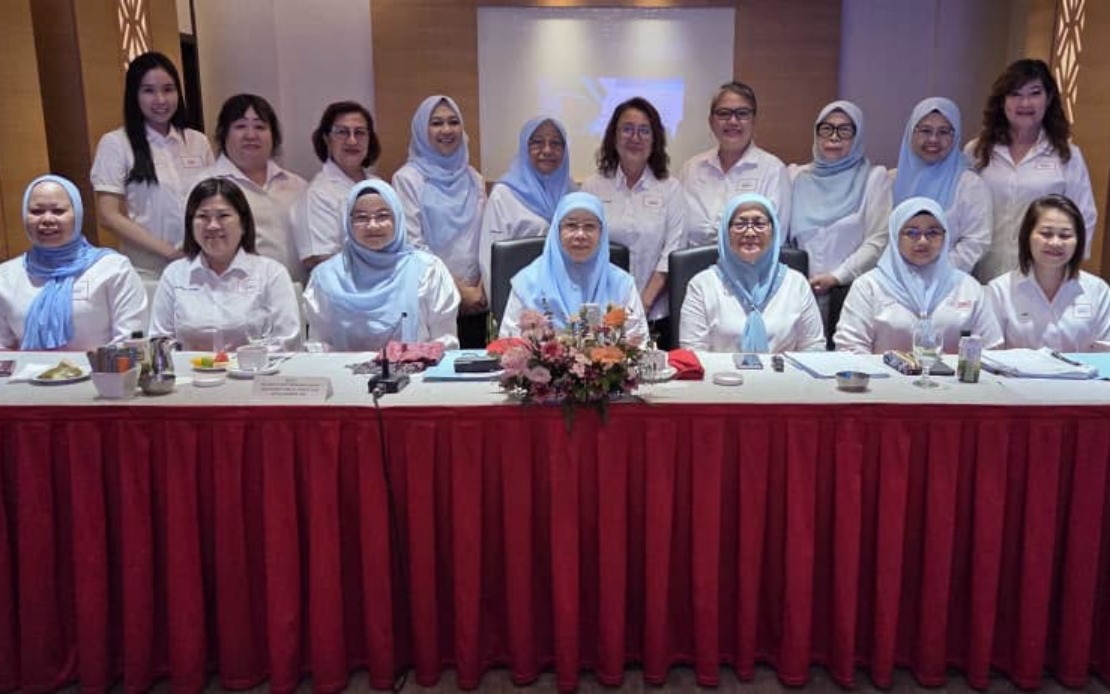
The Gabungan Rakyat Sabah (GRS) Women's wing has moved to reinforce its organizational capacity by establishing five specialized operational units, marking a significant structural upgrade within the coalition ahead of anticipated general election campaigning. Datuk Seri Azizah Mohd Dun, who leads the women's division, announced the development following a formal meeting held in Kota Kinabalu on July 22, emphasizing that the decision reflects a deliberate strategy to deepen the party's reach into communities and enhance its response mechanisms to pressing political matters.
The newly created units have been deliberately designed with distinct mandates to ensure comprehensive coverage of critical governance and community-facing areas. These divisions include the Policy and Strategy Unit, which will handle long-term positioning and tactical planning; the Economic Unit, tasked with developing initiatives around financial and employment concerns; the Health Unit, addressing public health advocacy and wellness programmes; the Information Unit, managing communications and public messaging; and the Welfare Unit, concentrating on social safety net initiatives and community support. By compartmentalizing these functions, the GRS Women's wing aims to deploy resources more efficiently and craft targeted interventions that resonate with voter priorities across different demographic segments.
Leadership of these units has been distributed among experienced party members, with Datuk Seri Azizah retaining oversight of the Policy and Strategy Unit to maintain coherence across divisional initiatives. Datuk Surinam Sadikun will direct the Economic Unit, while Simi Linggom takes charge of health-related programming. Datin Atin Belynda Buntot has been assigned to lead the Information Unit, and Datin Wong Siow Lee, also known as Mary Wong, will oversee the Welfare Unit. This distribution of responsibility suggests an attempt to leverage individual expertise and establish clear lines of accountability within what constitutes an expanded operational structure.
For Malaysian political observers, particularly those monitoring developments in Sabah, this reorganization signals that GRS is treating the next electoral cycle with heightened seriousness. The coalition, which has dominated state politics since 2020, faces a fluid national environment where election timing remains uncertain. By institutionalizing these units within its women's wing—a voter segment that consistently demonstrates high participation rates—GRS is positioning itself to mobilize female voters and harness their grassroots networks more systematically than in previous campaigns. The emphasis on structured engagement represents a departure from less formal organizational practices that characterized earlier political operations in the state.
Datuk Seri Azizah's public remarks underscore a philosophy that views political success as contingent upon constant adaptation rather than institutional inertia. She articulated a clear warning against complacency, noting that the women's wing cannot afford to remain within established patterns of operation when the political environment itself continues shifting in unpredictable directions. This candid acknowledgment of vulnerability, despite GRS's current dominance in Sabah, suggests internal recognition that electoral outcomes are never predetermined and that organizational vigilance represents a fundamental requirement for sustained political relevance.
The timing of this structural overhaul merits consideration within the broader context of federal Malaysian politics. The government led by Prime Minister Anwar Ibrahim faces mounting pressure from multiple political fronts, with questions about coalition stability and electoral strategy dominating national discourse. By strengthening its women's organizational capacity, GRS is essentially preparing its electoral machinery for scenarios that could unfold within months rather than years. This proactive approach reflects lessons learned from recent electoral cycles elsewhere in Malaysia, where parties that failed to invest in robust ground organizations suffered unexpected reversals despite apparent polling advantages.
From a Southeast Asian perspective, the GRS initiative exemplifies how regional political parties are increasingly recognizing women as strategic constituencies requiring dedicated organizational infrastructure rather than auxiliary status within broader party structures. The allocation of specific portfolios addressing health, welfare, and economic concerns—traditionally areas where women voters express particular interest—demonstrates a deliberate attempt to connect party organization with voter priorities. This gendered approach to political mobilization has become standard practice in mature democracies and is increasingly evident among Southeast Asian parties seeking competitive advantage through sophisticated voter segmentation.
The five-unit framework also reflects contemporary understanding about how information flows and community engagement function in the digital era. By creating a dedicated Information Unit, GRS acknowledges that controlling narrative and responding rapidly to emerging issues now represents a core competency for any competitive political organization. This unit will likely coordinate social media presence, manage crisis communications, and ensure message consistency across multiple platforms—capabilities that have become essential for parties seeking to maintain relevance among younger voters and shape public opinion in real time.
Implementation of this new structure will likely require significant investment in training and resource allocation, though GRS's firm control of state government finances and federal coalition membership provides advantages in this regard. The success of these units will ultimately depend on whether individual leaders can translate institutional mandates into concrete programming that delivers tangible benefits to constituent communities. Early programme successes in health, economic development, or welfare provision could generate momentum that translates into electoral gains, while visible failures or empty initiatives might undermine the credibility that organizational restructuring is meant to enhance.
Looking forward, observers should monitor whether this structural innovation generates genuine improvements in party-community interaction or remains primarily a bureaucratic reorganization. The next general election will provide empirical evidence about whether GRS's investment in this expanded women's organizational capacity produces measurable returns in voter mobilization and electoral performance. For other Malaysian political parties watching these developments, the GRS Women's wing experiment offers both a potential model for institutional strengthening and a cautionary reminder that structural innovation alone cannot substitute for genuine policy achievements and authentic community engagement.

