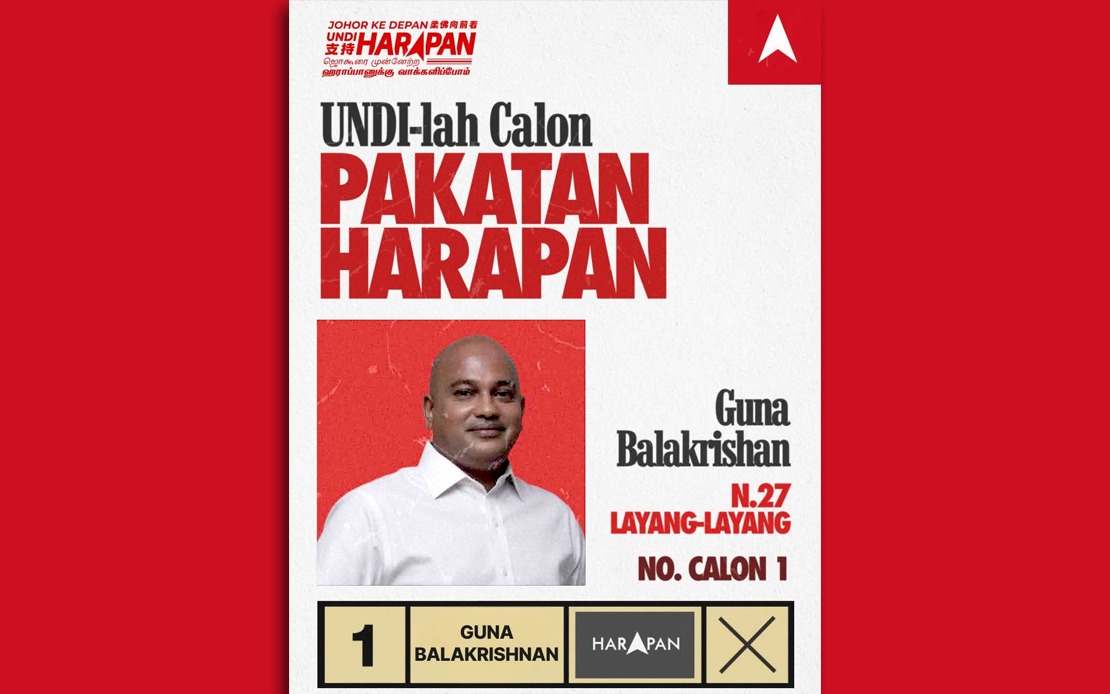
Pakatan Harapan candidate Guna Balakrishnan has rolled out an ambitious six-point manifesto for the Layang-Layang state seat, placing particular emphasis on inclusive development and tangible improvements to residents' living standards. Speaking in Kluang, Guna presented a platform rooted in addressing long-standing community challenges while positioning himself as a bridge between constituents and government machinery, a commitment he stressed would transcend typical campaign rhetoric.
Flood mitigation has emerged as the centrepiece of Guna's platform, reflecting the chronic water management issues that have devastated several neighbourhoods within the constituency. The affected areas—including Kampung Senda, Sungai Sayong, Kampung Tengah Renggam, Ulu Benut, Simpang Renggam, and Kampung Chokro—have experienced recurring inundation that disrupts livelihoods and displaces families seasonally. Rather than offering vague assurances, Guna committed to expediting the rollout of flood mitigation infrastructure, upgrading drainage systems, and instituting a systematic maintenance regime for roads and public facilities. These pledges signal recognition that rural communities in Johor continue to bear disproportionate infrastructure deficits compared to urban centres.
The manifesto extends beyond flood control to encompass broader connectivity and safety concerns that disproportionately affect rural constituencies. Guna outlined plans to strengthen street lighting in underserved areas and expand internet coverage to remote zones—initiatives that address both security anxieties and economic opportunity. Rural broadband connectivity has become increasingly critical as digital literacy shapes employment prospects and educational outcomes for younger generations. For a constituency with 25,181 registered voters, such infrastructure investments could meaningfully influence voter sentiment, particularly among families with school-age children and small business operators dependent on online platforms.
Youth development represents another substantial plank of the campaign platform, with Guna proposing to democratise access to Technical and Vocational Education and Training across Layang-Layang. This focus reflects broader Malaysian concerns about skills mismatches in the labour market and the need to create viable pathways for school-leavers beyond traditional university routes. More innovatively, he has suggested establishing a motorsports track as an organised venue for talent cultivation, recognising that recreational infrastructure often serves dual functions—channelling youthful energy while generating ancillary economic benefits through tourism and employment.
Economic empowerment of disadvantaged communities constitutes a further dimension of Guna's platform. He has committed to supporting small traders and merchants within the constituency, acknowledging that many rural economies depend on informal and semi-formal commercial activity. Additionally, he has highlighted the tourism potential of Renggam, suggesting that strategic development of this asset could generate employment and income diversification for residents. Such positioning reflects understanding that sustainable constituency development requires multiple revenue streams rather than reliance on government transfers alone.
Social welfare provisions targeting women and elderly residents underscore the breadth of Guna's policy vision. Proposals to strengthen women's entrepreneurship recognise that female-headed households and women-led micro-enterprises remain underserved by conventional business support mechanisms. The establishment of a Senior Citizens Activity Centre demonstrates acknowledgment that ageing populations require dedicated social infrastructure to maintain dignity, purpose, and community integration. In Malaysian constituencies with ageing demographic profiles, such provisions often command considerable electoral salience.
Guna's framing of these commitments as realistic rather than aspirational objectives represents a calculated rhetorical strategy. He explicitly cautioned against treating manifesto points as ephemeral campaign promises, instead characterising them as concrete undertakings backed by coordinated effort across state government, local authorities, and relevant agencies. This language invites scrutiny while simultaneously positioning his candidacy as serious and substantive. For voters fatigued by unfulfilled electoral pledges, such clarity regarding implementation pathways may carry weight.
The three-cornered contest in Layang-Layang—pitting Guna against Barisan Nasional's Chua Jian Boon and incumbent Perikatan Nasional representative Abd Mutalip Abd Rahim—reflects broader fragmentation within Malaysian electoral politics. The presence of an incumbent standing for a different coalition signals potential dissatisfaction with previous governance, though seat dynamics remain unpredictable in constituencies where no single coalition commands overwhelming dominance. Guna's emphasis on responsive governance and community consultation may resonate particularly strongly if constituents perceive incumbency has generated complacency or insufficient attention to local grievances.
The Johor state election scheduled for July 11, with early voting on July 7, represents an important barometer of voter sentiment as Malaysia navigates post-pandemic recovery and economic adjustment. Johor, Malaysia's second-largest state by population and economy, has historically served as a bellwether for broader electoral trends. The extent to which rural constituencies like Layang-Layang prioritise infrastructure and service delivery over partisan affiliation will influence overall election outcomes and shape policy priorities for whichever coalition gains state control. Guna's manifesto thus reflects not merely local constituency concerns but also the broader conversation about governance quality and responsiveness that animated Malaysian electoral politics in the current cycle.

