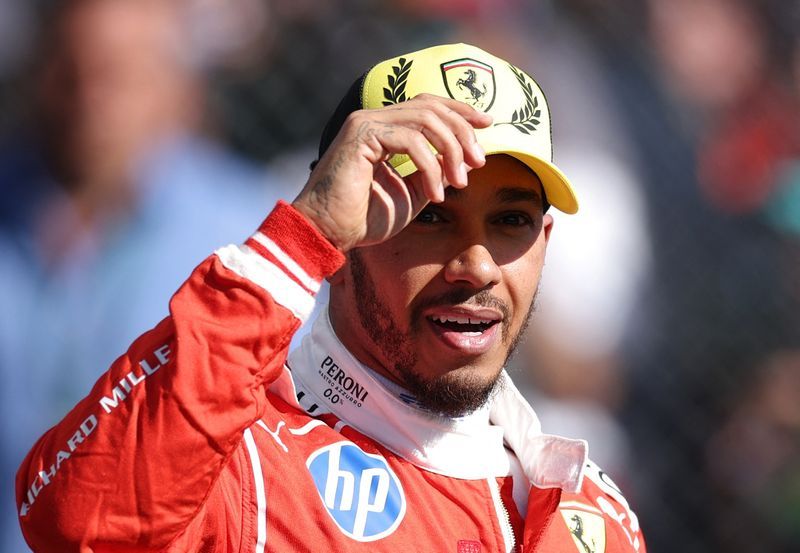
Lewis Hamilton arrives at the Hungarian Grand Prix this weekend positioned to end Formula One's summer break on an upswing, with Ferrari offering him a realistic platform for victory at a circuit where his seven-world-championship pedigree has flourished. The Budapest track represents sanctuary for the British driver as the championship's treacherous mid-season phase unfolds, providing respite before the August shutdown forces teams into recalibration mode.
The narrative dominating paddock discussion centers not on Hamilton's ambitions but on the deepening malaise engulfing his championship rival George Russell at Mercedes. The Briton's W15 machine exhibits a critical performance deficit on the straights, a vulnerability that has transformed him from season-opening favourite into a 50-point afterthought. Russell's recent exit into the gravel at Spa in Belgium marked his third pointless finish, a collapse of consistency that starkly contrasts with his pre-season billing as "Mr Consistency" and the championship frontrunner. Meanwhile, his 19-year-old Italian teammate Kimi Antonelli has emerged as the season's dominant force, accumulating six victories from ten races and building an commanding 45-point advantage over Hamilton, now positioned in second place overall.
Hungary represents hallowed ground for Hamilton's career trajectory. His record at the Hungaroring stands unmatched: eight victories across multiple seasons, a dominance that reflects both machine advantage and interpretative mastery of the circuit's technical demands. Another victory would equalize his all-time record of nine wins at a single venue, matching his Silverstone achievement and cementing his Budapest legacy further. The circuit's characteristics favour Hamilton's strengths—his pole position here as recently as 2023 underscores familiarity and sustained competitive edge. For Ferrari, bringing their new recruit Hamilton to a configuration-dependent track where engine superiority holds diminished importance offers tactical opportunity.
Ferrari team principal Fred Vasseur projected cautious optimism while deliberately tempering expectations surrounding the Maranello outfit's prospects. The Frenchman acknowledged that while Budapest's reduced emphasis on straight-line speed and power output theoretically diminishes the engine deficit that plagued Mercedes at high-speed Spa, such technical advantages never translate automatically into competitive advantage. Vasseur's philosophy centered on the notion that every weekend demands fresh approach and meticulous execution—setup refinement, tyre management optimization, and the incremental gains that separate victory from mediocrity. The French engineer's measured tone reflected awareness that assumptions evaporate under race-day pressure.
Charles Leclerc emerges as Ferrari's form driver from recent rounds, securing victory at Silverstone and second place at Spa, demonstrating more consistent reliability than Hamilton's recent fluctuations. Hamilton's own Budapest campaign must overcome the residual momentum of his Spa fourth-place finish, which followed third-place at Silverstone despite his Barcelona triumph. The differential performances across successive rounds highlight the championship's unpredictability and the fragile margins separating success from struggle.
Antonelli, despite commanding the standings, publicly acknowledged Budapest's potential as a levelling ground where Red Bull's energy-deployment advantages diminish and McLaren resurge. The teenager articulated analysis suggesting a four-team contest could emerge—Mercedes, Ferrari, Red Bull, and McLaren—with outcomes hinging upon driver precision rather than mechanical superiority. His comparison to Monaco's character, emphasizing pure driving capability over aerodynamic exploitation, reflected the Italian's sophisticated understanding of circuit dynamics. The championship leader's willingness to concede ground suggests psychological preparation for complications rather than coronation momentum.
McLaren's strategic approach reinforces expectations of competitive intensification. The team arrives bearing substantial upgrades including revamped floor specifications, aerodynamic refinements, and experimental rear-wing configurations destined for Friday's practice validation. Oscar Piastri's deliberate absence from opening practice allows reserve driver Leonardo Fornaroli, the previous season's Formula Two champion, race-day exposure while preserving resource allocation. The upgrades represent McLaren's recognition that stagnation invites collapse and that incremental development pressures competitors during the break's subsequent phase.
Historical precedent suggests competitive volatility at Budapest. Four of the championship's top-seven drivers have previously triumphed at the Hungaroring, with Mercedes drivers and Leclerc notably absent from that exclusive club. Last year's race saw McLaren dominate with Lando Norris's victory and Piastri's supporting second-place finish, demonstrations of pace that may resurface if upgrades yield anticipated performance gains. The championship's competitive heterogeneity—no single outfit commanding uncontested superiority—creates genuine uncertainty regarding outcome prediction.
Aston Martin's mechanical developments underscore the calendar's strategic sequencing. The team unveils awaited chassis improvements at Budapest, yet frustration persists regarding Honda's latest power unit, withheld until the Dutch Grand Prix closing August's racing calendar. This timing constraint prevents Aston Martin from maximizing performance gains during the critical pre-break window, a timing disadvantage that illustrates how technical calendars shape championship trajectories beyond mere driver competence or team strategy.
For Malaysian motorsport enthusiasts and Southeast Asian regional readers, Hungary's significance transcends sporting intrigue. The championship's competitive equilibrium—no single team dominating, young talent like Antonelli challenging established champions, technological development accelerating competitive turnover—mirrors broader global racing trends where traditional hierarchies dissolve. Hamilton's pursuit of historical records intersects with narratives of veteran resilience amid youth ascendancy, themes resonating across sporting cultures. The August break's implications extend beyond vacation rhythms; they represent the season's structural midpoint where strategic recalibration determines final championship complexion. Whether Hamilton capitalizes on Hungarian advantage or Antonelli consolidates dominance becomes the narrative hinge upon which September's racing unfolds.

