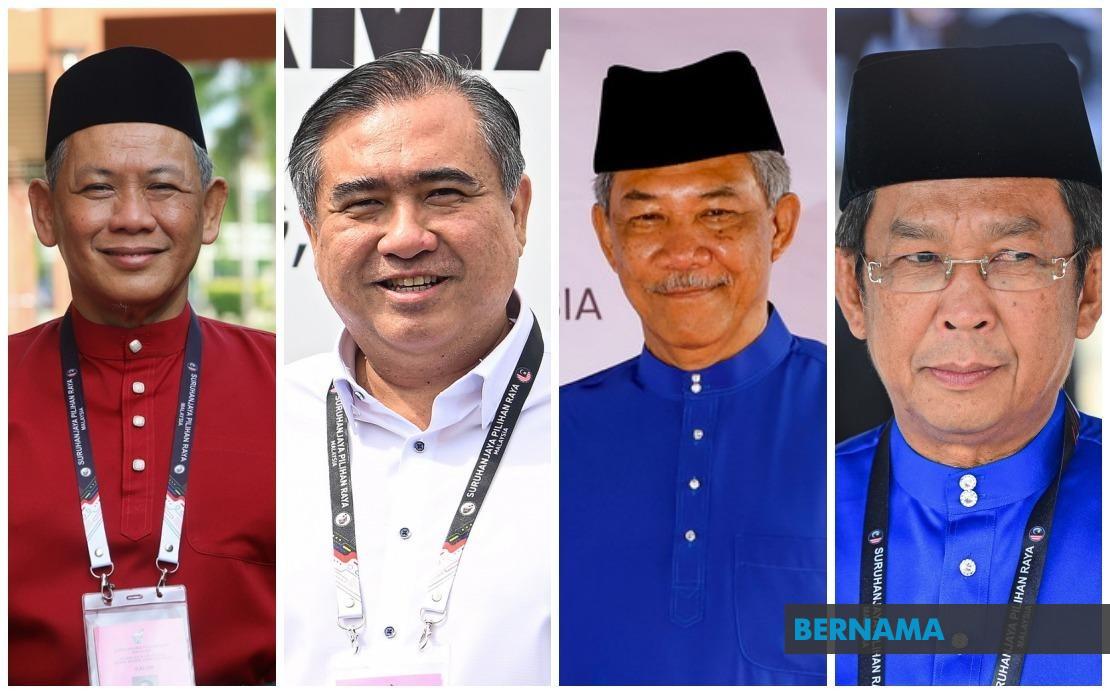
The 16th Negeri Sembilan state election is shaping up as a watershed moment for Malaysia's political establishment, with several heavyweight contenders finding themselves in unexpectedly tight races. Unlike previous campaigns in which dominant personalities sometimes cruised to easy victories, this electoral contest presents no guarantees for the country's top political operators, signalling a fundamental shift in voter sentiment and party competition dynamics within the state.
Pakatan Harapan's hold on Negeri Sembilan faces its sternest test yet, particularly in the Linggi constituency where caretaker Menteri Besar Datuk Seri Aminuddin Harun confronts a three-way scramble against incumbent Datuk Mohd Faizal Ramli of Barisan Nasional and Bersatu's Datuk Zamri Md Said. Aminuddin's position as PKR vice-president and state PH chairman has traditionally provided him substantial organisational advantages, yet the emergence of a viable Bersatu candidate threatens to fragment the anti-BN vote, complicating his path to retaining the seat. This configuration typifies broader fragmentation within Malaysia's political landscape, where Bersatu's presence has fundamentally altered electoral mathematics across numerous constituencies.
DAP's strongholds in Negeri Sembilan, which the party has held consistently since the 2013 election cycle, now face unprecedented pressure. In the Chennah constituency, party secretary-general Anthony Loke, who simultaneously holds the Transport Minister portfolio, must defend against Negeri Sembilan MCA Youth chief Siow Kong Choon. The significance of this contest extends beyond personality politics; it represents Barisan Nasional's attempt to reclaim territory surrendered a decade ago and reflects the complicated dynamics of MCA attempting to revitalise its presence among the state's Chinese-majority constituencies.
The Rantau seat presents perhaps the most intriguing generational face-off. Datuk Seri Mohamad Hasan, the 70-year-old Foreign Minister and UMNO deputy president known colloquially as Tok Mat, directly confronts Dr Azizul Hakim Mahdi of Pakatan Harapan in a straight contest. Mohamad's two-decade stewardship of Rantau since 2004 has established him as virtually synonymous with the constituency, yet the emergence of a significantly younger challenger represents broader questions about political renewal and voter appetite for fresh voices. The generational arithmetic in Malaysian politics has shifted markedly, with constituencies increasingly receptive to candidates untethered to the older establishment networks.
UNUMO's own dominance within Negeri Sembilan faces scrutiny through multiple contests. The Pertang seat, held since 2013 by Datuk Seri Jalaluddin Alias, the Negeri Sembilan UMNO chief, now features a three-cornered battle against Mohd Umry Abdul Khois of Pakatan Harapan and Bersatu's Mohd Faizal Fadli Mohd Idrus. The presence of three competitive candidates suggests that UMNO's traditional organisational advantages have become insufficient to guarantee automatic victory, reflecting broader voter volatility across the state.
The fractious nature of contemporary Malaysian politics crystallises in the Nilai and Sri Tanjung constituencies, both witnessing five-way contests that dilute the traditional two-coalition framework. In Nilai, DAP national deputy chairman and sitting assemblyman J. Arul Kumar confronts four challengers including Datuk Lai Chien Kong of Barisan Nasional, Datuk V. Saravana Kumar of Bersatu, Berjasa's Zamani Ibrahim, and independent candidate Omar Mohd Isa. This multiplication of candidates reflects the fragmentation of Malaysia's political ecosystem, where smaller parties and independent candidacies have carved out legitimate electoral niches.
Sri Tanjung presents similarly crowded circumstances, with incumbent PH member Dr G. Rajassekaran competing against four opponents spanning the political spectrum. Notably, Bersatu's nominee Leevineshwaraan Murugan, at just 23 years old, constitutes the youngest candidate contesting the entire state election. This detail underscores shifting generational patterns, as parties increasingly recognise the electoral necessity of fielding youthful candidates capable of energising younger voter demographics disenfranchised by establishment politics.
The broader arithmetic of candidate deployment reveals substantial shifts in party strategy across Negeri Sembilan. Pakatan Harapan has fielded the maximum complement of 36 candidates across all contested seats, reflecting their ambition to govern the state outright. Barisan Nasional fields 25 candidates, attempting selective concentration in winnable constituencies rather than universal coverage. Bersatu, with 24 candidates, maintains substantial presence despite uncertainties surrounding Perikatan Nasional's internal cohesion at the federal level. The combined presence of smaller parties—Berjasa, Parti Orang Asli Malaysia, and Parti Sosialis Malaysia—alongside independent candidates totals eight additional nominations, collectively illustrating the diversification of electoral competition beyond the traditional two-bloc framework.
The 14-day campaign commencing from July 18 through July 31 introduces compressed timeframes that favour well-resourced campaigns and established political machinery. Early voting on July 28 and the August 1 polling date mean that candidate momentum and media saturation become more concentrated and consequential than in lengthier campaigns. For Malaysian and broader Southeast Asian observers, the Negeri Sembilan election functions as a critical barometer of voter sentiment regarding coalition governance, generational political transition, and the sustainability of electoral coalitions under contemporary Malaysian conditions.
This election emerges amid broader questions about Pakatan Harapan's consolidation of state-level governance following their 2022 federal electoral losses and subsequent reconfiguration. Whether the PH-led Negeri Sembilan administration can secure electoral revalidation or whether Barisan Nasional can capitalise on federal-level momentum remains genuinely uncertain. The competitive positioning of multiple top-tier political figures across genuinely contested seats—rather than the coronations that have sometimes characterised Malaysian state elections—suggests voters have retained meaningful agency in determining electoral outcomes, a development with profound implications for Malaysian democracy's future trajectory.

