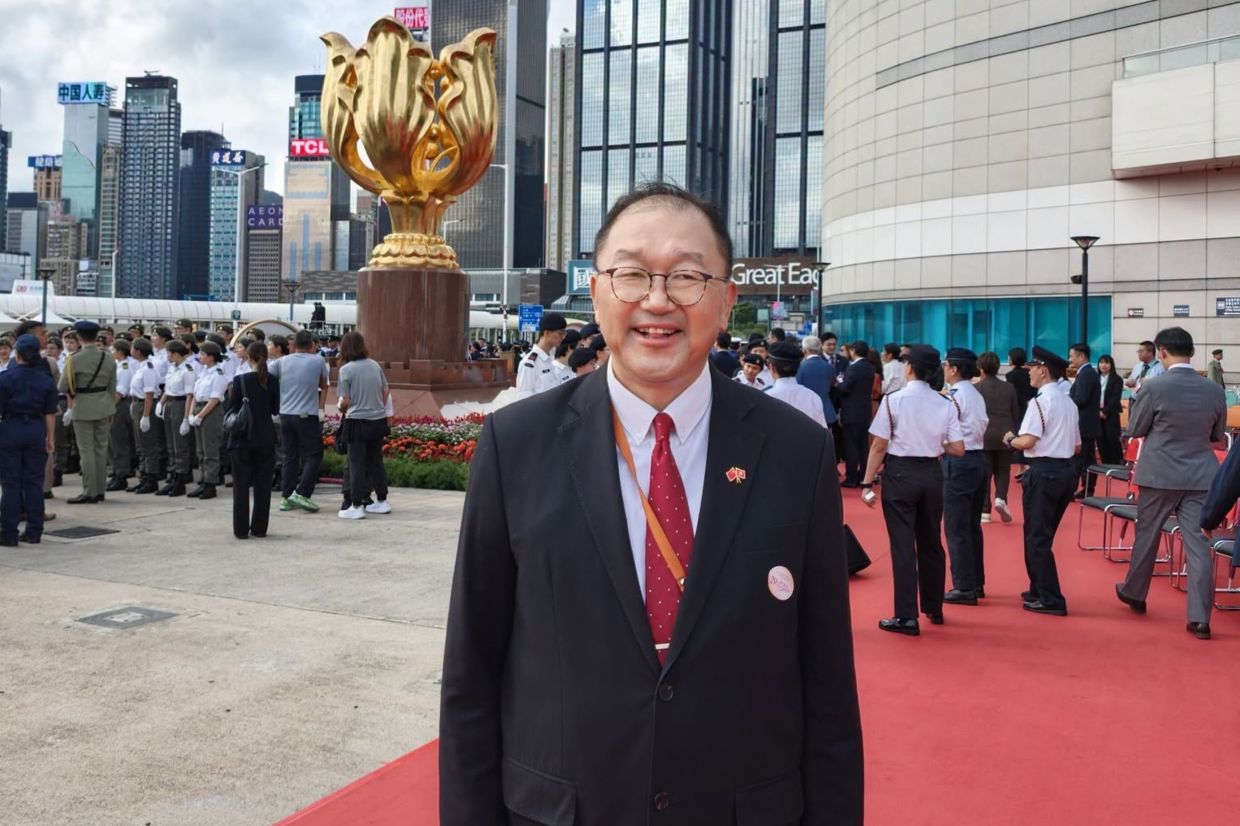
William Wong Kam-fai, a 66-year-old Hong Kong legislator, has made history by becoming the first member to resign from the Legislative Council over a scandal in more than a quarter-century, bowing to pressure following his arrest on suspicion of driving under the influence and fleeing an accident scene. His decision to step down comes barely four days after he was detained on Monday evening when his vehicle struck two parked cars on a university campus, marking a dramatic reversal in the political landscape of Asia's most influential financial hub and raising questions about governance standards and accountability in Hong Kong's reformed legislative system.
Wong announced his resignation on Friday through an official statement expressing deep remorse for the embarrassment and disruption his actions had caused both society and the legislature. He emphasised that his departure was designed to shield the Legislative Council from further reputational damage and to allow the body to continue functioning without distraction. In his carefully worded public remarks, Wong refrained from elaborating on the details of the incident, citing the ongoing police investigation as justification for remaining silent on the specifics of what transpired during the Monday night collision near campus residences.
The incident occurred at approximately 10.46pm when Wong lost control of his vehicle, resulting in a collision with a stationary car that subsequently struck another parked vehicle. The crash triggered immediate police involvement, leading to his detention and formal questioning regarding the circumstances surrounding the accident and whether alcohol played a factor in his inability to maintain vehicle control. The arrest was particularly significant given Wong's prominent status as both a senior legislator representing the Election Committee constituency and an academic administrator at a major university.
Legislative Council President Starry Lee Wai-king formally acknowledged Wong's resignation letter on Friday, expressing appreciation for his service to the institution and his contributions to Hong Kong's development. Her public statement struck a measured tone, neither condemning Wong nor dwelling on the scandal, instead focusing on the procedural acceptance of his departure and gratitude for his years in office. This diplomatic response reflects the sensitive nature of legislative resignations in Hong Kong's politically charged environment, where institutional stability and perceived fairness are matters of considerable importance to both the government and the broader public.
Political analysts have largely viewed Wong's swift resignation as the strategically prudent response to an untenable situation. Lau Siu-kai, a specialist consultant at the Chinese Association of Hong Kong and Macau Studies, characterised the decision as damage control that protects multiple stakeholders simultaneously. According to Lau's assessment, prolonged resistance to resignation could have invited sustained criticism on the grounds that legislative standards had been compromised and that the principle of patriots administering Hong Kong—a cornerstone of the reformed political system—was being undermined. By acting decisively, Wong has minimised the scope of collateral damage to institutional credibility and his own personal standing.
Beyond his legislative role, Wong also held a position with the Chinese People's Political Consultative Conference, the nation's paramount political advisory body. Analysts expect that Wong will similarly relinquish this appointment, particularly given the severity of the allegations he faces. Central authorities would likely view the resignation as appropriate and proportionate, though such membership terminations remain uncommon in practice. The CPPCC position carries considerable prestige and represents a significant marker of political trust, making its potential loss another dimension of the scandal's consequences for Wong.
Tam Yiu-chung, Hong Kong's former sole representative to the National People's Congress Standing Committee, endorsed Wong's decision as befitting a lawmaker held to elevated ethical and conduct standards. Tam argued that the gravity of the situation—compounded by expectations placed upon legislators—made resignation the only defensible course of action. He acknowledged that Wong's departure from the Election Committee constituency would not substantially disrupt the legislature's operational capacity, since Election Committee seats differ fundamentally from functional constituencies in their representation of sectoral interests.
The question of whether a by-election will be held to fill Wong's vacant seat remains uncertain and ultimately rests with the government. Tam noted that no legal obligation exists to conduct a by-election, and authorities may consider various practical factors when making this determination. The financial implications of holding a by-election, combined with the remaining time in the current legislative term, may influence the decision. Historical precedent offers limited guidance: when Stephen Wong Yuen-shan, another Election Committee legislator, departed in late 2022 to assume a role with a government think tank, his seat remained vacant for approximately three years without triggering a by-election process.
Wong's resignation marks the first such departure over scandal since Gary Cheng Kai-nam stepped down in 2000, shortly after winning his seat in September of that year. Cheng's exit followed revelation of undisclosed business connections, improper disclosure of confidential government documents, and personal indiscretions. He subsequently faced criminal prosecution, receiving an 18-month prison sentence in 2001 after conviction on charges including bribery, misconduct in public office, false accounting, and theft. The quarter-century interval between these two resignations underscores the comparative rarity of such departures and suggests that either legislative discipline has strengthened or that public scrutiny and institutional expectations have evolved substantially.
The university where Wong held administrative positions alongside his legislative duties released a statement emphasising institutional commitment to standards of professional conduct and ethical behaviour. Officials confirmed they had immediately suspended Wong from administrative responsibilities pending the outcome of police investigations. The institution's response illustrates how scandal involving a dual-role public figure can reverberate across multiple sectors and institutions, creating secondary waves of consequences that extend beyond the political sphere.
Wong's case arrives at a moment when Hong Kong's governance structures and legislative standards remain subjects of considerable attention both domestically and internationally. The reformed political system, implemented following significant constitutional changes in recent years, emphasises the principle that only patriots demonstrating genuine commitment to Hong Kong's welfare should hold high office. Wong's swift resignation, whatever its personal costs, has been interpreted by observers as broadly consistent with this principle—demonstrating that those who breach public expectations face genuine consequences, thereby reinforcing institutional credibility. For Malaysia and other Southeast Asian democracies, the episode offers instructive lessons about how political systems navigate scandals involving high-ranking officials and the balance between accountability, stability, and institutional preservation.

