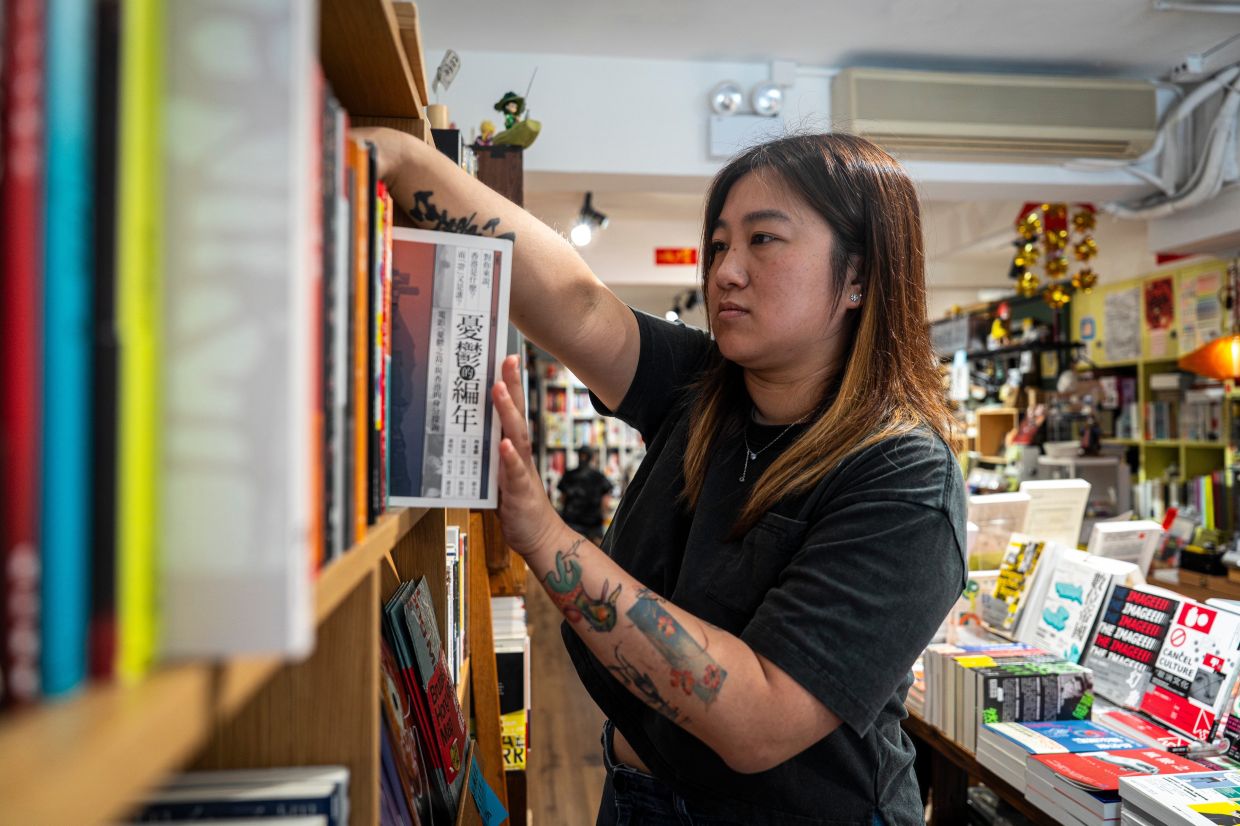
Hong Kong police have moved against independent booksellers in what critics view as an escalating campaign to suppress dissenting voices in the territory. On Wednesday, authorities arrested two individuals connected to a bookstore in the Sham Shui Po district on suspicion of selling seditious publications and accepting funds from overseas political organisations, marking the latest application of stringent national security legislation introduced in 2024.
While the government statement released Thursday did not formally identify those detained, local media reports citing unnamed sources indicate that one of the arrested is Leticia Wong, the owner of Hunter Bookstore and a former pro-democracy district councillor. The news has reverberated through Hong Kong's civil society, as Wong has emerged as a vocal commentator on political freedoms following the mass pro-government demonstrations of 2019 and the subsequent arrest of leading activists. Her detention, should confirmation come, would represent another visible effort by authorities to restrict political expression in Asia's leading financial centre.
The arrests unfold against the backdrop of deepening scrutiny of Hong Kong's remaining autonomy. The timing is particularly sensitive, occurring just a week before the city marks the 29th anniversary of its return to Chinese sovereignty in 1997. During handover negotiations decades ago, Beijing committed to a "one country, two systems" framework that was intended to preserve Hong Kong's Westminster-style legal protections and civil liberties for at least fifty years. Observers and international commentators have increasingly questioned whether that promise remains meaningful as security legislation expands and independent institutions face mounting pressure.
According to police documents, the two individuals face accusations of displaying and distributing materials with seditious content within their shop, including items allegedly designed to incite hostility toward the Hong Kong government, its courts, and law enforcement. Authorities also allege they received financial remittances from foreign political entities, though the government statement provided no specifics about which publications or organisations are involved in the case. The lack of transparency mirrors previous security-related investigations in the territory, where authorities have disclosed minimal detail about the exact materials or funding sources at issue.
Hunter Bookstore has occupied a peculiar position in Hong Kong's political landscape. Last year, a pro-Beijing newspaper publication launched criticism at an independent book fair hosted at Wong's premises, characterising it as a form of "soft resistance" to the government. The outlet specifically flagged the bookstore's intention to stock a biography of Jimmy Lai, the incarcerated media tycoon and pro-democracy stalwart whose detention has drawn international scrutiny. This episode illustrates how independent bookshops have become focal points for official concern about the dissemination of politically sensitive materials.
Wong herself has documented the pressures applied to her business in meticulous detail. In remarks to international media last year, she revealed that government authorities had taken action against her shop on 92 separate occasions between July 2022 and June 2025. These interventions ranged from official inspections and conspicuous police patrols to written warnings citing alleged regulatory breaches. She also disclosed that an unsigned letter sent to an external organisation planning to host an event at the bookstore prompted organisers to cancel their booking—a demonstration of how intimidation operates even when authorities do not directly intervene.
The crackdown on booksellers represents part of a broader pattern observable across Hong Kong's independent publishing sector. In March, police arrested the proprietor and staff members of another bookstore, with reporting suggesting they faced similar accusations regarding the sale of seditious materials, particularly biographical works about imprisoned activists like Lai. Those individuals were subsequently freed on bail, though the episode signalled that law enforcement was prepared to use arrest as a tool against the book trade. The repeated targeting of booksellers underscores that authorities view the distribution of certain political narratives as a core security concern under the evolving legal framework.
The 2024 national security law that serves as the basis for these prosecutions forms part of Hong Kong's expanding security architecture. The government insists this legislation, along with earlier enactments, is essential for maintaining public order and stability in the territory. Officials contend that freedoms of speech and expression remain robustly protected within Hong Kong's legal system. Critics and international observers contest this characterisation, pointing to the arrest of prominent journalists, the closure of independent media outlets, and cases like the current bookstore prosecutions as evidence that the space for lawful dissent has contracted significantly.
For readers in Malaysia and across Southeast Asia, the Hong Kong situation carries implications for regional debates about press freedom, civil liberties, and the balance between security and open expression. Malaysia itself has confronted questions about sedition laws and their application to political speech, making the Hong Kong precedent relevant to local conversations about the permissible boundaries of criticism and independent publishing. The manner in which authorities in Hong Kong interpret and enforce sedition statutes offers a cautionary example of how broadly framed security provisions can be deployed against ordinary acts of commerce and communication.
The uncertainty surrounding the identities of those arrested reflects the opacity that now characterises many security investigations in Hong Kong. Police did not confirm details, and Wong herself could not be immediately reached, leaving journalists and observers to rely on unverified reports. This informational vacuum serves its own disciplinary function, as uncertainty about the precise allegations and evidentiary basis for such arrests compounds the chilling effect on independent activity. For bookstore owners, publishers, and readers across the region, the Hong Kong episode demonstrates the real legal and commercial risks now attached to handling materials that authorities might deem subversive.

