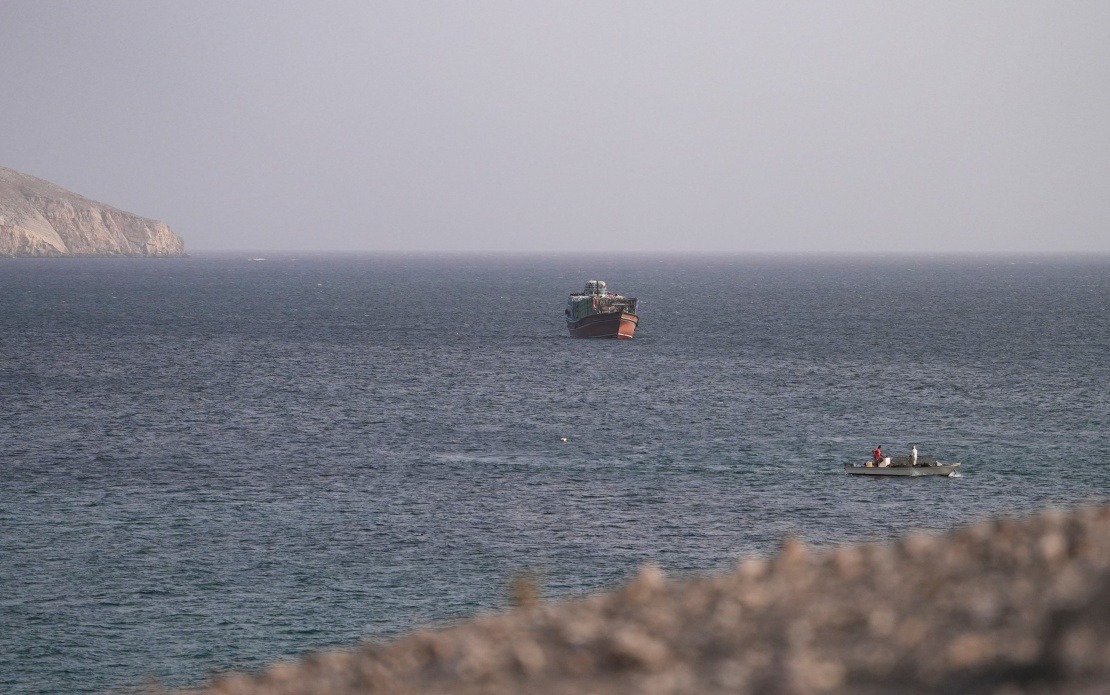
Iran's Foreign Ministry Spokesperson Esmaeil Baqaei has made clear that the Strait of Hormuz will undergo a fundamental transformation, rejecting any possibility of reverting to the maritime conditions that prevailed before the recent conflict. In a televised interview, Baqaei stated categorically that any agreement reached with Oman should not be interpreted as a simple reopening of one of the world's most critical shipping channels. This pronouncement signals a deliberate shift in Tehran's approach to one of the region's most strategically sensitive waterways, through which roughly one-fifth of global petroleum traffic normally passes.
The Iranian official's remarks underscore that discussions between Tehran and Muscat have been progressing for several months, with both nations attempting to establish a comprehensive framework that would guarantee secure maritime passage while accommodating Iran's security concerns. These bilateral negotiations commenced immediately following the ceasefire agreement on April 8, and have since involved multiple rounds of technical and diplomatic exchanges. The emphasis on a bilateral process between the two Strait coastal states reflects Iran's determination to sideline external actors from decisions affecting the waterway's future management.
According to Baqaei, the post-conflict diplomatic engagement received high-level attention when Iran's Foreign Minister Abbas Araghchi made Oman his first international destination after the conflict concluded. Discussions with the Sultan and Oman's foreign ministry focused substantially on establishing new protocols for Strait of Hormuz management and creating a secure maritime corridor. This prioritisation of the Oman visit demonstrated how central the Hormuz question has become to Iran's post-conflict regional diplomacy and its efforts to stabilise shipping lanes amid lingering tensions.
The memorandum of understanding that ended the conflict explicitly addresses the Strait's future governance, with its fifth clause stipulating that Iran should manage maritime arrangements in consultation with Oman and through dialogue with other regional actors. Baqaei highlighted that during the initial 22 to 23 days of implementing the ceasefire agreement, the northern shipping route operated without incident and vessels transited safely. However, he asserted that an act of aggression against Iran occurred before the agreed 30-day period for restoring pre-war maritime conditions could be completed, effectively justifying Tehran's reluctance to return to previous arrangements.
Perhaps most significantly, Baqaei revealed that the future agreed maritime route through the Strait would constitute an entirely new passage distinct from either the existing northern or southern corridors. This novel route would emerge through bilateral Iranian-Omani negotiations rather than representing a restoration of previous arrangements. The commitment to crafting new shipping lanes suggests Iran views this process not merely as a technical maritime issue but as an opportunity to institutionalise enhanced security protocols that serve its strategic interests.
The Iranian spokesperson emphasised that Tehran's objective in these consultations is ensuring the Strait cannot be exploited by nations that have conducted military operations against Iran. This security imperative has become central to Iran's negotiating position, with Baqaei insisting that any mechanism governing future maritime traffic must fully respect Iranian sovereignty. The implicit reference to potential third-party interference underscores Tehran's concern that external powers might attempt to constrain Iran's authority over waters adjacent to its territory.
Addressing broader geopolitical tensions, Baqaei dismissed threats emanating from United States officials, characterising such warnings as neither novel nor consequential to Iranian decision-making. He noted that Iran has previously endured multiple instances of high-intensity military intervention from the United States, implying that contemporary rhetoric holds little sway over Tehran's strategic calculations. This defiant posture reflects the confidence Iran appears to be projecting despite ongoing regional instability and great power competition affecting the Middle East.
The Iranian official also responded to claims attributed to United States President Donald Trump regarding Iran's alleged efforts to halt attacks, dismissing such assertions as historically inaccurate. Baqaei characterised these statements as components of psychological and media-based warfare designed to influence Iranian policy through public pressure and social media campaigns. His rejection of these narratives emphasises Iran's determination to operate according to national interests rather than responding to external messaging strategies.
Baqaei underscored that Iran had recently fielded diplomatic communications from Bulgaria, the United Kingdom, and Ukraine over a 24-hour period. These contacts, while not elaborated upon in detail, suggest ongoing international engagement with Iran despite regional tensions. The Iranian spokesman reaffirmed that Tehran views itself as obligated to communicate the likely consequences of any potential military escalation or fresh aggression, effectively serving notice to potential adversaries and their supporters regarding the stakes involved in further regional confrontation.
Critically, Baqaei articulated a doctrine of accountability extending to third parties, warning that any nation cooperating in military action against Iran, providing military facilities, or offering logistical assistance to aggressors would assume responsibility for such aggression and face corresponding consequences. This statement carries particular significance for regional and international actors, including Gulf Cooperation Council members and NATO allies who maintain military installations in the Persian Gulf. The articulation of this position suggests Iran is establishing redlines intended to deter states from providing support to any actors conducting operations against Iranian interests.
Fundamentally, the Iranian position on the Strait's future remains inextricably linked to broader security developments and American actions in the region. Baqaei's insistence that the waterway's ultimate status depends on regional stability and United States policy choices reflects Iran's leverage over one of global commerce's most vital chokepoints. This approach positions Tehran as seeking to maintain strategic optionality, capable of either facilitating or complicating maritime traffic depending on geopolitical circumstances.
For Southeast Asian readers and regional observers, these developments carry substantial implications. Malaysia, as a maritime nation with significant shipping interests and as home to major transhipment hubs, faces direct consequences from any prolonged disruption to Hormuz shipping patterns. Malaysian traders and logistics operators rely on predictable passage through the Strait, and any instability threatening reliable transit would affect regional supply chains and energy security. Additionally, the emerging Iranian-Omani framework for maritime governance may establish precedents for bilateral coastal state management of critical waterways, with potential implications for regional maritime law and the authority of international shipping organisations.
Moreover, the broader context of great power competition in the Middle East touches Southeast Asian interests through energy security, trade flows, and regional stability. As the region navigates between competing powers, the establishment of new maritime governance arrangements in the Persian Gulf signals evolving power dynamics that Southeast Asian nations must monitor carefully. The outcome of Tehran-Muscat negotiations will influence shipping costs, insurance premiums, and supply chain reliability affecting Malaysian businesses and consumers, making this seemingly distant Middle Eastern diplomacy directly relevant to regional economic welfare.

