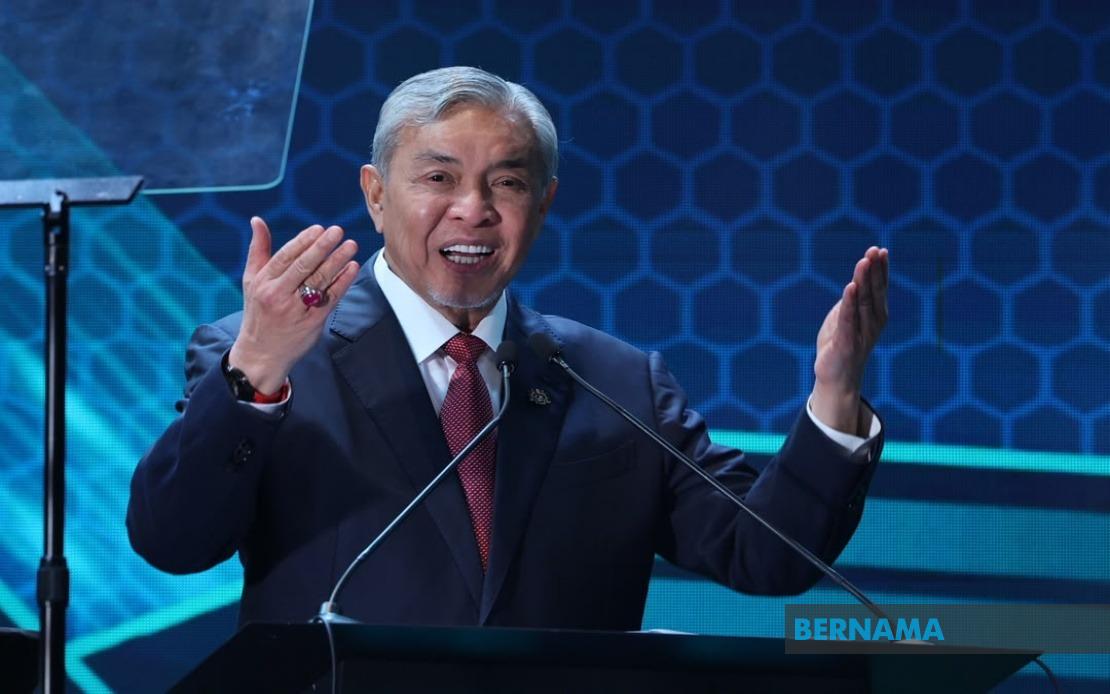
Deputy Prime Minister Datuk Seri Dr Ahmad Zahid Hamidi has called for a fundamental reimagining of the Immigration Department's role, shifting it from a purely regulatory body into an active contributor to Malaysia's economic competitiveness and national security apparatus. Speaking at the 2026 Immigration Day celebration in Cyberjaya, Ahmad Zahid articulated a sweeping transformation agenda that moves beyond conventional border control functions towards a more integrated approach encompassing economic facilitation, technological modernisation and institutional integrity.
The Deputy Prime Minister introduced a four-point strategic mandate designed to serve as the compass for the department's evolution. These priorities encompass positioning the Immigration Department as a facilitator of national economic growth, strengthening security and sovereignty through intelligence-driven enforcement, accelerating digital transformation and service innovation, and fortifying integrity, professionalism and humanitarian values across all operations. Ahmad Zahid emphasised that this transformation cannot occur through piecemeal efforts or temporary adjustments, but requires sustained commitment embedded within every institutional policy, system and operational decision.
On the economic dimension, Ahmad Zahid highlighted how immigration authorities have traditionally functioned primarily as gatekeepers, focusing on controlling movement across entry points. However, he argued this paradigm must evolve to recognise that unnecessary procedural delays, convoluted processes and excessive red tape directly undermine the nation's ability to attract investment and talent. He pointed to the United Arab Emirates as an instructive model, noting how that nation integrated immigration policy with investment attraction strategies through mechanisms such as the Golden Visa programme offering residence validity up to ten years, resulting in record foreign direct investment of RM196.6 billion in 2025 and securing the UAE's ninth-place global ranking as an investment destination for four consecutive years.
For Malaysian policymakers and business leaders, the implications are significant. As the region intensifies competition for capital flows and skilled workers, immigration procedures that impose friction costs on legitimate business activity represent genuine competitive disadvantages. Ahmad Zahid's remarks suggest the Malaysian government recognises that streamlining visa processing, reducing clearance timelines and simplifying documentation requirements for investors and expatriate professionals could yield measurable returns in foreign direct investment and economic output.
The security dimension of the mandate reflects equally substantial challenges. Ahmad Zahid noted that transnational threats have evolved dramatically over the past decade, with criminal syndicates engaged in migrant smuggling becoming increasingly organised and sophisticated, while human trafficking operations have grown more complex in structure and operations. He stressed that modern security responses cannot remain reactive, dependent on conventional inspection procedures and isolated enforcement actions. Instead, he advocated for intelligence-led enforcement frameworks that leverage data analytics, artificial intelligence and predictive modelling to anticipate threats and allocate resources more effectively.
This security-focused modernisation aligns with broader Southeast Asian concerns regarding transnational crime. The region faces persistent challenges from irregular migration networks, organised trafficking rings and cross-border criminal activities that evade detection through conventional means. By adopting advanced analytics and predictive systems, the Immigration Department could enhance capacity to identify and intercept problematic movements while facilitating legitimate travel and commerce. The integration of biometric systems, digital identity frameworks and smart border infrastructure represents the technological frontier for modern immigration management, enabling faster decision-making alongside stronger security assurance.
The third pillar of Ahmad Zahid's mandate concentrates on accelerating digital transformation across the department. He articulated a vision extending beyond mere digitisation of existing processes towards leveraging technology to fundamentally enhance institutional capability. This encompasses deploying artificial intelligence for pattern recognition, implementing big data analytics to identify suspicious movements and trends, adopting digital identity solutions to strengthen verification protocols, and constructing integrated smart border systems enabling coordinated responses across multiple enforcement agencies. Ahmad Zahid emphasised the objective is not simply working faster through technology, but thinking more strategically, acting with greater precision and delivering services meeting international standards.
For Malaysian citizens and businesses, this modernisation agenda promises tangible improvements in service delivery. Expedited visa processing, reduced queue times at immigration checkpoints, seamless digital documentation and real-time status tracking represent practical benefits flowing from systematic technological integration. The implicit acknowledgment that current systems often impose unnecessary burdens suggests receptiveness to radical simplification of procedures previously resistant to reform.
The integrity and professionalism component of the mandate addresses institutional culture and values. Ahmad Zahid called upon all Immigration Department personnel to maintain strict procedural compliance, exercise sound judgment in decision-making and demonstrate courage in doing what is right. He emphasised that the department's reputation rests not merely on firm law enforcement but equally on the professionalism, integrity and humanitarian values embedded within its operations. This framing suggests recognition that aggressive enforcement divorced from fairness or compassionate judgment undermines public trust and institutional legitimacy.
The comprehensive integration of these four elements, Ahmad Zahid argued, transforms the Immigration Department from a reactive administrative body into a strategic national institution serving multiple vital functions simultaneously. It becomes a guardian of sovereignty through enhanced security capabilities, a catalyst for economic competitiveness through facilitation of legitimate movement and investment, and a symbol of public trust through demonstrated professionalism and ethical conduct. This multi-dimensional approach reflects sophisticated understanding that modern immigration functions serve economic, security and social objectives that require careful balancing rather than prioritising enforcement above all other considerations.
The statement carries particular significance for Malaysia's positioning within Southeast Asia's increasingly competitive landscape for investment and talent. Nations that successfully integrate immigration policy with broader economic strategies tend to outperform those maintaining rigid, purely regulatory approaches. Ahmad Zahid's remarks suggest Malaysia's government recognises this competitive dynamic and seeks to position the Immigration Department as a strategic asset rather than merely a law enforcement body. The challenge lies in implementing this transformation consistently across the sprawling bureaucracy while maintaining security standards and public trust.

