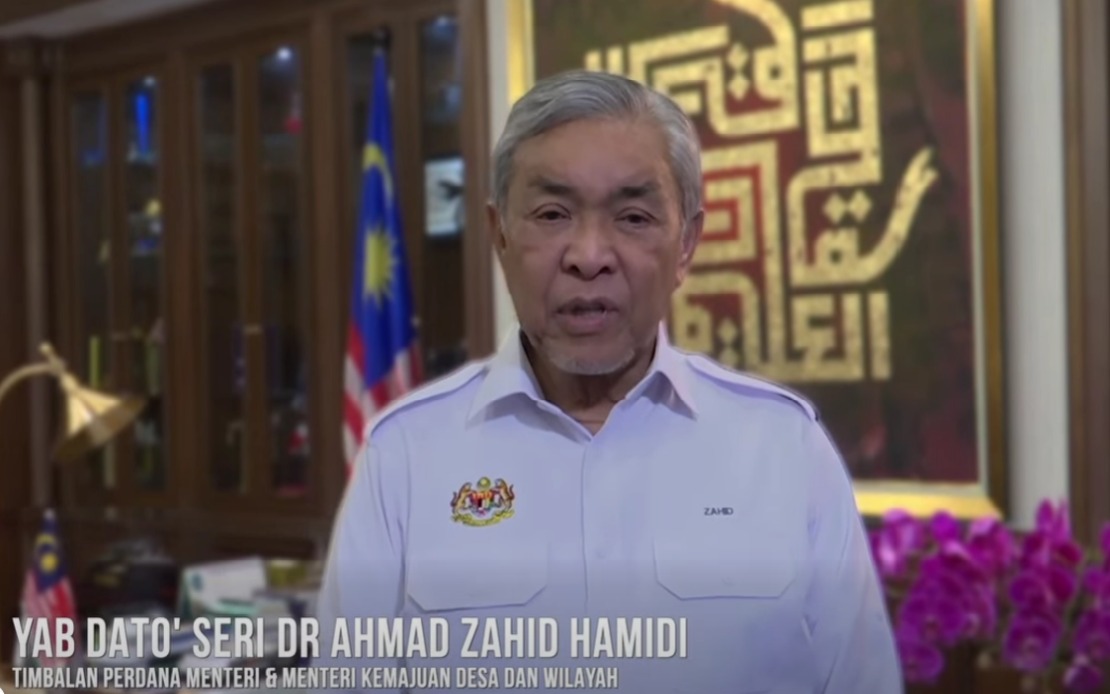
As Malaysia observed its 69th National Day, Deputy Prime Minister Datuk Seri Dr Ahmad Zahid Hamidi articulated a vision of independence that extends beyond the historical date of freedom from colonial rule, positioning it instead as an ongoing commitment to ensure prosperity reaches every segment of society. Speaking through a video message released on social media, Ahmad Zahid reframed the significance of independence not as a past achievement but as a living obligation that government and citizens must actively uphold through concrete improvements in people's daily lives.
The crux of Ahmad Zahid's argument centres on the notion that true independence loses meaning if citizens lack the means to build secure futures. He specifically identified technical and vocational education and training—commonly referred to as TVET—as essential to breaking cycles of limited opportunity. By equipping younger generations with practical, market-relevant skills, the government positions them to access higher-wage employment and escape dependence on entry-level or precarious work. This emphasis reflects growing recognition across Southeast Asia that traditional academic pathways alone cannot absorb the labour force, and that prosperity depends on creating diverse pathways to dignified employment.
Beyond individual livelihoods, Ahmad Zahid's framing encompasses the broader ecosystem of economic participation. He highlighted the imperative to nurture small entrepreneurs and provide platforms for business growth, acknowledging that family enterprises and micro-businesses form the backbone of Malaysia's informal economy. This recognition signals understanding that development must accommodate not only large-scale industrial and service sectors but also the countless households that depend on self-employment and small trading. For Malaysian readers, particularly those in towns and smaller cities, this signals openness to policies that might ease business registration, reduce regulatory burdens, or expand access to affordable financing for modest ventures.
A distinctive element of Ahmad Zahid's message addresses disaster resilience and post-crisis recovery. He positioned government responsibility to extend beyond building infrastructure during stable times to actively protecting citizens during emergencies and helping them rebuild afterwards. Given Malaysia's vulnerability to floods, landslides, and other climate-related hazards, this articulation carries weight. It suggests government recognition that independence is incomplete if citizens remain exposed to catastrophic loss without state support—a concern that resonates across rural and low-income communities that often bear disproportionate climate impacts.
As Rural and Regional Development Minister, Ahmad Zahid pivoted to emphasize the geographical dimension of inclusive development. His assertion that national greatness emerges not from what government builds in cities but from who it brings along throughout the development process directly challenges the historical concentration of investment and services in urban centres. He illustrated this with vivid examples: a single road transforming a village, electricity bringing hope to modest dwellings, or a small classroom nurturing future talent. These metaphors resonate across Southeast Asia, where rural-urban disparities remain stubborn development challenges. For Malaysian policymakers, the message underscores that infrastructure reaching remote areas constitutes not charity but essential nation-building.
Ahmad Zahid introduced Malaysia's halal industry as a contemporary expression of independence, linking it to both national pride and economic opportunity. The positioning of halal development as a vehicle for creating livelihoods and accessing global markets reflects Malaysia's distinctive positioning as a Muslim-majority nation with growing influence in international halal certification and trade. This framing appeals to entrepreneurs and workers across sectors—food, cosmetics, pharmaceuticals, tourism—who benefit from Malaysia's halal brand. It also underscores how post-colonial nations can leverage cultural and religious identity as economic assets rather than viewing them solely through social cohesion lenses.
Meanwhile, Deputy Prime Minister Datuk Seri Fadillah Yusof offered a complementary perspective, emphasizing the internal, psychological dimensions of independence. He called upon Malaysians to liberate themselves from division, hatred, prejudice, and extremism—positioning these as threats to national harmony that rival external challenges. This framing acknowledges that sustainable independence requires citizens to actively cultivate unity despite genuine differences in religion, culture, language, and custom. Fadillah's argument that shared homeland, future, and aspirations must transcend these differences reflects the delicate balancing act of multicultural governance, particularly relevant as Malaysia navigates rapid social change, evolving media landscapes, and competing narratives about national identity.
Fadillah's invocation of the Rukun Negara—Malaysia's founding principles—and the Malaysia MADANI vision indicates governmental emphasis on resurrecting collective civic values amid contemporary challenges. His warning against losing identity and community spirit in periods of economic transition, technological disruption, and information saturation speaks to anxieties felt across the region as societies grapple with globalisation's homogenising pressures. The Malaysia MADANI framework, with its emphasis on well-being for all rather than mere economic growth, suggests reorientation toward measuring development by quality of life, social cohesion, and equitable access to opportunity rather than gross domestic product alone.
The dual messaging from both deputy prime ministers articulates government positioning on the eve of potential political transitions and amid persistent questions about inclusivity and regional equity. Ahmad Zahid's emphasis on skills, entrepreneurship, and rural development addresses concrete grievances about employment prospects and unequal access to opportunity, while Fadillah's focus on social cohesion and shared values targets concerns about fracturing national unity. Together, these statements construct a narrative wherein independence is not historical fact to commemorate but ongoing project requiring continuous recommitment from both state and citizens.
For Malaysian readers evaluating political direction and policy priorities, these National Day messages signal that government leadership recognises the need to move beyond inherited post-independence structures toward more deliberate, inclusive development models. The emphasis on TVET, rural infrastructure, entrepreneurship support, and disaster resilience suggests policy focus areas for coming years. Simultaneously, repeated calls for unity and warnings against division indicate recognition that Malaysia's multicultural social contract requires active maintenance and cannot be assumed stable.
The thematic coherence between the two deputy prime ministers—each stressing that independence must be continuously renewed through concrete action benefiting all sections of society—reflects institutional messaging discipline. Whether these articulated commitments translate into budgetary allocation, legislative action, and bureaucratic implementation remains the critical test of whether independence, in the leaders' own formulation, truly reaches into the lives of ordinary Malaysians across cities, towns, villages, and remote areas where development's reach remains uneven.

