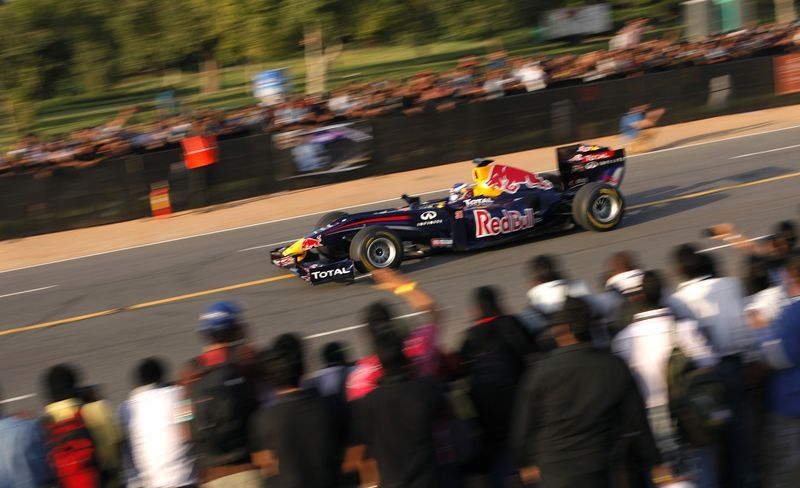
India's political leadership has signalled serious intent to resurrect Formula One racing after a 15-year absence, with the government assembling a dedicated task force to dismantle the bureaucratic and fiscal barriers that scuttled the sport's previous stint in the country. Sports Minister Mansukh Mandaviya has convened stakeholders including the Adani Group, which is acquiring control of the Buddh International Circuit on New Delhi's outskirts, alongside representatives from India's motorsports federation to chart a path toward hosting a Grand Prix in 2028.
India's relationship with Formula One has been marked by ambition followed by disappointment. The Indian Grand Prix debuted at the Buddh International Circuit in 2011, positioning the nation as the sport's fifth-largest economy to host a race. However, the event foundered after just three editions, with the 2013 running proving to be the final instalment. The collapse stemmed from protracted disputes over taxation treatment and regulatory frameworks that made the event economically unviable for organisers and the international sanctioning body alike. Resolving those same structural impediments now forms the cornerstone of New Delhi's revival strategy.
The government's approach reflects a recognition that India's previous attempt failed not from lack of ambition but from administrative dysfunction. The newly constituted task force will specifically examine taxation challenges, regulatory architecture, infrastructure requirements, and necessary policy reforms to create conditions hospitable to Formula One's operations. Crucially, India's tax authorities will hold representation on the panel, signalling that fiscal clarification and certainty will be priorities rather than afterthoughts in negotiations. The government's apex policy think tank has been instructed to coordinate across multiple ministries to streamline approvals and eliminate bureaucratic redundancies that previously hampered the race.
The Adani Group's involvement signals substantial private-sector commitment to the revival effort. Karan Adani, managing director of Adani Ports & Special Economic Zone Ltd, has publicly stated his personal engagement in returning Formula One to India, indicating the conglomerate views the project as strategically significant beyond mere sporting prestige. The group's acquisition of the track ownership structure places it in direct position to negotiate with Formula One's international operations and manage the complex interface between global regulatory demands and Indian governance requirements.
Formula One's hierarchy has responded to India's overtures with measured optimism tempered by realism about implementation challenges. Stefano Domenicali, the sport's chief executive, confirmed in recent comments to FanCode, India's Formula One broadcaster, that the organisation maintains substantial interest in returning to the Indian market. However, Domenicali's remarks underscored that considerable groundwork remains to be completed. Identifying suitable promoters capable of managing the financial and operational complexity of a Grand Prix, securing collaborative frameworks between international and domestic stakeholders, and establishing realistic timelines will all demand sustained negotiation and problem-solving beyond the immediate months ahead.
The economic logic underpinning India's renewed pursuit reflects the nation's broader position within global motorsport. As Asia's third-largest economy and home to over 1.4 billion people, India represents an enormous untapped market for Formula One viewership, merchandise, and hospitality revenues. The Southeast Asian region's growing wealth and appetite for premium sporting experiences make a successful Indian Grand Prix potentially valuable not merely for India itself but for the entire region's motorsport infrastructure and development. A functioning Formula One event could catalyse investment in circuit facilities, technical expertise, and fan engagement across South Asia and beyond.
Yet the persistent nature of the obstacles outlined in the task force's mandate suggests that India's earlier failure was not merely circumstantial but reflected deeper structural issues within India's regulatory and tax environments. Previous disputes over how international sporting events should be taxed, what exemptions or incentives should apply to foreign operators, and how state and national governments should coordinate approval processes remain largely unresolved in India's legislative and administrative frameworks. The task force's explicit focus on these domains implies that New Delhi now recognises that piecemeal negotiation with Formula One alone will prove insufficient without broader institutional reform.
The 2028 timeline, spanning roughly four years from the task force's establishment, provides a compressed but potentially realistic window for policy amendments and infrastructure preparations. Grand Prix events require substantial circuit upgrades, expanded accommodation capacity in surrounding areas, enhanced transport infrastructure, and comprehensive security protocols. The Buddh International Circuit already possesses foundational racing infrastructure from its previous Formula One operations, eliminating the necessity to build a track from foundations. This advantage substantially reduces both the financial burden and the implementation timeline compared to constructing an entirely new venue.
From a regional perspective, India's Formula One revival carries implications for motorsport development across South Asia and Southeast Asia. A successful Grand Prix in New Delhi would demonstrate that major international sporting events can function within the subcontinent's regulatory environments, potentially opening pathways for other premium sporting competitions. Malaysian readers will note particular relevance here, given Malaysia's own established Formula One credentials through the Sepang International Circuit near Kuala Lumpur, which has hosted the Malaysian Grand Prix since 1999. Competition between India and Malaysia for Formula One's regional attention could intensify, with implications for circuit investment, broadcaster revenue allocation, and driver development pathways across Asia.
The task force's formation also reflects India's broader ambitions to position itself as a global sporting hub. Beyond Formula One, New Delhi has pursued hosting rights for the Olympics, cricket world cups, and other major international competitions as part of a strategy to elevate its standing on the world stage and showcase economic development achievements. Formula One's return would constitute a significant symbolic victory in that broader agenda, demonstrating that bureaucratic obstacles that previously deterred the sport have been substantially overcome. Success here could reshape India's international image as a destination for complex, high-value global sporting franchises that require sophisticated regulatory and administrative frameworks to function effectively.

