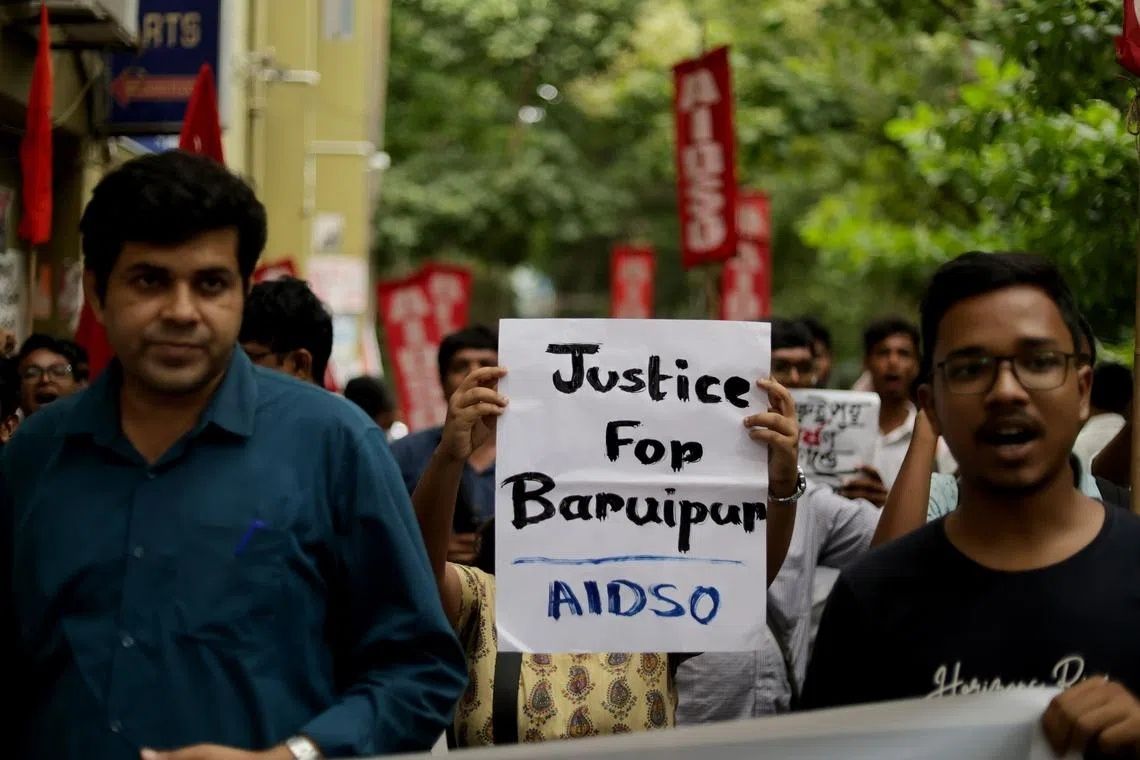
Indian police arrested dozens of people for violent and destructive conduct during demonstrations this week following the rape and murder of an 11-year-old girl discovered in West Bengal's Baruipur city, located approximately 30 kilometres south of Kolkata. The child's body was recovered from a pond on July 5, one day after she disappeared, triggering immediate outrage in the eastern state and prompting authorities to mobilise a significant law enforcement response across the region.
According to senior state police officer Arvind Kumar Anand, authorities have detained 35 individuals accused of violence and vandalism in connection with the unrest. Police officials indicated that investigations into additional suspects implicated in the disturbances are ongoing, with officers reviewing multiple video recordings that circulated widely across social media platforms. The intensity of public anger was evident in the severity of the protests, which saw residents blocking traffic arteries and setting fire to vehicles in demonstrations that extended throughout the week following the discovery of the victim's body.
In a separate but interconnected development, one of four men arrested on suspicion of committing the rape and murder was fatally shot by police during an alleged escape attempt in the early hours of July 8. The suspect, identified as Prabhas Mondal, was being transported to the crime scene as part of the investigative process when he reportedly tried to flee, leading to the police shooting. This killing has added another layer of complexity to an already volatile situation, raising questions about police conduct and the judicial process in a state grappling with serious crimes against minors.
The killing of Mondal was notably endorsed by his own mother, who publicly refused to accept her son's body for burial or cremation. In a television interview, she expressed her belief that her son deserved his fate, stating that he had not lived a virtuous life and that the punishment he received was proportionate to the gravity of his alleged actions. Her refusal to claim his remains underscores the profound shame and moral condemnation that such crimes generate within affected families and communities, reflecting deep cultural attitudes toward criminal culpability.
Complicating the investigation further, media reports suggest that one of the other three arrested suspects may be innocent and apprehended through a case of mistaken identity. The family of this individual has publicly declared his innocence and claimed he was wrongfully detained. No public statements have emerged from the families of the remaining two suspects, leaving their legal status and the strength of evidence against them unclear to the public.
West Bengal's newly appointed Chief Minister Suvendu Adhikari, whose Bharatiya Janata Party secured electoral victory in the state polls held in May, used the incident to affirm his administration's commitment to combating sexual violence and vigilante justice. Speaking through a social media post on July 9, Adhikari pledged that his government would show no mercy toward perpetrators of rape and violent crimes, as well as toward individuals who engage in mob killings. He framed the administration's response as part of a broader mission to ensure that the legal system operates fairly and delivers justice to victims and their families.
This tragic case has reignited discussions across India regarding the persistent vulnerability of women and girls to sexual violence, despite legislative reforms enacted in the aftermath of the devastating 2012 Delhi gang rape case. That incident, which resulted in the rape and murder of a 22-year-old woman, provoked massive nationwide protests and led to the introduction of tougher criminal statutes. The eventual execution of four men convicted in that case represented a significant symbolic moment for advocates of women's safety, yet the recurrence of such horrific crimes demonstrates the inadequacy of legal mechanisms alone in preventing sexual violence.
West Bengal has become a focal point for national and international scrutiny regarding women's safety in India, particularly following the 2024 rape and murder of a trainee doctor at Kolkata's prestigious RG Kar Medical College and Hospital. That case triggered widespread demonstrations not only within the state but across India, with protesters demanding systemic reforms in police accountability, hospital security, and workplace protections for women. The medical student's case exposed vulnerabilities within institutional environments that were previously considered relatively secure, compelling medical colleges and other organisations to reassess their safety protocols.
The pattern of high-profile cases emerging from West Bengal raises uncomfortable questions about the effectiveness of existing institutional safeguards and police response mechanisms. For Malaysian readers and observers across Southeast Asia, these developments reflect broader challenges that many regional societies face in protecting vulnerable populations from sexual violence. India's experience illustrates how even countries with established legal frameworks and judicial systems struggle to prevent horrific crimes and manage the social upheaval that follows such incidents.
The intersection of police conduct, vigilante justice, and systemic reform remains contested in the Indian context. While some view the shooting of Mondal as necessary force to prevent escape, others question whether extrajudicial killings—whether justified or not—serve the cause of justice or instead undermine the rule of law. The apparent case of mistaken identity raises concerns about investigative procedures and the potential for innocent people to become ensnared in the pursuit of justice, a phenomenon that has plagued India's criminal justice system for decades.
As West Bengal grapples with this tragedy and the violent aftermath, the state government faces pressure to demonstrate that it can simultaneously deliver swift justice for perpetrators while protecting the rights of the accused and preventing mob violence. The challenge before Adhikari's administration is particularly acute given the political dimensions of the case and the heightened expectations placed on a newly elected government to prove its effectiveness in combating crime. For the broader South Asian region, the case serves as a sobering reminder of the ongoing struggle to reconcile justice, rule of law, and community demands for accountability in cases involving violence against children.

