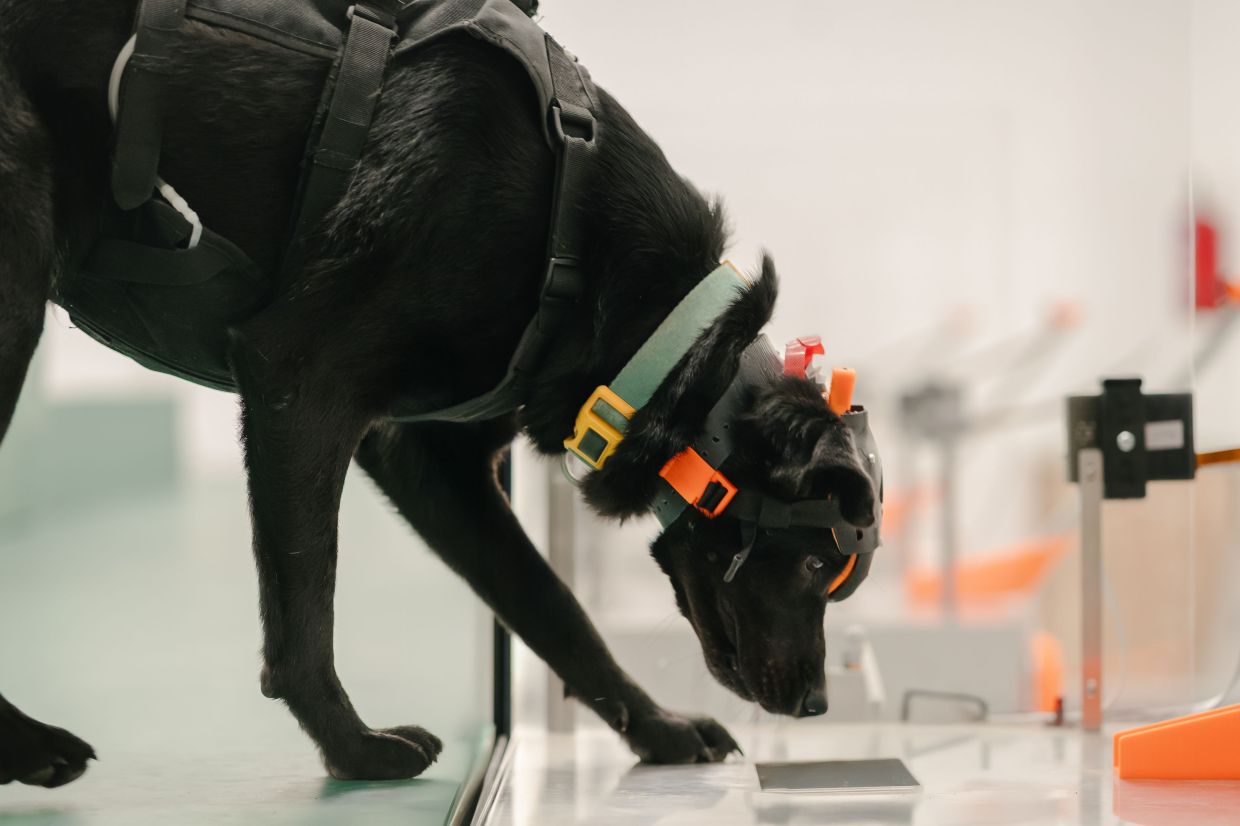
A Bengaluru-based startup is pioneering an unconventional approach to cancer detection that leverages one of nature's most sensitive instruments: the canine nose. Dognosis operates a facility on a two-acre farm south of India's tech hub where beagles, labradors, Dutch shepherds and other breeds undergo structured training to identify early markers of cancer in human breath samples. The company, now two years old, represents a growing movement to repurpose dogs' extraordinary olfactory capabilities—traditionally employed in drug and explosives detection—for accessible health screening in populations where conventional diagnostic infrastructure remains limited.
The mechanics of the system are deceptively simple yet technologically sophisticated. Patients provide breath samples via masks that are sent to the Dognosis laboratory, where trained dogs are exposed to the samples in controlled conditions. Rather than relying on the subjective interpretation of a dog's behaviour, the company employs an array of sensors that monitor the animals' movements, respiration patterns, neural activity and body language. Artificial intelligence algorithms then process these data streams to determine whether a sample exhibits markers consistent with cancer. This approach eliminates the need for expensive imaging scans, invasive biopsies or blood tests, addressing a critical bottleneck in early detection across resource-constrained healthcare systems.
The scientific validation underpinning this approach comes from a Phase 2 trial published in the Journal of Clinical Oncology, which reported approximately ninety percent sensitivity for detecting early-stage cancers across seven broad disease categories encompassing more than twenty cancer types, including breast cancer. Remarkably, dogs trained to identify ten specific cancer types demonstrated the ability to detect an eleventh type they had never encountered during training—suggesting the animals may be recognizing fundamental biochemical signatures rather than memorized patterns. This generalization capability points toward the potential for a universal cancer screening tool rather than disease-specific detection protocols.
India's epidemiological profile renders this innovation particularly urgent and relevant. According to the International Agency for Research on Cancer, India ranks third globally in the absolute number of new cancer diagnancies, with approximately 1.5 million cases and over 900,000 deaths recorded in 2024. The agency projects that roughly one in every ten Indians face a statistical risk of developing cancer before age seventy-five. Breast cancer claims the highest incidence among women, followed by cancers affecting the lip, oral cavity, lung and cervix. However, this disease burden exists against a backdrop of catastrophic screening failure: only 1.9 percent of Indian women surveyed between 2019 and 2021 reported ever undergoing cervical cancer screening, whilst just 0.9 percent had received breast or oral cancer examinations. Among men, merely 1.2 percent reported having undergone oral cancer screening. These figures underscore the profound gap between disease prevalence and preventive intervention.
Dognosis secured US$1.5 million through a pre-seed funding round in 2024, with additional undisclosed capital raised subsequently. Early-stage investors including Accel India and San Francisco-based Caffeinated Capital backed the venture. According to co-founder Akash Kulgod, current funding provides sufficient runway for two years given the company's planned expansion trajectory. The dogs themselves are maintained in comfortable conditions on the farm, receiving regular walks and play sessions, with their diagnostic work structured as game-like activities rewarded with treats. Training sessions last between thirty minutes and an hour daily, transforming what would otherwise be a stressful medical procedure into enrichment activity.
The company's commercial ambitions are notably expansive. Dognosis plans to launch an at-home multi-cancer prescreening test across India next year at a price point measured in thousands of rupees—dramatically lower than conventional diagnostic approaches. The organization envisions processing one million tests annually within its planning horizon, doubling its canine workforce to thirty dogs and reducing turnaround times to a single week. International expansion is also under active consideration, with Kulgod indicating that facility establishment in the United States could occur by late 2027 or early 2028.
Currently, Dognosis is executing a Phase 3 clinical trial that commenced in April, enrolling ten hospitals across India with plans to recruit approximately 10,000 participants over twelve months. This study will focus on asymptomatic individuals at elevated cancer risk and survivors vulnerable to disease recurrence. Participants identified through the canine screening process will receive conventional diagnostic follow-up including imaging and biopsies, establishing whether the dogs' detection actually translates into clinically meaningful early identification. The regulatory pathway in India facilitates this expansion, as Kulgod notes that the company's screening tool does not require regulatory approval since it functions as a prescreening instrument rather than a diagnostic device—the latter category alone being subject to Indian regulatory requirements.
The logistics and scalability challenges ahead remain formidable. Demonstrating that the ninety percent sensitivity observed in controlled trials translates to real-world performance across diverse populations with varying cancer prevalence will prove essential. The company must also establish reliable systems for collecting, transporting and processing massive volumes of breath samples while maintaining the integrity necessary for accurate detection. Perhaps most critically, the enterprise faces a profound challenge of clinical acceptance: persuading physicians trained in conventional diagnostics and patients accustomed to established screening methodologies to trust a system fundamentally centered on canine olfaction.
Pankaj Chaturvedi, deputy director of the Centre for Cancer Epidemiology at Tata Memorial Centre in Mumbai, articulates this tension thoughtfully. He emphasizes that emerging technologies "offer exciting opportunities, but they should strengthen – not replace – existing screening programs." This perspective acknowledges the genuine diagnostic potential while cautioning against displacement of proven public health infrastructure. For countries like Malaysia and other Southeast Asian nations grappling with rising cancer incidence, Dognosis's model presents intriguing possibilities: a screening modality potentially more culturally acceptable, logistically feasible and financially sustainable than conventional approaches across diverse healthcare settings.
The fundamental innovation lies not in discovering that dogs detect cancer—this capability has been documented across multiple studies examining canine identification of cancers ranging from malignancies to COVID-19. Rather, Dognosis's contribution rests on solving what Kulgod identifies as the persistent bottleneck: standardization and scaling of the dog's nose through technological integration. By combining biological sensing with artificial intelligence, the company transforms an extraordinary individual animal capability into a reproducible, systematized diagnostic platform. This convergence of biotechnology and machine learning potentially offers developing healthcare systems an alternative pathway to cancer detection that bypasses expensive imaging infrastructure while remaining accessible to populations currently excluded from preventive screening.
The coming months will prove decisive. Success in the Phase 3 trial would provide the evidence base necessary for broader implementation across diagnostic chains and healthcare partnerships throughout India. Failure would suggest that the analytical sophistication required to convert canine behavior into reliable medical diagnosis remains unrealized. For regional observers, Dognosis represents a fascinating case study in whether emerging markets can leapfrog conventional diagnostic paradigms by harnessing underutilized biological capabilities and modern computing power. Whether this particular approach achieves commercial viability and clinical adoption will reveal much about healthcare innovation's future trajectory in Asia.

