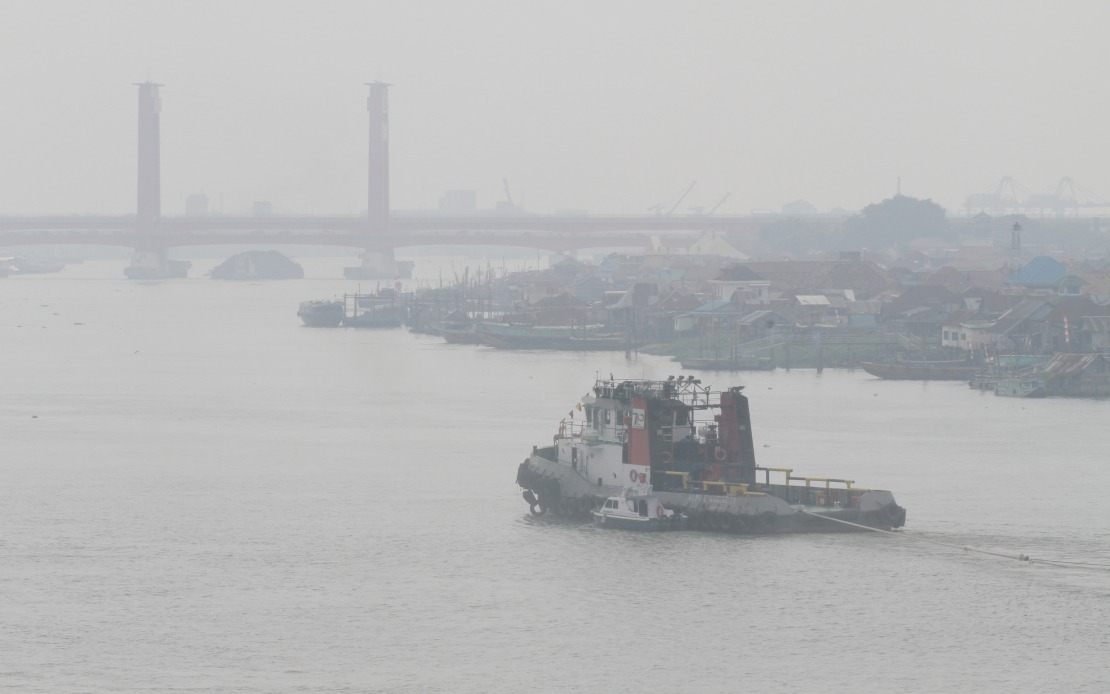
The escalating haze crisis gripping Southeast Asia has prompted Indonesia and Malaysia to deepen their bilateral coordination, with both nations now focusing on weather modification as a frontline intervention strategy to mitigate the catastrophic effects of ongoing forest fires. The announcement underscores the urgency facing the region as smoke from burning peatlands and agricultural areas in West Kalimantan has already degraded air quality across Sarawak and multiple Malaysian states, with some areas recording Air Pollutant Index readings approaching hazardous thresholds that threaten public health on both sides of the border.
According to Berton Panjaitan, Acting Head of the National Disaster Mitigation Agency's Data, Information, and Disaster Communication Centre, the two governments have moved beyond preliminary discussions and are now operationalizing concrete measures to address the transboundary pollution crisis. The bilateral framework extends across three complementary pillars: prevention mechanisms to reduce fire ignition, ongoing monitoring systems to track pollution movement, and active weather modification operations along the Malaysia-Indonesia border zones. This multi-layered approach reflects growing recognition that reactive firefighting alone cannot adequately contain the scale of the current emergency, particularly given the geographic challenges and resource constraints typical of large-scale fire suppression in tropical peatland environments.
Malaysia's Environment Minister Arthur Joseph Kurup achieved a significant diplomatic breakthrough when he secured Indonesian airspace access for Malaysian cloud-seeding aircraft, a concession that removes a crucial operational barrier to weather modification efforts. This permission, granted by Indonesian Environment Minister Jumhur Hidayat during bilateral discussions on August 24, represents a notable escalation from previous years when such coordination faced greater friction. The approval enables Malaysian teams to conduct cloud-seeding missions more efficiently without the delays and complications previously associated with seeking clearance for individual sorties, allowing for more rapid deployment when atmospheric conditions favour precipitation formation.
The severity of the current situation becomes evident when comparing it to regional patterns from recent years. Officials at the Malaysian Consulate in Pontianak reported that 2024 and 2025 were largely free from severe haze events, creating a false sense of complacency about the region's ability to contain fire-related air pollution. This year's dramatic deterioration has shattered that assumption, with West Kalimantan experiencing significantly worsened conditions that have cascaded across maritime borders into Malaysian territory. The resurgence of severe transboundary haze demonstrates that the underlying drivers—peatland vulnerability, agricultural conversion practices, and seasonal drought cycles—remain fundamentally unresolved despite years of bilateral agreements and regional frameworks.
The air quality measurements provide stark evidence of the crisis's intensity. Sarawak areas have recorded API readings as high as 195, approaching the 201-plus threshold that constitutes very unhealthy air conditions warranting emergency public health measures. Beyond Sarawak, the pollution has spread to affect Kuala Lumpur, Selangor, Penang, Kedah, and Perak, indicating that the haze is no longer confined to border regions but has penetrated Malaysia's population centres. This geographic dispersion means that millions of Malaysians across multiple states are experiencing degraded air quality simultaneously, creating cumulative pressure on healthcare systems and economic productivity as workers adopt protective measures and outdoor activities cease.
Malaysia has signalled openness to providing direct firefighting assistance beyond cloud-seeding operations, though Indonesia has not yet formally requested water-bombing assets or personnel deployment. This measured approach reflects the diplomatic sensitivities involved in cross-border firefighting operations, where operational coordination, liability issues, and sovereignty considerations require careful management. Both nations are proceeding through established bilateral mechanisms rather than improvised emergency protocols, suggesting institutional learning from previous haze crises that underscored the importance of clear frameworks and prior agreements. However, officials indicated that mechanisms exist to rapidly escalate to direct firefighting support if Indonesia determines that fire suppression requires external resources beyond its current capacity.
The Malaysian diplomatic corps in Kalimantan is operating under heightened alert to protect the 577 registered Malaysian nationals scattered across the province, predominantly expatriates employed in resource and agricultural sectors. The consulate has implemented emergency protocols including mandatory mask usage, transition of educational institutions to online delivery, and restrictions on non-essential outdoor movement. These measures address not only immediate health risks from particle inhalation but also the broader disruptions to daily life and economic activity that severe haze creates. The consulate's previous track record of supporting Indonesian firefighting efforts—including donation of six water pumps to West Kalimantan's provincial administration in 2023—demonstrates that Malaysian assistance often flows through institutional channels rather than high-profile government mobilizations.
The underlying tension in this crisis reflects a perennial regional challenge: how to address environmental problems that originate from land-use decisions by private actors and regional governments in one country but impose health and economic costs on neighbouring populations. Indonesian actors operating palm oil plantations, timber concessions, and agricultural enterprises often bear no direct cost for the transboundary pollution they generate, creating moral hazard and misaligned incentives around land management practices. Weather modification and firefighting, while necessary emergency responses, do not address root causes—the conversion of carbon-rich peatlands into economically productive but fire-prone landscapes, inadequate land management oversight, and insufficient fire prevention investment during dry seasons.
The weather modification approach, while operationally promising in the short term, remains scientifically contested and resource-intensive. Cloud-seeding requires specific atmospheric conditions including adequate moisture content and appropriate cloud formations; it cannot guarantee precipitation and often requires multiple sorties to achieve modest cumulative effects. Malaysia and Indonesia are investing in this technology partly because the alternatives—restricting agricultural expansion, enforcing stricter environmental standards, or accepting periodic severe haze—appear politically costlier or economically unacceptable to influential constituencies. The bilateral focus on weather modification therefore represents a pragmatic but potentially insufficient response to structural environmental vulnerabilities that will require deeper transformations in land-use governance to permanently resolve.
The August 24 agreement between Arthur Joseph Kurup and Jumhur Hidayat represents both progress and continuity in Malaysia-Indonesia environmental diplomacy. Both nations have established institutional mechanisms for addressing transboundary haze through the ASEAN Agreement on Transboundary Haze Pollution and bilateral frameworks dating back decades. Yet successive haze events demonstrate that institutional agreements have not prevented recurrence or substantially reduced severity, suggesting that coordination mechanisms alone cannot overcome the fundamental economic incentives driving land conversion in fire-prone environments. The current escalation to include weather modification and expanded air access reflects acknowledgment that previous measures, while necessary, have proven insufficient.
Looking forward, the effectiveness of the Malaysia-Indonesia weather modification partnership will depend on sustained political commitment, adequate resource allocation, and integration with broader fire prevention measures within Indonesia. Malaysian policymakers should recognize that bilateral coordination, however well-intentioned, cannot indefinitely substitute for addressing the root causes of fire risk in Kalimantan's agricultural and plantation landscapes. The current haze episode, while creating immediate suffering and economic disruption, simultaneously presents an opportunity to build stronger frameworks for land-use governance, fire prevention incentives, and environmental accountability that could reduce the probability and severity of future transboundary pollution events affecting the entire Southeast Asian region.

