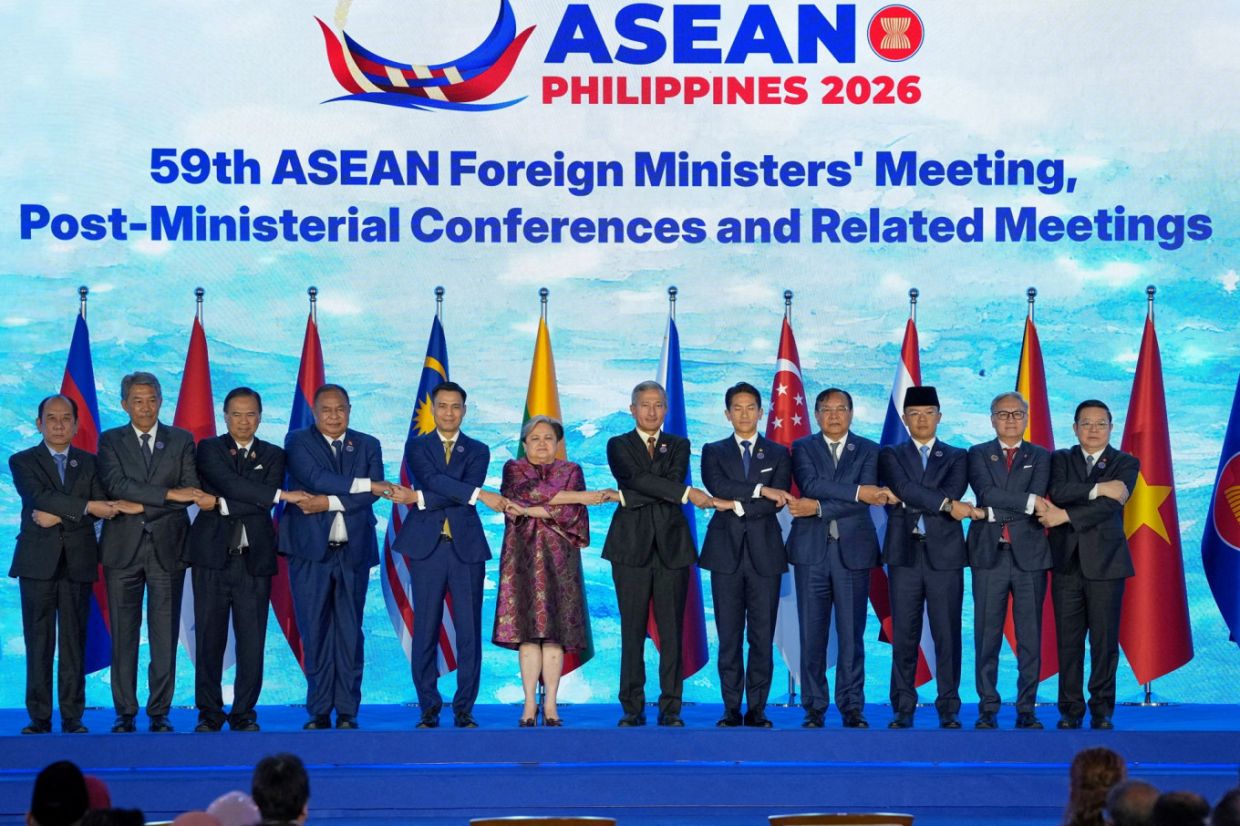
Indonesian Foreign Minister Sugiono has issued a pointed challenge to the Association of Southeast Asian Nations, demanding that the 11-member bloc shift from making promises to demonstrating measurable results on the ground. Speaking at the 59th Asean Foreign Ministers Meeting in Manila, Sugiono posed a direct question to his regional counterparts: can Asean genuinely deliver on what it pledges? The question cuts to the heart of the bloc's legitimacy and influence as it navigates an increasingly fractious geopolitical landscape where external powers seek to expand their influence across Southeast Asia.
The Filipino capital hosted two days of intensive diplomatic meetings that brought regional foreign ministers together to hash out common positions before engaging with Asean's major dialogue partners including the United States, China and Russia. The closed-door sessions revealed the depth of shared concern over multiple interconnected crises threatening the region's stability and prosperity. The bloc confronted immediate practical challenges stemming from the Middle East conflict while simultaneously grappling with longstanding disputes that have resisted resolution for decades.
The economic ramifications of Middle Eastern instability emerged as a central concern for Asean member states, many of which depend heavily on energy imports and maritime trade routes passing through strategically vital waterways. Ministers acknowledged the vulnerability of their nationals working abroad and recognised the knock-on effects on supply chains and energy security. The collective statement issued after deliberations reflected anxiety about cascading socio-economic impacts, particularly for populations already struggling with economic pressures. This acknowledgment underscores how distant conflicts can penetrate deeply into Southeast Asian communities through interconnected global systems.
Indonesia specifically seized upon Middle East tensions to highlight a troubling strategic paradox facing the bloc. As member states seek alternative energy sources, particularly renewable energy infrastructure, some are becoming increasingly dependent on Chinese suppliers and technology. Data showing the Philippines doubling its solar panel imports from China in the first half of this year exemplifies this trend. This deepening economic interdependence with Beijing potentially weakens Asean's collective negotiating position precisely when the bloc needs to press forward on contentious maritime issues in the South China Sea.
The stalled Code of Conduct negotiations for the South China Sea dominated Indonesian concerns. For nearly a quarter-century, Southeast Asian nations have awaited binding rules to govern activity in one of the world's most strategically important and contested waterways. Sugiono's insistence that the region's people have waited 24 years and should not wait another year reflects rising frustration with the glacial pace of negotiations. The Indonesian minister framed this issue not as merely diplomatic theatre but as fundamental to whether Asean can enforce a rules-based order or whether regional conduct will remain determined by raw power.
The philosophical tension underlying these discussions cuts deeper than immediate policy disagreements. Sugiono emphasised that fulfilling Asean's foundational charter depends primarily on preserving regional peace and upholding shared principles of non-interference and respect for sovereignty. Yet the bloc struggles to apply these principles consistently, particularly when major powers have conflicting interests in the region. The contradiction between Asean's aspirational rhetoric and its practical inability to bind all members to unified positions has become increasingly apparent.
Myanmar remained another persistent thorn in Asean's credibility. Ministers devoted a dedicated retreat session to reviewing implementation of the Five-Point Consensus, the bloc's peace roadmap designed to manage the military coup and subsequent humanitarian catastrophe. Yet divisions among member states continue to undermine coherent action. While Philippine Foreign Secretary Theresa P. Lazaro reported that ministers had put forward "progressive" views, the reality suggests Asean remains fractured over how forcefully to pressure Nay Pyi Taw. The decision to review how progress is measured and possibly reform the special envoy mechanism indicates recognition that existing approaches have stalled.
The timing of these discussions highlights Asean's vulnerability to external shocks and the limitations of a consensus-based bloc lacking enforcement mechanisms. The Middle East crisis exposed how external events can simultaneously create pressure on Asean to act decisively while offering individual members incentives to pursue bilateral arrangements outside the bloc framework. When energy security feels threatened, nations naturally gravitate toward direct relationships with suppliers rather than relying on cumbersome regional processes.
For Malaysian and Southeast Asian audiences, these dynamics carry direct implications. Malaysia shares the region's stakes in South China Sea stability and energy security while maintaining complex relationships with both China and Western powers. The success or failure of Asean's current efforts to forge binding maritime rules will shape the security environment for years. The economic interdependencies exposed by Middle East turmoil underscore how regional prosperity increasingly hinges on Asean's capacity to maintain stable relationships with major powers rather than choosing sides in emerging geopolitical competition.
Indonesia's push reflects a broader recognition that Asean faces a legitimacy crisis. The bloc's founding principles of consensus, non-interference and respect for sovereignty remain admirable in theory but increasingly difficult to maintain when members have divergent interests and when external powers seek to exploit divisions. Sugiono's repeated emphasis on delivering concrete results rather than issuing statements signals impatience with the status quo. The implicit warning is that if Asean cannot demonstrate tangible achievements on crucial files like the Code of Conduct and Myanmar policy, the bloc risks becoming irrelevant to the very crises threatening regional stability.
The road ahead remains unclear. The continuation of meetings with dialogue partners would provide opportunities for Asean to coordinate positions with external actors, though this risks further diluting the bloc's independence. The November leaders' meeting deadline for reviewing Myanmar mechanisms suggests Asean recognises the need to show progress before year-end. Yet without mechanisms to enforce compliance or resolve fundamental disagreements among members, Asean's ability to translate commitments into outcomes depends ultimately on whether member states prioritise collective interests over bilateral advantage. Indonesia's challenge amounts to asking whether Asean has sufficient political will to become more than a talking shop.

