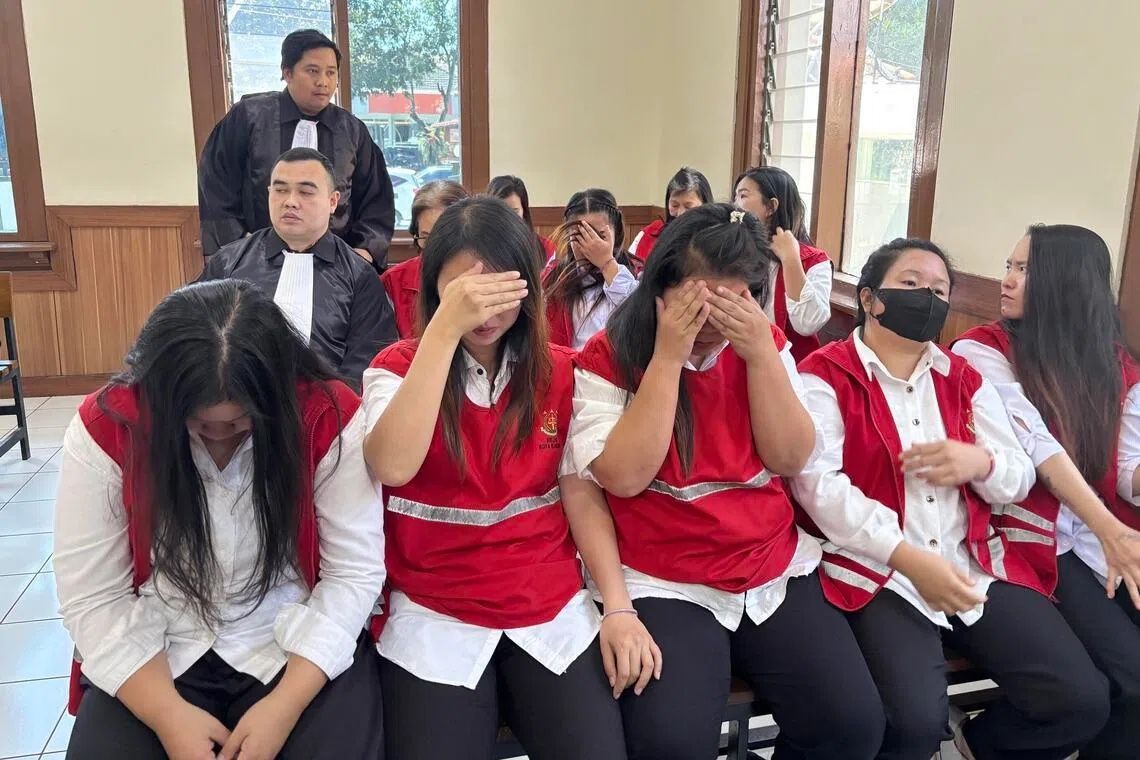
Indonesian prosecutors have called for sentences of up to 10 years imprisonment for members of an alleged baby trafficking syndicate that sold at least 34 infants, including dozens sent to Singapore, in what represents one of the region's most significant cases of organised cross-border human trafficking in recent memory. The demand came on Tuesday at the Bandung District Court, where 19 defendants—18 women and one man—have been undergoing trial since April on charges relating to infant trafficking activities spanning 2023 to 2025.
At the heart of the prosecution's case stands 70-year-old Lie Siu Luan, known by various aliases including Lily and Popo, whom investigators identify as the suspected architect of the entire operation. Prosecutors allege that Lie orchestrated the recruitment of newborns from vulnerable families, orchestrated the preparation of fraudulent documentation, and coordinated the transfer of infants across international borders. The scope of her alleged involvement underscores the sophisticated nature of the trafficking network, which required coordination across multiple jurisdictions and the manipulation of adoption procedures in at least two countries.
The economic dimensions of the trafficking operation reveal the systematic exploitation involved. Prosecutors documented that at least 12 of the 34 trafficked infants were transported to Singapore, with each child commanding a price of between 200 to 250 million rupiah—equivalent to approximately S$18,110 per infant. This pricing structure suggests a highly organised commercial enterprise with established pricing mechanisms and reliable distribution channels, hallmarks of professional criminal syndicates rather than opportunistic trafficking.
Prosecutor Cucu Gantina articulated the legal basis for the charges, seeking a declaration that Lie had been proven guilty of recruiting, harbouring, transferring, and receiving persons for exploitation within Indonesian territory. Beyond the ringleader, prosecutors targeted three other individuals for the maximum 10-year sentence: Astri Fitrinika and Djaka Hamdani, both identified as principal recruiters within the network, and Elin, another alleged recruiter. Additionally, Lai Su Hua faces the same sentence for her role in falsifying state documents essential to the adoption process—a function that demonstrates how the syndicate exploited administrative vulnerabilities to facilitate their operations.
The remaining 14 defendants, who allegedly served as caretakers for the infants awaiting transfer, face prosecution requests for five-year sentences. This tiered sentencing structure reflects the prosecution's assessment of individual culpability and the different roles played within the trafficking hierarchy. The emotional response during the June 30 hearing—with both Lie and Astri weeping as sentences were demanded—provided a stark reminder of the human cost implicit in these proceedings.
Defence counsel have begun challenging core elements of the prosecution's narrative. Sendi Sanjaya, representing Lie, argues that the prosecution has failed to establish the crucial component of exploitation, suggesting instead that the children were physically healthy and their locations identifiable. This defence strategy attempts to reframe the case by questioning whether the conduct constitutes trafficking under Indonesian law, which typically requires proof of intent to exploit. However, this argument appears vulnerable given that the entire structure of the operation—recruitment from vulnerable families, falsified documentation, and sale to foreign nationals—inherently suggests exploitative intent regardless of post-transfer welfare outcomes.
Astri's defence counsel, Hendri Samuel Tampubolon, has adopted a markedly different tactical approach by conceding Astri's involvement while attempting to minimise her culpability by portraying her as subordinate to Lie's control. He expressed disappointment that prosecutors sought equivalent sentences for Astri and Lie, arguing that Astri's cooperation with authorities merited recognition. This differentiation strategy could prove influential during sentencing, particularly if Astri provided actionable intelligence that enabled authorities to dismantle the network.
The genesis of the case reveals how determined individual whistleblowers can expose large-scale criminal operations. The investigation commenced in July 2025 when West Java resident Dani Hidayat reported suspicious activity to authorities. Hidayat had joined a Facebook adoption group while his wife was pregnant, subsequently receiving an unsolicited offer from Astri to purchase his forthcoming child for 8 million rupiah. This seemingly isolated incident unravelled into exposure of a sprawling operation, demonstrating how social media platforms facilitate both legitimate adoption connections and predatory criminal recruitment.
The transnational dimensions of this case have prompted formal cooperation between Indonesian and Singaporean governments. Officials from both nations issued a joint statement in January acknowledging ongoing coordination on the investigation. During trial proceedings, Lie identified four Singaporeans—identified only as Petter, John, Mr Tan, and Mr Chew—as adoption agents working for the syndicate. These individuals allegedly functioned as the essential link connecting Indonesian suppliers to Singaporean clients, suggesting that the trafficking chain extended well beyond mere physical transfer to encompass structured client relationships and sustained distribution networks.
The case exposes significant vulnerabilities within adoption systems in the region. Indonesia's adoption framework appears to have lacked sufficient safeguards to prevent fraudulent documentation and the recruitment of vulnerable pregnant women. The ease with which syndicate members fabricated required documents raises questions about verification procedures within Indonesian family courts and civil registration offices. Similarly, the willingness of alleged Singaporean participants to engage with Indonesian agents without proper due diligence suggests insufficient screening mechanisms on the receiving end.
For Malaysia and other Southeast Asian nations, this case serves as a cautionary illustration of how transnational crime exploits regional proximity and varying regulatory standards. The geographical propinquity of Indonesia, Singapore, and Malaysia, combined with existing migrant networks and porous information flows, creates inherent trafficking vulnerabilities. Malaysian authorities monitoring this prosecution may identify relevant patterns applicable to domestic contexts, particularly regarding the exploitation of social media platforms for criminal recruitment and the falsification of civil status documents.
The trial's continuation with scheduled defence presentations next week will determine whether defence arguments regarding exploitation find judicial acceptance. The outcome will significantly influence how Indonesian courts interpret human trafficking legislation and whether proving commercial transaction and document falsification suffices to establish trafficking liability even absent direct evidence of subsequent exploitation. The verdict will likely reverberate across the region, potentially influencing how other Southeast Asian jurisdictions prosecute similar cases and establishing precedent regarding cross-border trafficking liability.

