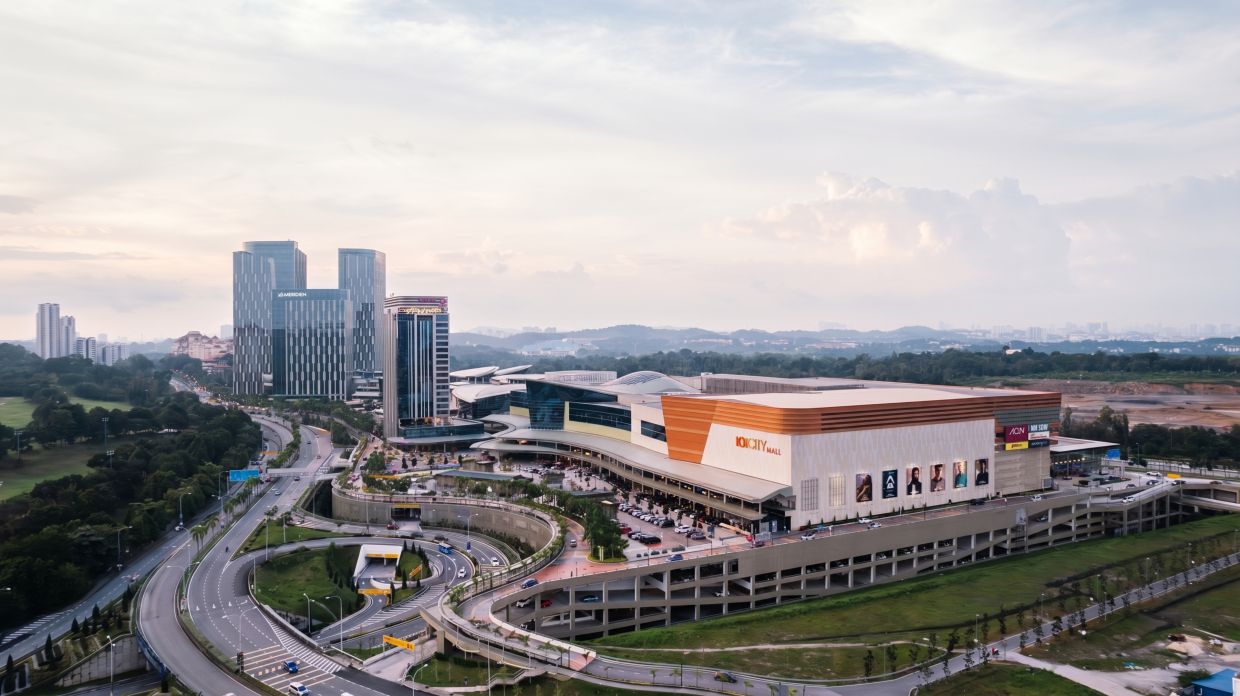
IOI Properties Group has cleared a major regulatory hurdle in its ambitious real estate investment trust ambitions, securing Securities Commission approval for a REIT offering that will monetise some of Malaysia's most recognisable commercial and hospitality landmarks. The listing represents a strategic move to unlock capital from IOIPG's portfolio whilst creating an investment vehicle that grants shareholders and the broader market exposure to high-quality Malaysian property assets across multiple sectors.
The REIT will launch with an initial capitalisation of 5.5 billion units and command a total property portfolio valued at RM7.58 billion. The underlying assets constitute a carefully curated collection spanning retail, office, and hospitality segments. The retail component anchors the offering through IOI City Mall Phases 1 and 2, flagship shopping destinations in the Putrajaya corridor. Complementing this are premium office towers including IOI City Towers and PFCC Towers, which serve as key corporate addresses for multinational firms and regional headquarters seeking grade-A office space in Malaysia's business districts.
The hospitality arm of the portfolio demonstrates diversification across both the luxury and upper-midscale segments. The collection includes Putrajaya Marriott, a five-star property positioned to capture high-value business and leisure travellers visiting Malaysia's federal administrative capital, and its sister property Le Méridien Putrajaya, offering contemporary upscale accommodation. Three additional branded hotels round out the offering: Moxy Putrajaya, targeting the hip millennial and business-focused traveller segment; Four Points by Sheraton Puchong, strategically located in the Klang Valley industrial and commercial zone; W Kuala Lumpur, representing the luxury end of the market; and Courtyard by Marriott Penang, tapping into the northern Malaysian hospitality market.
Financing the acquisition of these assets follows a dual-track structure designed to optimise capital efficiency. IOIPG will issue 5.5 billion consideration units priced at 90 sen each, contributing RM4.95 billion in equity capital to the REIT. The remaining RM2.65 billion will be sourced through Islamic financing via Sukuk issuance, reflecting Malaysia's growing appetite for Shariah-compliant debt instruments and positioning the REIT as an attractive vehicle for faith-based investors throughout Southeast Asia and the broader Islamic finance ecosystem.
The public offering architecture reflects Malaysian regulatory priorities around retail participation and Bumiputera inclusion. The retail component comprises 715.6 million units and encompasses several tranches designed to broaden the investor base. A restricted offer for sale extended specifically to existing IOIPG shareholders provides a pathway for current equity holders to maintain exposure through the REIT vehicle. Allocations to eligible persons—a category encompassing selected institutional clients and high-net-worth individuals—ensure capital-efficient pricing and reduce administrative burden. A dedicated public tranche of 55 million units is reserved exclusively for Bumiputera investors, recognising both the regulatory framework and the government's policy objective to expand Bumiputera participation in capital markets and productive assets.
Institutional investors are catered for separately through an offering of up to 1.48 billion units, split between Bumiputera-approved institutional investors—such as government-linked funds and Bumiputera-controlled asset managers—and conventional institutional investors including pension funds, insurance companies, and international asset managers. This bifurcated approach allows the REIT to tap into Malaysia's substantial institutional capital base whilst maintaining diversity in the shareholder register and supporting broader economic objectives.
The Securities Commission's approval carries several important conditions that reflect the regulator's oversight mandate. Most significantly, IOIPG must maintain Bumiputera equity participation at a minimum threshold of 12.5 percent, ensuring sustained indigenous Malaysian economic involvement in the REIT structure. The commission has also mandated operational audits in the post-listing phase, a measure designed to protect unit holders and maintain transparency standards following the IPO. These conditions are standard in major Malaysian capital markets transactions and demonstrate the regulators' commitment to balancing commercial efficiency with investor protection and economic policy objectives.
For IOIPG, the REIT listing represents a watershed moment in the company's capital markets evolution. The structure allows the property conglomerate to realise substantial value from its real estate holdings without requiring outright asset sales, whilst simultaneously reducing balance sheet leverage and funding capacity constraints. By converting trophy assets into an income-generating trust, IOIPG can appeal to yield-focused investors seeking regular distributions whilst retaining management control and operational involvement with the properties. The move follows a broader global trend wherein mature real estate portfolios are repackaged as REITs to unlock trapped equity and create liquid investment vehicles.
The composition of the underlying portfolio underscores IOIPG's positioning at the premium end of Malaysia's real estate spectrum. The Putrajaya concentration—with its twin shopping centres, office towers, and three branded hotel properties—reflects the federal territory's evolution as a corporate and administrative hub attracting high-quality retail and hospitality demand. The inclusion of assets in the Klang Valley and Penang ensures geographic diversification whilst maintaining focus on high-growth, liquid real estate markets. This geographic and sectoral balance mitigates concentration risk for unit holders whilst providing exposure to Malaysia's strongest property submarkets.
For Malaysian investors, the REIT offers exposure to professionally managed, income-generating real estate without the capital requirements of direct property ownership. Institutional investors gain liquidity and diversification benefits, whilst retail investors benefit from property exposure at an accessible entry price point. The 90-sen consideration unit pricing appears calibrated to appeal to Malaysian retail investors accustomed to unit trust and REIT distributions in the lower price brackets, potentially broadening the investor participation base beyond conventional property investors.
The broader implications extend to Malaysia's capital markets architecture and regional real estate financing trends. A successful IOIPG REIT could catalyse additional REIT listings, particularly from Malaysia's substantial property development sector, which has accumulated valuable completed assets suitable for REIT conversion. The Sukuk component signals growing appetite for Islamic real estate finance, with potential to attract capital from Gulf Cooperation Council sovereign wealth funds and Islamic financial institutions seeking Shariah-compliant Malaysian property exposure. This positioning may ultimately strengthen Malaysia's standing as an Islamic finance centre and deepen integration of domestic property markets with global Islamic capital flows.
The regulatory approval process, whilst straightforward, reflects the maturation of Malaysia's REIT framework and the Securities Commission's capacity to expeditiously process complex securitisation transactions. As IOIPG advances toward the IPO launch phase, investor pricing and market reception will provide key signals regarding institutional and retail appetite for quality Malaysian real estate exposure and the robustness of demand for strategically diversified property portfolios in the current economic environment.

