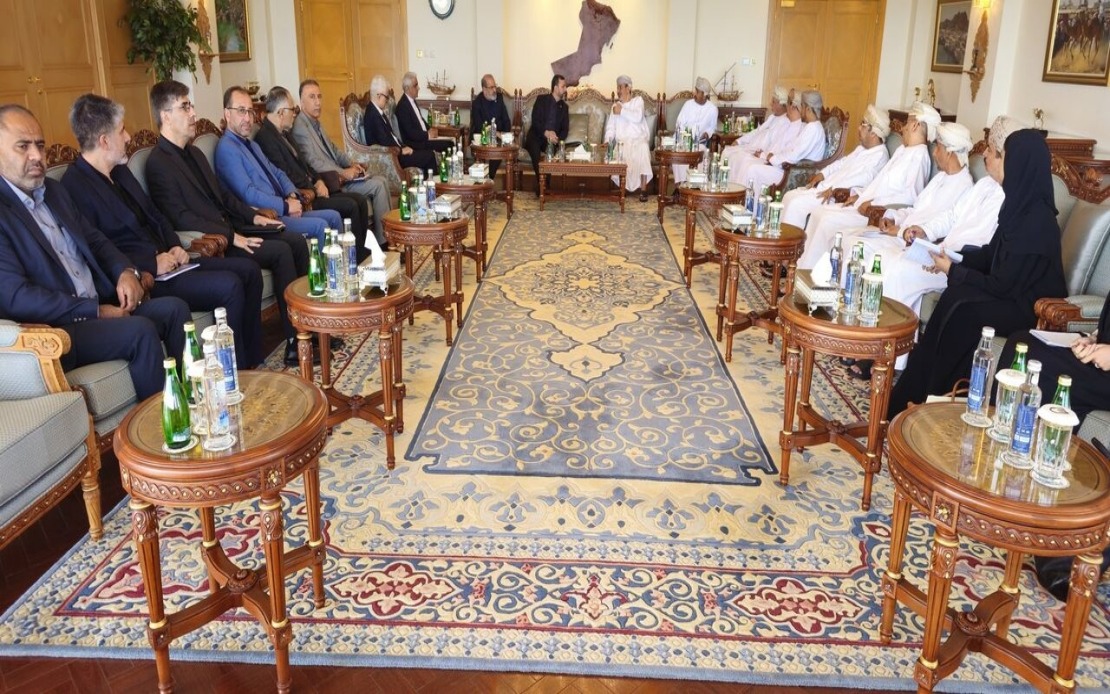
Iran and Oman have taken a significant diplomatic step by convening the inaugural session of the Joint Hormuz Committee, establishing a formal mechanism for bilateral dialogue on one of the world's most strategically crucial waterways. The meeting, held during a visit by Iranian Deputy Foreign Minister for Legal and International Affairs Kazem Gharibabadi to Muscat, represents a tangible outcome of earlier high-level discussions between Tehran and Oman's leadership and signals both nations' commitment to cooperative governance of the Strait of Hormuz.
Gharibabadi met with Oman's Ambassador-at-Large Abdulaziz Al Hinai to launch the joint committee, which has been tasked with addressing pressing issues surrounding the Strait's current operations and developing a framework for its future administration. The meeting came on the heels of a June 23 joint statement issued by both countries' foreign ministries, indicating that preparatory groundwork had already been laid through high-level diplomatic engagement.
The scope of the committee's mandate is both broad and technically complex. Officials used the inaugural session to survey existing challenges affecting the Strait of Hormuz and to initiate a substantive exchange of perspectives on how the waterway should be managed going forward. This dual focus—addressing current operational issues while simultaneously charting a long-term vision—underscores the pragmatic nature of the initiative and suggests both capitals recognise that effective stewardship requires continuous refinement of arrangements.
Critically, both delegations grounded their discussions within established international legal frameworks, specifically referencing Paragraph 5 of the Islamabad Memorandum of Understanding. This deliberate invocation of existing multilateral agreements signals that Iran and Oman are not attempting to circumvent international law but rather to work within recognised protocols that protect the interests of all states, particularly those bordering the Strait. The emphasis on respecting the sovereign rights of littoral states reflects a careful balance between asserting national prerogatives and acknowledging the legitimate interests of other regional powers dependent on safe passage through these waters.
The Strait of Hormuz remains one of the world's most critical maritime chokepoints, with roughly one-fifth of global petroleum passing through its narrow channels annually. For Malaysia and other Southeast Asian economies heavily reliant on stable energy supplies and uninterrupted maritime trade routes, developments affecting the Strait's security and governance carry profound implications. Any arrangements that enhance predictability and reduce tensions in this region directly benefit regional trading partners and energy consumers across Asia.
The bilateral committee structure emerging from these discussions reflects a recognition that durable solutions to maritime governance challenges require sustained dialogue rather than unilateral declarations. By institutionalising regular meetings between Iranian and Omani representatives, both countries have created a forum for managing disputes before they escalate and for building consensus on operational protocols. This institutionalisation is particularly valuable in regions where historical tensions and geopolitical competition can quickly translate into maritime incidents with wider consequences.
Looking ahead, the committee's work programme is ambitious. Officials are tasked with reaching agreement on how shipping services should be provided through the Strait, how associated costs should be distributed, and what mechanisms should govern these arrangements in accordance with international standards. These issues, though technical in appearance, carry substantial political weight, as they touch on questions of cost-sharing, liability, and the degree of control individual littoral states can exercise over traffic flows.
The timing of this initiative carries broader significance within the region's diplomatic landscape. The establishment of the Joint Hormuz Committee reflects a pragmatic approach by both Iran and Oman to managing differences through institutional channels rather than confrontational posturing. For regional observers and stakeholders throughout Southeast Asia watching how the Middle East manages its internal affairs, this development offers a modest but encouraging example of bilateral cooperation transcending historical tensions.
Oman's role as an intermediary and bridge-builder in regional affairs is well-established, and its willingness to partner with Iran on this committee underscores Muscat's strategic interest in ensuring stable conditions for maritime commerce. The sultanate's geographic position and its reputation for diplomatic restraint make it an ideal partner for such initiatives. Iranian participation demonstrates a willingness to engage constructively on maritime governance issues, potentially signalling a broader shift toward practical cooperation on matters of mutual economic interest.
For Malaysia and regional shipping industries, the success of this committee could yield tangible benefits. A transparent, predictable framework for transiting the Strait—established through consensual dialogue rather than unilateral assertion—reduces uncertainty and allows shipping companies to better calculate operational costs and schedules. Enhanced stability also reduces the risk of incidents that could disrupt energy supplies or trigger broader regional crises.
The committee's commitment to basing arrangements on international standards is particularly noteworthy. This language suggests that both countries envision a governance model compatible with established maritime law and practices, rather than a bespoke arrangement serving narrow national interests. Such an orientation increases the likelihood that other maritime powers and regional states will accept and respect whatever frameworks the committee eventually develops.
The success of the Joint Hormuz Committee will ultimately depend on whether participating nations can move from agreeing on principles to implementing concrete operational protocols. The coming months will be critical as the committee undertakes detailed technical discussions. How effectively Iran and Oman navigate these negotiations—balancing sovereignty assertions with pragmatic compromise—will offer important signals about whether institutional cooperation can endure as a governing framework for this strategically vital waterway.

