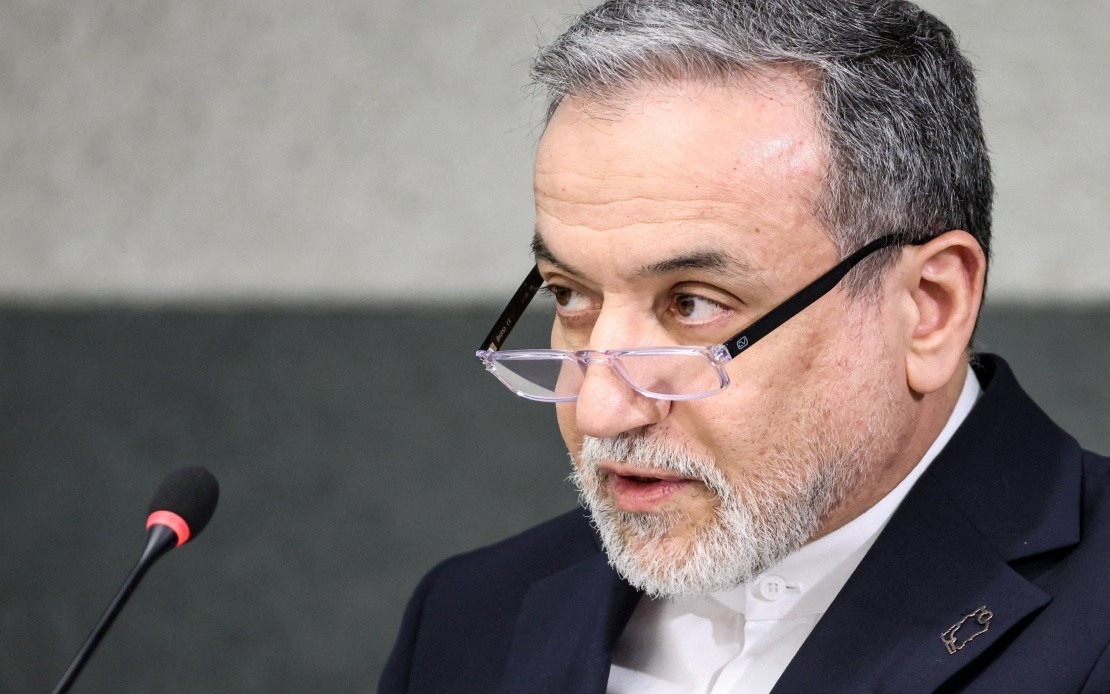
Iran's Foreign Minister Abbas Araghchi has reasserted his country's dominance over the Strait of Hormuz in response to US President Donald Trump's proposal to levy a 20 per cent toll on international shipping. Speaking on X, Araghchi acknowledged the principle that those providing safe passage through the critical waterway deserve compensation, yet rejected the specific tariff rate as excessive and pledged Iran would offer fairer terms. His remarks underscored Tehran's conviction that it alone bears responsibility for security in one of the world's most strategically vital maritime corridors.
Trump's announcement on Monday signalled a dramatic shift in American policy towards the strait, a passage through which roughly one-third of global seaborne traded oil transits annually. The US President declared his administration would blockade Iranian access and implement the toll system to fund American operations in the region. This proposal represents an unprecedented attempt to monetise the provision of maritime security in international waters and has profound implications for global trade, particularly for energy-dependent economies in Southeast Asia and beyond.
Araghchi's response carried a calculated tone of reasonableness mixed with nationalist resolve. By framing compensation for safe passage as a legitimate concept, he appeared to validate the underlying logic of Trump's position while simultaneously rejecting its execution. His insistence that Iran would offer fairer treatment than the proposed 20 per cent suggests Tehran views the Strait of Hormuz as falling within its sphere of influence and security responsibility, a position that derives from both geography and military capability. The Foreign Minister's capitalization of the word "FOREVER" when describing Iran's role as guardian reflected the country's long-term commitment to this geopolitical stance.
The Strait of Hormuz has been a flashpoint in US-Iran relations for decades. Located between Iran and Oman, the waterway narrows to just 21 nautical miles at its critical juncture, making it vulnerable to interference from either major power or non-state actors. Iran has historically leveraged this geographic advantage to project influence and threaten Western interests, particularly during periods of acute tension. The recent escalation in rhetoric and the exchange of attacks between Washington and Tehran highlight how fragile the security equilibrium remains despite efforts by third parties to broker peace.
Pakistan's mediation efforts, which produced a memorandum of understanding aimed at de-escalating tensions and pursuing a lasting settlement, appear to have had limited impact on the underlying trajectory of US-Iran confrontation. The continuation of military exchanges even after such diplomatic overtures suggests that both sides harbour deep mistrust and remain wedded to coercive strategies. For neighbouring countries and global commerce, this volatility creates substantial uncertainty and risk. Any actual implementation of Trump's proposed blockade and toll system could severely disrupt energy markets and supply chains throughout Southeast Asia, where nations like Malaysia depend heavily on Middle Eastern oil and petrochemical imports.
The economic ramifications of such a scheme would ripple across the region. Malaysia and other developing nations would face increased transportation costs for energy imports, potentially driving up fuel and electricity prices and straining government budgets already managing fiscal pressures. Port operators and shipping companies with routes through the strait would need to reassess their operational models and risk assessments. Insurance premiums for vessels transiting the waterway would likely rise substantially, further inflating the cost of trade.
Iran's assertion of guardianship over the strait reflects a nationalist narrative that has deep roots in Persian history and modern geopolitics. Tehran views the waterway as an extension of its territorial interests and has invested considerable resources in naval capabilities to enforce this claim. The Quds Force and Iranian Revolutionary Guard Corps Navy have repeatedly conducted exercises and demonstrations of force in the region to underscore this commitment. Araghchi's public statement serves both a domestic audience eager for assertions of national sovereignty and an international community watching how Iran will respond to American pressure.
The framing of the dispute around compensation also raises interesting questions about the nature of international maritime law and custom. Historically, the principle of freedom of navigation has governed passage through international straits, backed by the United Nations Convention on the Law of the Sea. Neither the United States nor Iran has fully ratified this convention, yet both invoke its principles selectively. Trump's toll proposal would essentially overturn this established framework through unilateral action, setting a precedent that could destabilise international shipping globally if other powers attempt similar schemes.
For Malaysia and the Southeast Asian region, the unfolding situation underscores the vulnerability of smaller nations to great power rivalries in critical strategic zones. The Strait of Hormuz's centrality to global energy security means that disruptions there directly affect prosperity and stability thousands of kilometres away. Malaysia's own experience with regional tensions, including navigational challenges in the South China Sea, provides perspective on how geopolitical disputes can complicate maritime trade. Regional governments have expressed concern about avoiding entanglement in US-Iran conflicts while protecting their vital economic interests.
The path forward remains uncertain. If Trump's administration implements the blockade and toll system, Iran would face acute pressure to either comply, escalate militarily, or seek alternative revenue mechanisms through attacks on shipping or threatening regional allies. Each scenario carries risks for international commerce and Middle Eastern stability. Conversely, if the proposal remains rhetorical posturing, it may simply deepen the cycle of escalatory rhetoric that characterises contemporary US-Iran relations. Araghchi's measured response suggests Tehran may seek to negotiate rather than immediately respond with force, yet the underlying tensions suggest that the Strait of Hormuz will remain a focal point of geopolitical contest in coming months.

