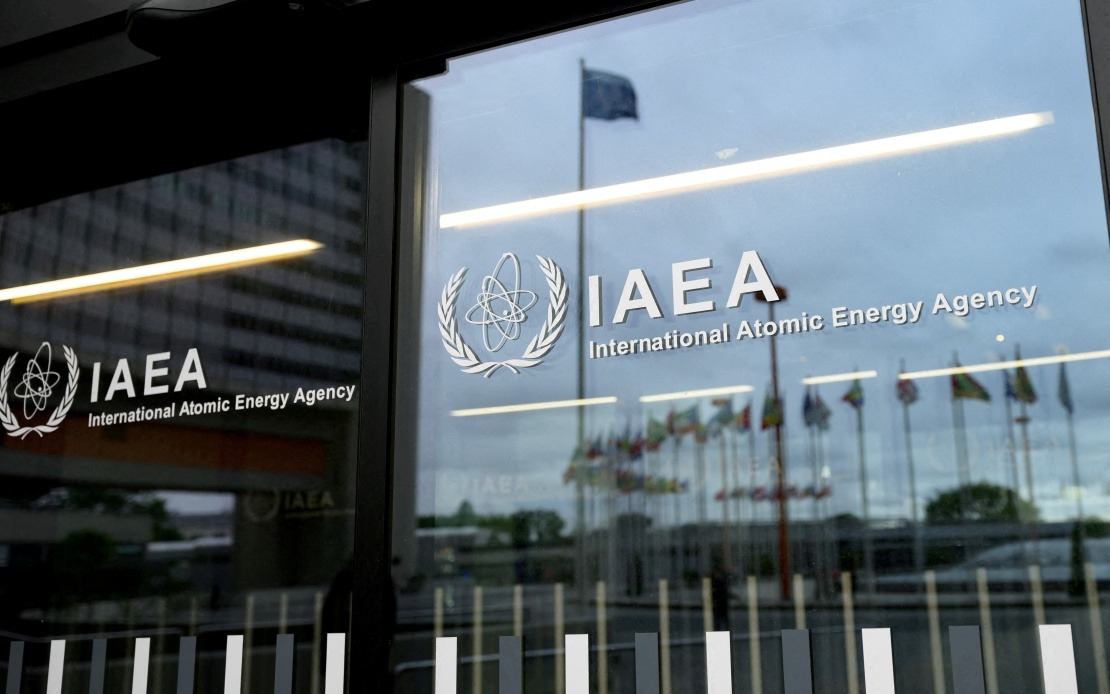
Iran has firmly rejected moves by the International Atomic Energy Agency to inspect its nuclear facilities, declaring that such access will only be negotiated as part of a comprehensive final agreement with the United States. The hardline stance emerged on Wednesday when Iranian Deputy Foreign Minister for Legal and International Affairs Kazem Gharibabadi took to social media to clarify Tehran's position, indicating that questions surrounding facility access and nuclear materials oversight must be settled exclusively within the framework of direct US-Iran negotiations, not through the IAEA's independent verification mechanisms.
Gharibabadi's statement represents a significant hardening of Iran's negotiating posture, particularly in response to recent comments from IAEA Director General Rafael Grossi, who suggested inspections would proceed based on a peace memorandum signed between Washington and Tehran on June 18. The Iranian diplomat made clear that any such IAEA activity would depend entirely on the United States first demonstrating concrete commitment by lifting all economic sanctions, a precondition that underscores Tehran's determination to leverage every element of the nuclear dispute for maximum concessions.
The standoff complicates what was supposed to be a structured negotiation framework. Under the June 18 memorandum of understanding, both parties committed to 60 days of intensive talks aimed at finalizing a comprehensive nuclear agreement and achieving sanctions relief. The first round of negotiations convened in Switzerland over the weekend, bringing together delegations from both nations in what observers hoped would represent a genuine diplomatic opening after months of military escalation across the Middle East.
Gharibabadi's comments also addressed another point of friction: he denied that any recent meeting had taken place between Iran's negotiating team and Grossi in Switzerland, despite the IAEA chief's apparent request for such engagement. This denial suggests Tehran is seeking to isolate nuclear talks from the IAEA's traditional oversight role, positioning the agency as subordinate to the bilateral US-Iran negotiation process rather than as an independent verifier of Iranian compliance.
The backdrop to these tensions is the recent military conflict that has devastated Iranian nuclear infrastructure. Iran's three principal nuclear installations—the Fordow enrichment facility, the Natanz uranium processing centre, and the Isfahan nuclear technology hub—all sustained significant damage in June 2025 when the United States conducted sustained bombing campaigns. These same sites have been repeatedly targeted since hostilities resumed in late February this year, with both American and Israeli strikes aimed at degrading Iranian nuclear and military capabilities.
For Malaysian readers and Southeast Asian observers, this dispute carries implications for regional stability. Iran's refusal to cooperate with IAEA inspections heightens international concerns about nuclear proliferation in the Middle East, an unstable region whose conflicts have historically disrupted global energy markets and international shipping through strategic waterways upon which East Asian economies depend heavily. The apparent breakdown in nuclear verification mechanisms also raises questions about whether any future US-Iran agreement will be sufficiently transparent to satisfy international concerns.
The Iranian strategy appears designed to extract maximum value from current geopolitical circumstances. By conditioning IAEA access on prior American concessions regarding sanctions, Tehran is signalling that it views nuclear transparency not as a confidence-building measure to be implemented during negotiations, but as a bargaining chip to be deployed at the final stage. This positions verification and inspection access as rewards for American compliance rather than prerequisites for agreement.
The significance of these positions extends beyond nuclear matters into broader questions about how major powers manage verification of international agreements. If Iran successfully insists that the IAEA operate only within parameters set by the bilateral US-Iran negotiation, it may establish a precedent that weakens the agency's independence and its capacity to provide objective technical assessment of nuclear programmes. This could have cascading effects on how other nations view IAEA inspections and compliance obligations.
The humanitarian and economic dimensions also warrant attention. The destruction of Iran's nuclear research facilities has disrupted civilian medical isotope production and scientific research programmes, affecting hospitals and research institutions across the region. Iran has repeatedly claimed that strikes on these sites violate international humanitarian law and constitute attacks on civilian infrastructure, charges the United States and Israel dispute by characterizing the facilities as components of weapons development programmes.
Looking ahead, the 60-day negotiation window established by the June 18 memorandum represents a critical juncture. If the IAEA remains excluded from the process, international confidence in any resulting agreement may prove fragile, particularly among nations concerned about nuclear non-proliferation. Conversely, if the United States capitulates to Iranian demands for sanctions removal before verification mechanisms are in place, Washington's negotiating leverage would be substantially diminished, potentially undermining the credibility of American security commitments throughout East Asia and beyond.
The coming weeks will be crucial in determining whether the current diplomatic opening can bridge these fundamental disagreements about transparency and verification, or whether the positions staked out by both parties will harden further, pushing the region closer toward renewed military confrontation.

