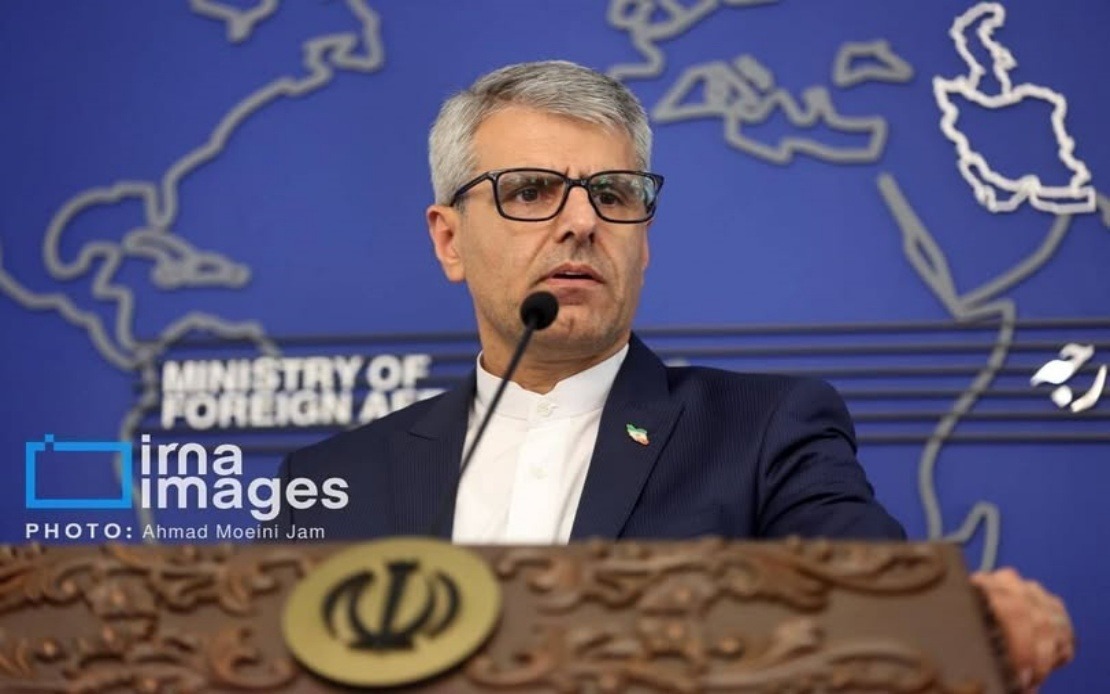
Iran has intensified its diplomatic push demanding that the United States establish a binding timeline for Israel's complete withdrawal from occupied Lebanese territories, framing the matter as fundamental to implementing the recently signed memorandum between Tehran and Washington. Speaking at a news briefing in Istanbul, Iranian Foreign Ministry spokesman Esmaeil Baqaei articulated Tehran's position that military de-escalation in Lebanon and the cessation of Israeli operations cannot be separated from broader efforts to stabilize the region and establish durable peace arrangements.
Baqaei underscored Iran's conviction that any final agreement securing regional stability must incorporate specific provisions protecting Lebanon's sovereignty and territorial integrity. Beyond these immediate territorial concerns, he stressed that ensuring the dignity and security of the Lebanese population represents an indispensable element for cementing the durability of any accord negotiated between Tehran and Washington. This framing reflects Iran's strategy of linking Lebanon's fate directly to the success of the broader memorandum, thereby leveraging diplomatic pressure on Washington to influence Israeli military posture.
The Iranian official emphasized that Tehran has consistently elevated the Lebanon question to the highest priority throughout successive rounds of negotiations, appearing prominently in both an April ceasefire understanding and the June 18 memorandum signed between Iran and the United States. By placing demands for an end to Israeli military operations in Lebanon alongside requirements for cessation of operations targeting Iran itself, Tehran has signaled that progress on one track cannot occur without progress on the other. This interconnected approach represents a significant negotiating tactic, as it broadens the scope of discussions beyond purely bilateral Iranian-American concerns to encompass regional stability writ large.
Baqaei further called upon Washington to translate its commitments under the memorandum into concrete diplomatic action, specifically urging the US to deploy its influence to compel Israel to halt military activities across Lebanese territory. The spokesman's language—demanding that Washington "take all necessary measures" to force Israeli compliance—suggests Iranian frustration with perceived American passivity or insufficient leverage over Israeli decision-making. For Malaysia and other regional observers, this dispute highlights ongoing tensions between stated American commitments to diplomatic solutions and the practical challenges of constraining Israeli military operations through diplomatic channels alone.
The Iranian government has specifically requested that Washington establish a "timetable for unconditional withdrawal from occupied Lebanese territories," a formulation that deliberately avoids conditional language and emphasizes Iran's expectation of unambiguous Israeli compliance. The use of "unconditional" reflects Tehran's negotiating position that Israeli withdrawal should not be contingent upon Lebanese military restructuring, disarmament of militant groups, or other demands that might complicate implementation. This stance differentiates Iran's approach from previous international frameworks that typically included reciprocal conditions and phased implementation schedules.
Mohammad Bagher Qalibaf, serving simultaneously as Iran's Parliament Speaker and chief negotiator, reinforced these demands through direct communication with Lebanese Parliament Speaker Nabih Berri, affirming Tehran's serious commitment to concluding the Lebanon conflict. According to Iranian media accounts, Qalibaf identified the Lebanon situation as a central discussion point during recent talks held in Switzerland, indicating that Israeli withdrawal and Lebanese territorial restoration occupy a prominent place in ongoing Iran-US negotiations. This dual-track approach—combining high-level diplomatic messaging with parallel communications to Lebanese leadership—demonstrates Iran's effort to maintain pressure on multiple fronts while ensuring that Lebanese stakeholders remain engaged in the diplomatic process.
Qalibaf characterized the Lebanon provisions as forming a central component of the first clause of what Iranian officials term the "Islamabad memorandum," referencing the broader 14-point understanding between Iran and the United States. The Iranian negotiator revealed that following Iranian objections regarding alleged violations of this provision, the parties agreed to establish a conflict-control unit comprising representatives from Iran, the United States, and Lebanon. This trilateral monitoring mechanism represents an innovative institutional response to implementation concerns, though its effectiveness will depend significantly upon the goodwill and compliance of all participating parties.
The Iranian Parliament Speaker articulated the overarching Iranian objective as "ending the war in Lebanon, returning displaced people to their homes, ending the occupation and securing the withdrawal of the Zionist regime from Lebanese territory." This formulation connects military withdrawal to humanitarian concerns, emphasizing the displacement crisis and economic devastation that continued conflict inflicts upon Lebanese civilians. For Southeast Asian governments monitoring Middle Eastern developments, this humanitarian framing represents an important dimension that extends beyond purely strategic calculations and touches upon civilian welfare and refugees—concerns that resonate across the region.
The diplomatic intensity surrounding Lebanon reflects the issue's critical importance within the broader Iran-US memorandum framework. Rather than treating Lebanon as a peripheral concern, Iranian officials have elevated it to co-equal status with direct Iranian security interests, a positioning that reflects either genuine concern for Lebanese welfare or sophisticated strategic calculation that linking Lebanon to Iranian demands increases Tehran's negotiating leverage with Washington. The establishment of trilateral monitoring mechanisms suggests both parties recognize implementation challenges ahead and the necessity of institutionalized oversight to prevent backsliding or disputes over compliance interpretation.
For regional observers including Malaysia, these developments underscore the complex interconnections between various Middle Eastern conflicts and the difficulty of achieving compartmentalized solutions. The Iranian approach of bundling Lebanese concerns with broader memorandum provisions means that any breakdown in implementing Lebanese elements could jeopardize the entire understanding. Conversely, the willingness to establish monitoring mechanisms suggests measured optimism that structured frameworks can manage implementation even amid ongoing tensions. The coming weeks will prove whether Washington possesses sufficient influence over Israeli decision-making to meet Iranian timelines and whether the conflict-control unit can function effectively amid the region's deep political divisions.

