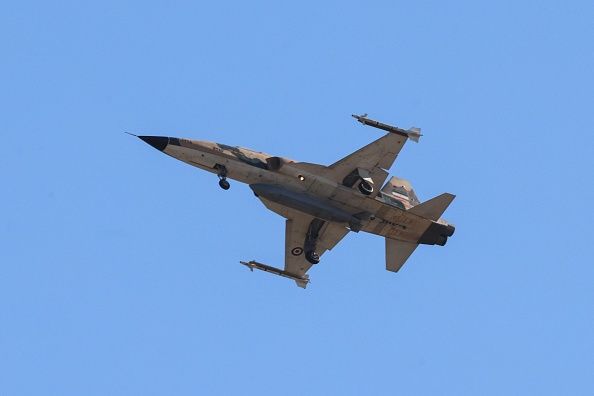
Tensions between Iran and its Gulf neighbours have intensified over the status of Iranian military personnel, with Tehran challenging accounts from both Qatar and Kuwait regarding individuals in their custody. An Iranian military commander disclosed on Sunday that a fact-finding delegation has been attempting to enter Qatar for months to verify the circumstances surrounding Iranian pilots whose aircraft strayed into Qatari airspace last March, according to reporting from Iran's semi-official Tasnim news agency.
The dispute centres on fundamentally contradictory narratives about what transpired following the March incident. Qatar's official position, announced on Saturday, maintains that search and rescue operations located the remains of one pilot after an Iranian aircraft breached its airspace and failed to respond to communications attempts. Doha contends it has made appropriate diplomatic overtures by notifying Tehran of the discovery and extending an invitation for Iranian officials to review comprehensive details of its search and rescue efforts, though it claims to have received no substantive response from Tehran.
Mohammad Baqerzadeh, who leads the Committee for the Search for Missing Persons within Iran's Armed Forces General Staff, has adopted a markedly more assertive stance. Rather than accepting Qatar's account, he alleges that Qatari officials have engaged in deliberate obstruction, repeatedly postponing scheduled investigations and preventing the return of deceased pilots to Iran. His assertions suggest a breakdown in diplomatic communication between the two nations, with each accusing the other of failing to cooperate in good faith on what should be a humanitarian matter.
The Iranian commander has specifically requested intervention from the International Committee of the Red Cross, signalling Tehran's willingness to escalate the matter to international oversight. This appeal to a neutral third party reflects Iran's apparent frustration with bilateral channels and signals to the international community that Iran views the situation as requiring external mediation. The involvement of such bodies typically indicates that one party perceives obstructionism or lacks confidence in direct negotiations.
The grievances extend beyond Qatar's borders. Baqerzadeh has simultaneously levelled accusations at Kuwait regarding four Iranian nationals whose detention has become another source of regional friction. According to Iran's official narrative presented in May, these individuals were affiliated with the Islamic Revolutionary Guards Corps and were conducting routine maritime patrol operations when a navigation system malfunction inadvertently caused their vessels to enter Kuwaiti territorial waters. This account portrays the detention as resulting from a technical mishap rather than deliberate hostile intent.
Kuwait's version of events presents a starkly different characterization of the same individuals and circumstances. Kuwaiti authorities have asserted that the four were suspected of planning hostile actions against the country, a claim substantially more serious than Iran's navigation failure explanation. This fundamental disagreement over the nature and intent of the four individuals underscores how regional disputes frequently involve competing narratives that serve the strategic interests of each nation involved.
The accumulation of these incidents reflects broader regional tensions between Iran and Gulf Arab states, particularly those aligned with Western powers and the Abraham Accords framework. Qatar's position as a mediator in regional affairs, evidenced by its hosting of American military installations and its diplomatic engagement across sectarian and national lines, complicates its role in this dispute. Kuwait, meanwhile, maintains closer security ties with Western powers and has historically viewed Iranian activities with considerable suspicion, particularly those involving military and paramilitary forces.
For Malaysian and Southeast Asian observers, these developments carry implications for regional stability and maritime security. The disputed incidents highlight risks associated with military aircraft operations and naval activities in congested airspace and contested waters. If smaller nations like Qatar and Kuwait feel compelled to adopt hardline stances toward Iranian military presence, it could escalate tensions and potentially trigger miscalculations with broader consequences for freedom of navigation and international commerce passing through Gulf waterways.
The Iranian insistence on conducting independent investigations and calling for Red Cross involvement suggests Tehran intends to maintain pressure on both nations through multiple diplomatic channels simultaneously. This multi-pronged approach keeps the issues prominent in international discourse whilst avoiding the appearance of capitulation. The refusal to accept the accounts provided by Qatar and Kuwait indicates that Iran views the outcomes as unsatisfactory and potentially as evidence of concealment.
The humanitarian dimensions of these disputes deserve particular attention. Regardless of the geopolitical animosities between nations, the location and proper treatment of deceased military personnel and the welfare of detainees represent fundamental humanitarian concerns that transcend political calculations. The apparent inability of these three Muslim-majority nations to cooperate on such matters reflects the depth of their mutual suspicions and the weakness of institutional mechanisms for resolving disputes within the Gulf region.
Moving forward, the trajectory of these cases will depend on whether direct negotiations between Tehran and its counterparts can resume productively, or whether disputes become frozen in mutual recrimination. International bodies like the Red Cross may prove essential in bridging communication gaps and establishing facts that both sides can accept. The outcomes will likely influence Iran's approach to future interactions with Gulf Arab states and may establish precedents for how similar incidents are handled in this strategically vital region.

