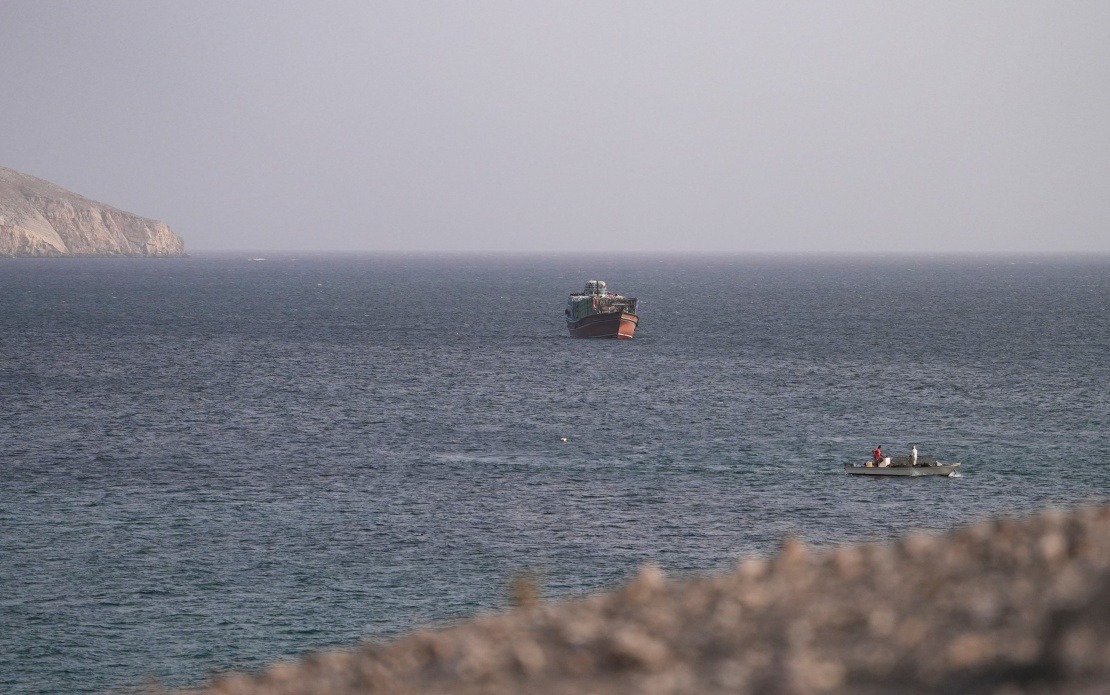
Iran and Oman are moving toward completion of an agreement that would establish fresh arrangements for merchant vessels navigating the Strait of Hormuz, one of the world's most critical maritime corridors. Deputy Foreign Minister Kazem Gharibabadi disclosed the progress on Wednesday, indicating that negotiations between the two neighbouring states have entered their concluding phases. The development signals a potentially significant shift in how the strategic waterway—through which roughly one-fifth of global oil trade passes daily—will be managed operationally.
The envisioned arrangement fundamentally departs from the status quo maintained over the past six decades, according to Gharibabadi's characterization. Rather than representing a complete reopening of the Strait of Hormuz, the accord introduces what Tehran describes as an innovative framework. Under this model, a substantial share of commercial traffic would route through Iranian territorial waters, effectively reconfiguring the shipping patterns that have defined the passage since the 1960s. This recalibration carries implications for maritime commerce throughout the Gulf and beyond, particularly for nations dependent on unimpeded energy flows from the region.
The question of whether Iran will levy transit fees on vessels traversing its designated waters remains unresolved, Gharibabadi indicated. Such a determination would rest with Iran's highest decision-making authorities and would also be contingent upon how the United States behaves in the coming period. This conditional framing reveals how closely tied the Strait of Hormuz question has become to broader US-Iran relations and nuclear negotiations. The withholding of a firm stance on fees suggests Tehran is reserving leverage for ongoing talks with Washington, potentially using the fee question as a bargaining chip in wider diplomatic discussions.
Significantly, Gharibabadi confirmed that Tehran has received indirect communications suggesting Washington's willingness to resume compliance with earlier undertakings, though he refrained from elaborating on which specific commitments or the channels through which these messages were transmitted. The oblique reference almost certainly concerns the 2015 nuclear deal, formally known as the Joint Comprehensive Plan of Action (JCPOA), which the United States abandoned in 2018 under the Trump administration. The prospect of a potential agreement materializing within days underscores the accelerating pace of diplomatic activity, though substantial hurdles remain before any breakthrough.
For Southeast Asian nations, particularly those with significant maritime trading interests and energy dependencies, the Strait of Hormuz arrangements carry direct relevance. Malaysia, Singapore, and other ASEAN members rely on stable passage through these waters for their own commercial shipping and energy imports. Any shift in how the corridor operates could influence insurance costs, shipping timelines, and overall supply chain reliability. The introduction of Iranian territorial routing and potential fee structures would reshape the economic calculus for regional traders and energy consumers reliant on Gulf supplies.
The timing of the Iran-Oman negotiations coincides with broader attempts to de-escalate Middle Eastern tensions. Oman has historically positioned itself as a neutral intermediary and diplomatic interlocutor between Iran and Western powers, making it a logical partner for structuring new operational arrangements. The sultanate's geographic proximity and established channels with both Tehran and international maritime stakeholders position it well to facilitate agreement on technical shipping protocols and governance mechanisms.
The distinction Gharibabadi drew—that the arrangement does not constitute full reopening but rather a reconfigured passage—suggests a calibrated approach seeking to satisfy Iranian interests without triggering international pushback. A completely militarized or heavily restricted Strait would disrupt global energy markets and provoke coordinated international opposition. By framing the new model as a commercial arrangement under Iranian sovereignty, Tehran presents the agreement as a legitimate exercise of state authority rather than a destabilizing assertion of dominance.
The potential involvement of the United States in parallel negotiations introduces complex variables. Any reciprocal American steps toward JCPOA re-engagement would likely encompass broader regional questions beyond nuclear arrangements, including maritime security and freedom of navigation. Washington has historically maintained strong interest in ensuring unobstructed passage through the Strait, viewing it as essential to global economic stability and regional balance. Whether US participation signals movement toward comprehensive normalisation or represents narrower tactical accommodation remains unclear from available information.
For global energy markets and shipping industries, the coming days will be consequential. The finalisation of Iran-Oman arrangements, whether accompanied by US re-engagement or proceeding independently, would establish new baseline conditions for one of Earth's most economically vital waterways. Insurance providers, shipping companies, and oil traders will scrutinise the agreement's technical details and enforcement mechanisms. Any ambiguity regarding fee structures, routing obligations, or security protocols could introduce uncertainty that ripples through global supply chains.
The geopolitical context cannot be divorced from these maritime negotiations. Tensions over Iran's nuclear programme, regional proxy conflicts, and competition for Gulf influence have all shaped the current environment. A successful agreement between Iran and Oman, potentially accompanied by American steps toward normalisation, would represent a notable reorientation of Middle Eastern power dynamics. Such developments could influence not only shipping patterns but also broader regional security calculations and the positioning of various state actors throughout the Gulf and beyond.
Moving forward, international observers will monitor both the substantive terms of any Iran-Oman accord and the broader diplomatic signals it conveys. Should Washington indeed reciprocate with steps toward JCPOA restoration within the timeframe Gharibabadi suggested, the cumulative effect could mark a significant thaw in confrontational US-Iran relations that have defined the past several years. For maritime-dependent economies and regions reliant on Gulf energy supplies, such developments warrant close attention, as they will ultimately determine the cost, reliability, and security of critical international commerce.

