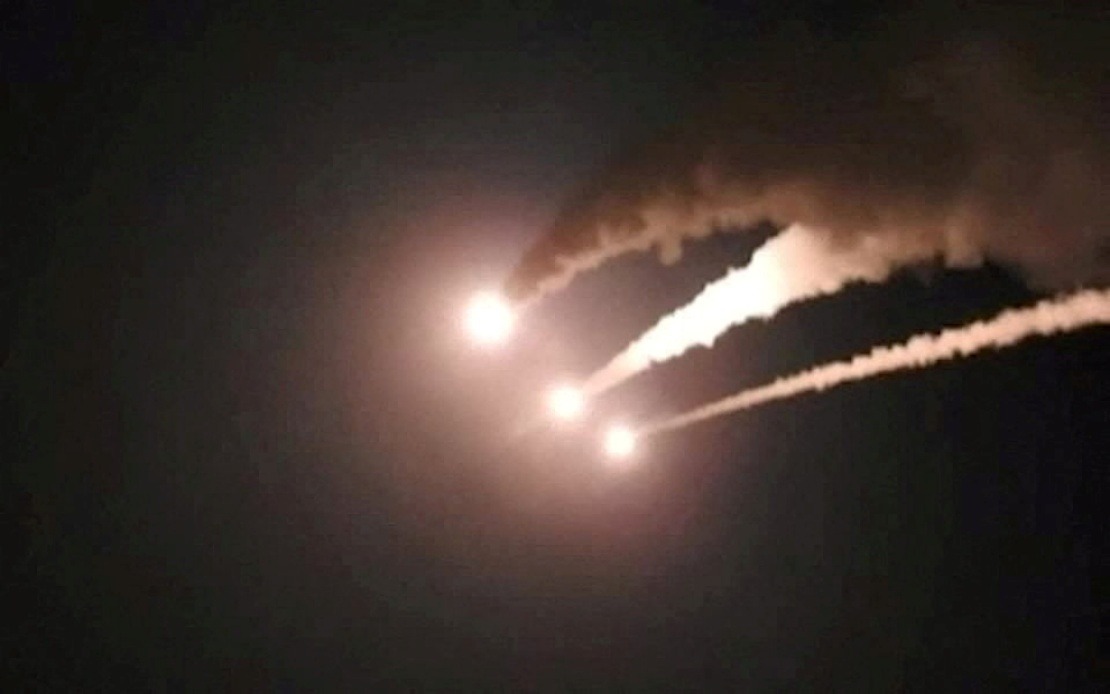
The military escalation between Iran and the United States entered a dangerous new phase on Wednesday as Tehran explicitly threatened American bases throughout the Middle East in retaliation for alleged ceasefire violations. Iran's armed forces declared that the entire constellation of US military infrastructure across the region—from air bases to naval facilities—would qualify as fair game for Iranian drone operations should Washington persist in what Tehran characterizes as systematic breaches of an existing ceasefire agreement.
The Iranian military's warning came after it claimed responsibility for strikes targeting what it described as concentrations of American forces at Sheikh Isa Air Base in Bahrain. The statement from state broadcaster IRIB framed the attack as a defensive response to what Iran alleged were hostile American military operations against civilian and military targets in Iran's southern territories, coupled with repeated violations of the fourteen-point ceasefire terms that both sides supposedly agreed to uphold.
The Islamic Revolutionary Guard Corps (IRGC), Iran's elite military branch, took the provocative step of announcing it had orchestrated a comprehensive assault involving missiles and unmanned aerial vehicles against approximately 85 American military objectives. These targets reportedly encompassed Salman Port, the headquarters of the United States Navy's Fifth Fleet stationed in Bahrain, and Ali Al-Salem Air Base located in Kuwait. The specificity of these claims, if verified, would represent a significant coordinated military operation with potential consequences for international shipping and regional stability.
For Southeast Asian nations with significant maritime interests in the Persian Gulf and Arabian Sea, this escalation carries direct implications. Malaysia, as a trading nation dependent on freedom of navigation through the Strait of Hormuz and regional waterways, faces potential disruptions to its commerce if military tensions continue spiralling. The threat to commercial vessels—explicitly mentioned by the United States as a trigger for its retaliatory strikes—could impact Malaysian shipping companies and exporters relying on these critical sea lanes.
Kuwait and Bahrain, two Gulf Cooperation Council members with close strategic ties to the Western alliance, reported active defensive measures on Wednesday. Kuwait's Ministry of Defence confirmed its air defence systems successfully intercepted incoming missiles and drones, while Bahrain experienced air raid warnings—incidents that underscore the tangible military nature of this confrontation rather than mere rhetorical posturing. These defensive activations demonstrate that the threat is not theoretical but operational.
The United States military responded with what American Central Command (CENTCOM) characterized as an immediate counterstrike against Iranian forces. American forces struck more than eighty targets across Iran, reportedly in direct retaliation for what CENTCOM stated were Iranian attacks on commercial shipping in the Strait of Hormuz. This tit-for-tat dynamic, with each side claiming to respond defensively to the other's aggression, mirrors familiar patterns of Middle Eastern conflict escalation that have repeatedly drawn international powers into prolonged regional conflicts.
The ceasefire agreement that both sides reference remains opaque in public reporting, and significant disagreements about compliance terms appear to underlie the current crisis. Iran's assertion that the United States has violated all fourteen points of an understanding suggests either fundamentally incompatible interpretations of what was agreed, or that one or both parties entered the arrangement with no genuine commitment to observing its provisions. Such divergence between stated agreements and actual conduct creates unpredictable escalatory cycles.
Regional analysts note that Iran's explicit threat to target American military infrastructure represents a qualitative shift from previous statements. By formally designating all US bases as legitimate military objectives, Iran has crossed a rhetorical threshold that typically precedes broader military operations. The targeting of commercial shipping, meanwhile, threatens the economic interests of numerous nations beyond the immediate US-Iran dispute, potentially drawing additional regional and international actors into the conflict.
For Malaysia and other Association of Southeast Asian Nations members, the stakes involve both immediate economic concerns and longer-term strategic considerations. Disruptions to Middle Eastern oil supplies affect regional energy prices and economic growth. The potential for escalation to involve Chinese or Russian military assets, given their respective interests in regional stability and commercial shipping, could further complicate an already volatile situation. Additionally, any major military conflict in the Persian Gulf region risks creating refugee crises and humanitarian disasters that neighbouring countries would inevitably absorb.
The language employed by Iran's military—particularly the designation of US bases as legitimate targets—suggests that Tehran calculates it has sufficient military capability to implement these threats, or at minimum believes that making such threats advances its negotiating position. Whether this reflects genuine confidence in Iranian military capacity or represents a high-stakes bluff remains unclear, but the consequences of miscalculation in such scenarios carry potentially grave implications extending far beyond the immediate belligerents.
The underlying dispute appears rooted in differing interpretations of what constitutes ceasefire compliance, though both sides blame the other for initiating hostile actions. This recurring pattern—where each actor perceives itself as responding defensively to aggression—often perpetuates conflict cycles absent external diplomatic intervention or clear military advantage for one party. International efforts to de-escalate, whether through the United Nations, regional organizations, or bilateral channels, will prove crucial in preventing further deterioration that could draw additional powers into the confrontation and destabilize global commerce and energy markets.

