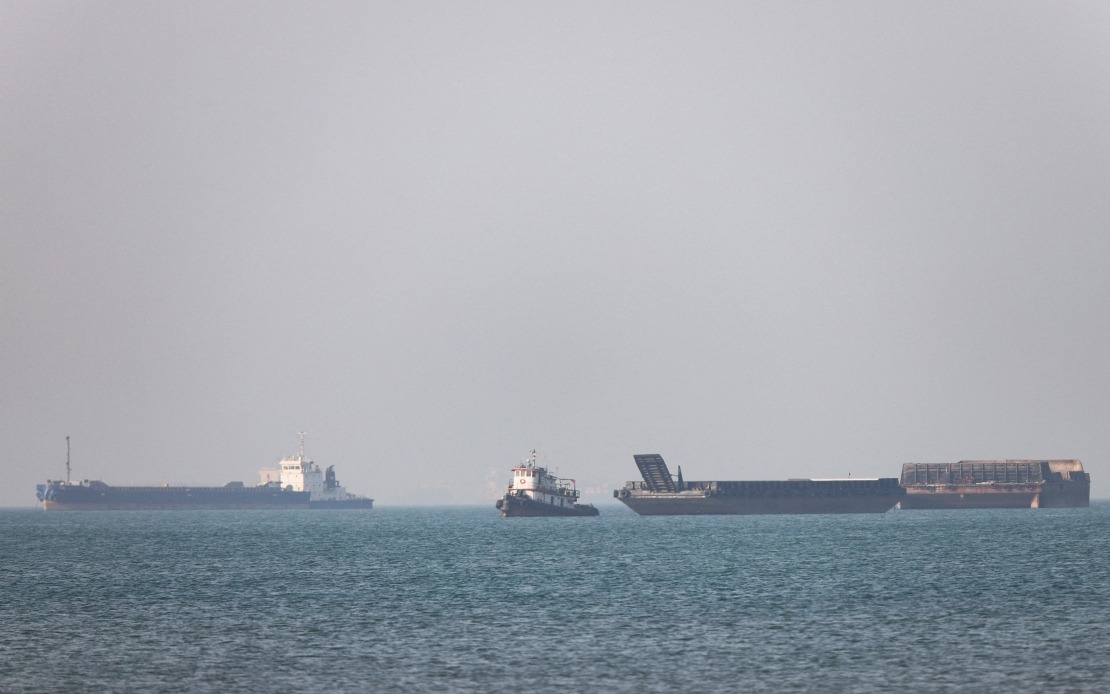
Iran's Islamic Revolutionary Guard Corps Navy claimed early Wednesday that it had "targeted and stopped" three commercial oil tankers navigating the Strait of Hormuz, alleging the vessels had disregarded multiple warnings and violated unspecified regulations. The interception represents another flashpoint in the volatile strategic waterway, through which roughly one-third of the world's seaborne traded oil passes daily, making any disruption a concern for global energy markets and maritime commerce.
The IRGC released a formal statement confirming the operation took place "a few hours ago" but provided minimal additional information that would allow independent verification of the incident. No details emerged regarding the names of the vessels involved, their ownership or flag states, their current locations, or the precise nature of the alleged infractions. This opacity is typical of Iranian military announcements concerning maritime operations, which often lack the specificity required for transparency or third-party assessment.
In its statement, the IRGC added pointed political language, declaring that "illegal interventions and orders of the US, a child-killing army, will not go unanswered by vessels in the region." The inflammatory rhetoric reflects deepening antagonism between Tehran and Washington, with the IRGC positioning itself as the principal protector of Iranian interests against what it characterises as American aggression. The phrasing also suggests the military body is signalling resolve to regional actors and domestic audiences.
Recent weeks have witnessed a dramatic deterioration in US-Iran relations, with military confrontations replacing the more restrained posturing that characterised the preceding period. The United States has launched what it describes as defensive strikes targeting Iranian interests, while Tehran has responded with retaliatory strikes against what it claims are American military installations and equipment distributed across multiple countries throughout the Middle East and broader region. This tit-for-tat cycle has created a pattern of escalation that threatens to spiral beyond either side's control.
The Strait of Hormuz remains one of the world's most strategically important and geopolitically sensitive maritime passages. Located between Iran and Oman, the narrow waterway connects the Persian Gulf to the Gulf of Oman and the Arabian Sea beyond. The chokepoint has been a recurring flashpoint for naval confrontations, sanctions enforcement operations, and security incidents for decades. Any sustained disruption to traffic through the strait carries implications for global oil prices, shipping insurance premiums, and regional stability.
For Southeast Asian nations including Malaysia, developments in the Strait of Hormuz carry direct economic consequences. Many regional economies, particularly those dependent on oil imports for energy generation and petrochemical manufacturing, would face higher fuel costs and potential supply disruptions if tensions further restrict tanker movements. Malaysian shipping companies operating globally also face increased insurance and security costs when transiting contested waters. Beyond immediate energy concerns, prolonged US-Iran hostility could divert American strategic attention and military resources from the Indo-Pacific region, potentially altering the balance of power in waters closer to Southeast Asia.
The pattern of tanker interceptions by Iranian forces has intensified over successive years, though distinguishing between enforcement of legitimate maritime regulations and politically motivated seizures remains challenging for outside observers. The IRGC Navy operates under less transparent command structures than Iran's conventional navy, and its actions sometimes reflect ideological rather than purely operational considerations. Previous incidents have involved detained vessels being held for extended periods before release, occasionally following diplomatic negotiations or financial settlements.
The intercept incident also occurs within a broader context of American military presence in the Persian Gulf and surrounding waters. The United States maintains substantial naval forces in the region, including aircraft carrier strike groups and expeditionary strike groups, positioned partly to ensure freedom of navigation and prevent Iranian actions perceived as destabilising. The presence of these American assets creates multiple opportunities for miscalculation, technical mishap, or deliberate confrontation.
International shipping organisations and maritime insurers monitor developments in the Strait of Hormuz closely, as incidents directly influence risk assessments and underwriting decisions. A sustained period of heightened tensions typically results in significant increases in insurance premiums for vessels transiting the waterway, effectively raising costs for global energy consumers. The lack of clarity surrounding the latest interception leaves maritime operators uncertain whether this represents a temporary spike in tensions or the beginning of a more sustained period of restricted access.
The incident underscores the fragility of maritime security in the Persian Gulf region and the potential consequences of unresolved diplomatic tensions between major powers. Whether the three tankers will be released promptly remains unclear, as does whether their seizure was based on genuine violations or represented a political statement. The opacity of Iranian military communications and the absence of international observers at the scene mean that determining the true circumstances will likely remain difficult.

