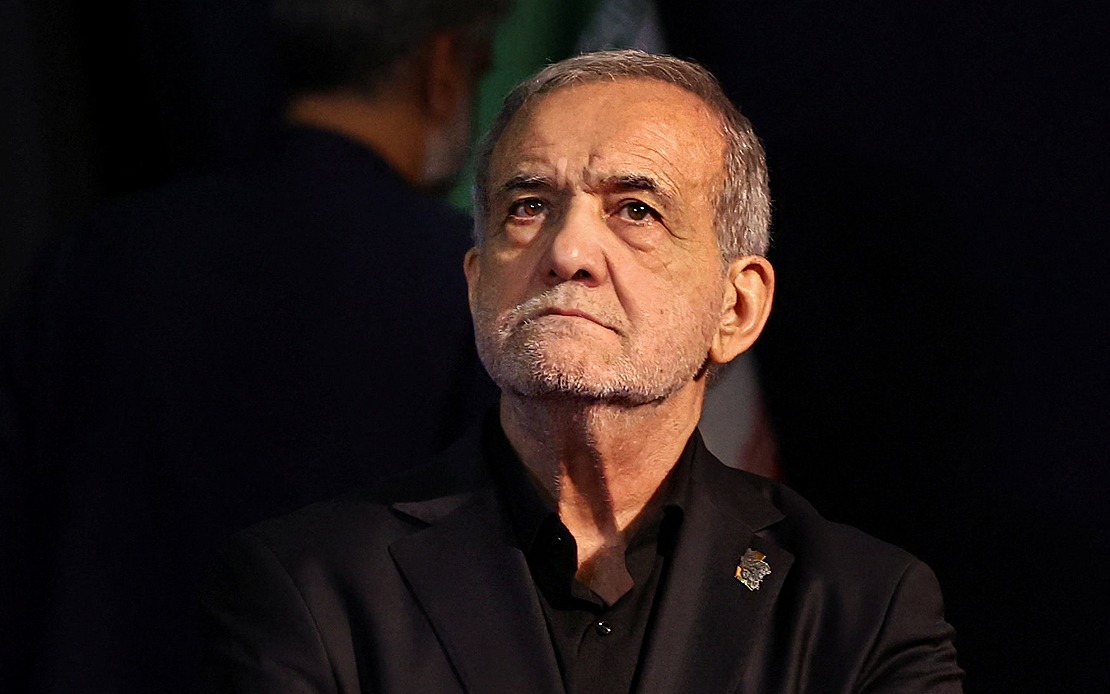
Iranian President Masoud Pezeshkian has initiated a push for international legal accountability following widespread damage to the nation's transport infrastructure, characterising the attacks as constituting war crimes under international law. The president's statement marks an escalation in Iran's diplomatic response to regional military tensions, signalling a shift towards pursuing remedies through established global legal mechanisms rather than relying solely on military deterrence.
During a visit to the Ministry of Roads and Urban Development on Sunday, Pezeshkian conducted a comprehensive review of Iran's transport and logistics capabilities as part of his ongoing oversight programme of government institutions. The inspection came shortly after a period of heightened military confrontation that saw intensive air operations targeting civilian infrastructure across southern Iran. Ministry officials provided the president with detailed assessments of the current operational status of border terminals, ports, shipping lanes, road networks, rail connections, and aviation infrastructure, alongside reports on supply chains and the distribution of essential commodities throughout the country.
Roads and Urban Development Minister Farzaneh Sadegh delivered a comprehensive briefing outlining the extent of destruction across multiple transport networks. The damage inventory encompassed critical facilities including port complexes, border crossing terminals, bridge structures, highway systems, railway lines, and logistics hubs—all identified as strategically vital to Iran's economic functioning. The detailed catalogue of damage provided concrete evidence for potential international legal claims, establishing a documented foundation for accountability procedures.
Responding to the briefing, Pezeshkian issued directives to accelerate reconstruction efforts across damaged facilities while simultaneously activating alternative transport corridors to maintain service continuity. The president emphasised the importance of fortifying the resilience of Iran's transport infrastructure against future disruptions, ensuring that critical supply networks could withstand further challenges to national security. These operational orders reflect a dual strategy of both recovery and defensive preparation.
The president commended ministry staff for their efforts in sustaining transport operations throughout the conflict period, acknowledging the institutional resilience demonstrated under pressure. Pezeshkian framed the maintenance of services as a direct challenge to adversarial attempts at economic destabilisation, linking transport functionality to broader national security objectives. His remarks underscored the political significance of infrastructure maintenance as an instrument of national resilience and anti-disruption strategy.
The timing of Pezeshkian's statements follows a period of renewed military confrontation in the region that ultimately de-escalated following Iran's military response operations against American positions. During nearly two weeks of sustained aerial bombardment, US operations specifically targeted transportation networks in Iran's southern regions, including critical bridge infrastructure and road systems essential for regional connectivity and economic activity. The campaign appeared designed to degrade Iran's logistical capabilities and economic function.
Iran's military doctrine of proportional retaliation prompted a shift in operational targeting, with the leadership indicating that further attacks on civilian infrastructure would face decisive responses. The implicit deterrent appears to have produced a cessation of the direct assault on transport facilities, though the underlying tensions remain unresolved. This dynamic demonstrates how military signalling and escalation thresholds shape the boundaries of regional conflict, with both sides calibrating responses within calculated risk parameters.
The pivot towards international legal mechanisms represents a significant strategic development. Rather than pursuing purely military or diplomatic channels, Iran is now formally pursuing accountability through competent international organisations, a strategy that could involve the International Court of Justice, the United Nations, or other multilateral bodies. This approach allows Iran to simultaneously maintain security measures while building a formal record of alleged violations for potential future legal proceedings.
For Malaysia and other Southeast Asian nations, Iran's initiative carries broader implications for international legal norms and the precedent-setting nature of major power conduct during regional conflicts. The question of whether attacks on civilian transport infrastructure constitute war crimes involves interpretation of international humanitarian law—standards that apply universally and affect the conduct of all states. Malaysia's position as a proponent of international law and multilateralism makes this development relevant to regional security frameworks and the maintenance of rules-based international order.
The damage to Iran's infrastructure extends beyond immediate physical reconstruction costs, affecting regional trade connectivity and the broader functioning of supply chains that intersect with Southeast Asian commerce. Disruptions to Iranian ports and border terminals influence shipping routes and logistics networks that connect to Malaysian and regional markets. The legal case Pezeshkian is pursuing could establish important precedents regarding the protection of civilian economic infrastructure during international disputes.
Iran's strategic choice to emphasise legal accountability reflects frustration with the limitations of military options and recognition that long-term security requires institutional validation of grievances through international structures. This approach also signals to allied nations and neutral observers that Iran perceives itself as operating within rule-based frameworks, even while maintaining its capacity for military response. The framing of infrastructure protection as a legal issue rather than purely a military one represents a different dimension of the broader geopolitical competition in West Asia.
The broader context reveals how regional powers navigate the tension between immediate security needs and longer-term legitimacy. By documenting damage, mobilising ministry resources for reconstruction, and pursuing international legal channels simultaneously, Pezeshkian demonstrates a multi-layered strategy that addresses immediate operational concerns while building the evidentiary foundation for future accountability mechanisms. For regional observers and international law practitioners, this case will likely inform ongoing debates about the application of humanitarian law to modern conflicts involving non-traditional targeting patterns.

