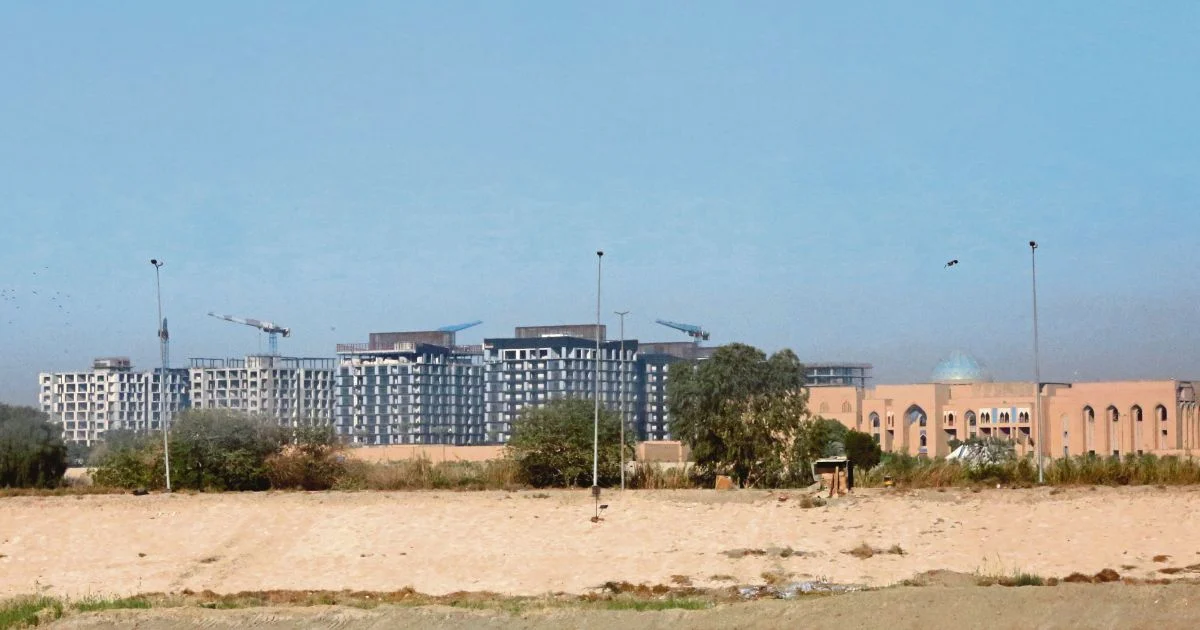
Iraqi security forces descended on Baghdad's fortified Green Zone in a dramatic pre-dawn operation on Sunday, conducting sweeping raids that resulted in the detention of several high-ranking officials and parliamentarians suspected of corruption. The coordinated operation, marked by heavy security deployments throughout the restricted enclave, represented one of the most significant anti-corruption pushes to target the country's political establishment in recent months.
The Green Zone, traditionally one of Iraq's most heavily guarded areas, served as the focal point for what authorities framed as a major anti-graft initiative. Located in central Baghdad and housing government ministries, parliament, and diplomatic missions, the zone's security infrastructure typically insulates senior officials from judicial action. The fact that security forces penetrated this protected perimeter to arrest sitting MPs and government officials underscored the seriousness with which investigators were pursuing the corruption allegations.
Among those detained were multiple members of parliament implicated in various financial misconduct investigations. The scale of the operation suggested coordinated efforts across several security agencies, with reports indicating heavy military and police presence maintaining control throughout the zone during the raids. This level of coordination typically signals high-level political backing for such operations, which often face resistance from powerful figures with vested interests in maintaining the status quo.
Corruption has long plagued Iraq's post-2003 institutional structures, with successive governments struggling to implement meaningful accountability measures against entrenched elites. International observers and Iraqi civil society organisations have consistently documented systemic graft affecting defence procurement, public contracts, and resource allocation. For Malaysian readers familiar with regional governance challenges, Iraq's corruption struggles reflect broader Middle Eastern difficulties in constraining power and establishing transparent institutions amid weak rule of law.
The targeting of parliamentarians carries particular significance in Iraqi politics, where legislative immunity has historically shielded officials from prosecution. The willingness of authorities to breach this protection suggests either extraordinary legal circumstances or a shift in political calculations regarding which factions face vulnerability. Such operations can rapidly become tools of factional struggle if selective prosecution prevails over principle-based accountability.
The operation's timing and scope also reflected evolving international pressure on Iraq to strengthen governance standards. Both Western allies and neighbouring states have periodically emphasised anti-corruption efforts as essential to Iraq's state-building agenda. For Southeast Asian countries navigating similar pressures from developed economies over governance issues, Iraq's experience illustrates the complex interplay between domestic institutional capacity and external diplomatic expectations.
Security force deployment throughout the Green Zone during the raids raised questions about operational necessity versus political messaging. The heavy visible presence served both practical security purposes and symbolic functions, demonstrating state capacity to constrain elite malfeasance. However, such dramatic operations also risked triggering backlash from targeted constituencies if perceived as politically motivated rather than juridically grounded.
The detained officials faced serious accusations encompassing misappropriation of public funds, contract fraud, and abuse of official position. While exact charges remained initially unclear, the specific targeting of corruption suspects indicated that investigations had progressed beyond preliminary inquiry stages. This suggested accumulated evidence and witness testimony supporting prosecution paths forward, assuming the judicial system would sustain cases through trial.
Iraq's judiciary has previously struggled with cases involving senior officials, with political pressures, intimidation of judges, and resource constraints complicating prosecutions. The success of Sunday's detentions would ultimately depend on whether cases advanced through courts without collapse under political pressure or procedural obstructions. International observers monitoring Iraqi governance would closely track whether detained officials faced substantive trials or experienced release through political negotiation.
The operation also reflected ongoing competition among Iraq's multiple security services and political factions regarding control and influence. Different armed groups and state institutions have sometimes pursued anti-corruption campaigns to undermine rivals while protecting allies. Determining whether Sunday's raids represented genuine institutional accountability or factional manoeuvring would require analysing patterns of prosecution across competing constituencies.
For the Iraqi public, particularly in Baghdad, such operations carried contradictory implications. While anti-corruption efforts aligned with widespread public demands for transparent governance, selective prosecution risked deepening cynicism if perceived as political weaponisation. Iraq's recovery of state legitimacy depends substantially on demonstrating that accountability applies consistently across political lines rather than targeting convenient adversaries while protecting connected allies.
Regionally, Iraq's anti-corruption initiatives influence perceptions of institutional development across the Middle East and, indirectly, affect diplomatic relationships. Countries viewing Iraq's governance trajectory inform their own policy approaches toward accountability and state capacity. For Malaysia, observing Iraqi institutional challenges provides comparative perspective on sustaining rule of law amid competing power centres and international pressures.

