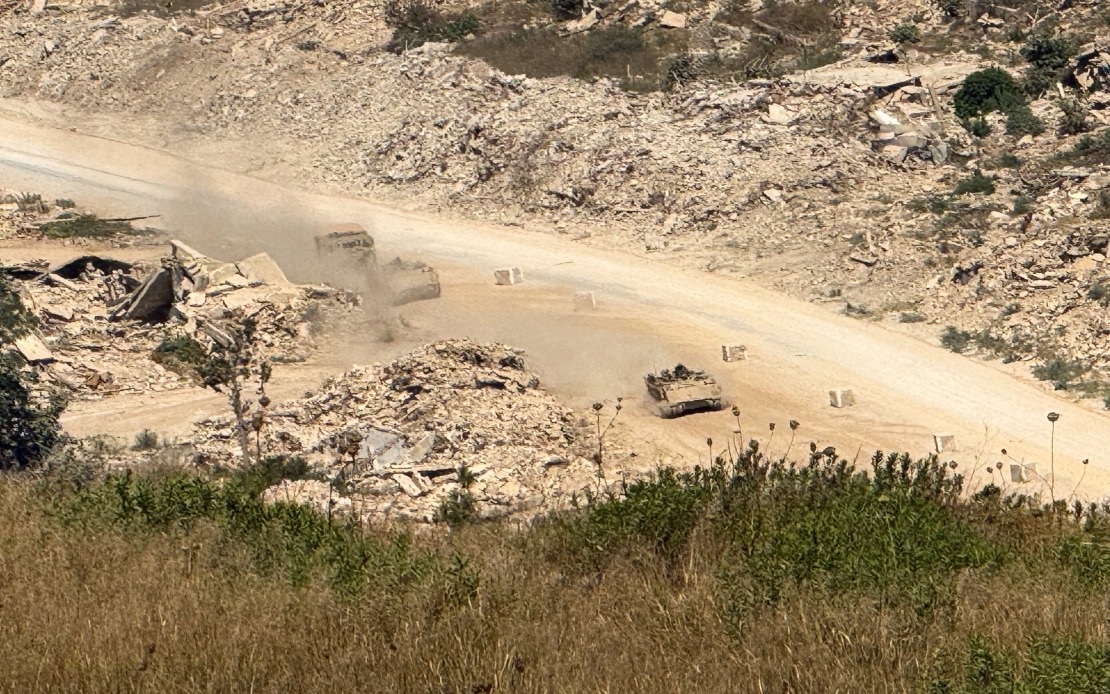
Tensions remain fraught along the Lebanese-Israeli border as military operations continue unabated in southern Lebanon, undercutting efforts to stabilize the region through diplomatic channels. According to Lebanon's state news agency, the Israeli military conducted extensive strikes across multiple towns and villages in the southern governorates on Monday, combining artillery bombardment with ground movements and residential destruction. The reported incidents represent a significant escalation in activities that ostensibly violate existing ceasefire understandings, raising questions about the viability of ongoing peace negotiations.
The military operations targeted numerous locations across the conflict zone. In Nabatieh governorate, Israeli forces directed machine gun fire toward Wadi al-Salouqi and unleashed artillery barrages on Mansouri overnight, while also executing two separate explosions in the latter area. A major detonation struck Kfar Tebnit in Nabatieh proper, with intermittent shelling reported on the outskirts of Nabatieh al-Fawqa. Concurrently, Israeli forces advanced into the western periphery of Mays al-Jabal, directing artillery fire at residential structures. The town of Khiam witnessed systematic burning of multiple houses during ongoing operations, while low-altitude drone flights were documented over the Zahrani region, suggesting reconnaissance activities accompanying the ground campaign.
The timing of these military actions carries particular significance given the diplomatic momentum established just days earlier. The seventh round of Lebanese-Israeli negotiations concluded Thursday in Rome under American sponsorship, with discussions centered on mechanisms for implementing the framework agreement signed on June 26. Lebanese President Joseph Aoun declared that the talks had yielded positive developments regarding border delineation and detainee matters during a Cabinet meeting Friday, suggesting that negotiators perceived tangible progress toward a settlement. The apparent disconnect between diplomatic progress and military escalation raises concerns about whether the armed forces and political leaderships on both sides maintain unified positions regarding conflict resolution.
The underlying framework agreement envisions a structured Israeli withdrawal from occupied Lebanese territories, beginning with designated pilot zones, coupled with Lebanese army deployment and the disarmament of armed groups including Hezbollah. This phased approach has become the primary vehicle for attempting to restore stability after months of devastating warfare. However, the continued military operations suggest that implementation mechanisms remain contested or that military commanders retain autonomy in conducting operations despite political negotiations. For Malaysian and Southeast Asian observers, this pattern mirrors recurring challenges in other conflict zones where military logic diverges from diplomatic trajectories, complicating third-party mediation efforts.
The humanitarian consequences of the ongoing campaign have reached catastrophic proportions. Lebanese authorities document that Israeli military operations commencing in March have claimed 4,335 lives, wounded 12,277 individuals, and displaced over one million people from their homes. These figures underscore the devastating toll that prolonged military confrontation inflicts on civilian populations, particularly in densely populated areas where infrastructure and residential zones intertwine. The displacement of such large populations creates humanitarian crises that extend far beyond immediate combat zones, affecting neighboring countries' capacity to absorb refugees and straining regional resources.
Geographically, Israel maintains occupation of territories across multiple contested regions. In southern Lebanon specifically, Israeli forces have penetrated more than ten kilometres into Lebanese sovereign territory during the current campaign, extending their control beyond areas held since the 2023-2024 conflict. Some occupied zones have remained under Israeli control for decades, creating a complex legal and political landscape regarding territorial sovereignty and withdrawal timelines. The depth of penetration demonstrated during recent operations suggests Israeli military capabilities to project force deep into Lebanese territory, complicating assumptions about withdrawal feasibility within prescribed timeframes outlined in diplomatic agreements.
Broader territorial disputes complicate the Lebanese-Israeli situation within a larger regional framework. Israel simultaneously occupies Palestinian and Syrian territories, similarly refusing withdrawal or acknowledgment of Palestinian statehood as mandated through relevant United Nations resolutions. This pattern suggests systemic reluctance to relinquish territorial control across multiple frontiers, potentially indicating that the Lebanese negotiations represent merely one dimension of a comprehensive strategy regarding territorial acquisition and security positioning. For Malaysia and fellow Southeast Asian nations monitoring these developments, understanding this broader territorial context becomes essential for assessing the likelihood of sustained ceasefires or durable peace arrangements.
The American diplomatic role in sponsoring the Rome negotiations underscores international investment in achieving Lebanese-Israeli stability. The United States facilitation of talks reflects broader strategic interests in preventing regional escalation that could draw in additional actors, notably the Islamic Republic of Iran and its various allied militias. Malaysia's position as a non-aligned nation and active voice within international forums means that developments in Lebanese-Israeli conflicts inevitably intersect with broader discussions regarding international law, territorial sovereignty, and the responsibility to protect civilian populations. The apparent gap between diplomatic progress and military operations poses questions about enforceability mechanisms and third-party monitoring arrangements within any eventual agreement.
The military operations' apparent lack of casualty or property damage reporting stands in stark contrast to the documented humanitarian toll from the broader campaign, suggesting either incomplete reporting from the specific incidents or localized operations with limited direct impact. Nevertheless, the systematic pattern of operations—combining artillery strikes with ground movements, drone surveillance, and residential destruction—reflects sustained military pressure designed to project power and potentially influence negotiating positions. This tactical sequencing demonstrates how armed forces may employ incremental pressure to shape diplomatic outcomes, a pattern familiar to observers of protracted conflicts elsewhere.
Moving forward, the sustainability of diplomatic progress hinges upon whether political commitments translate into genuine cessation of military operations or whether negotiations proceed parallel to ongoing campaigns. The Lebanese government's emphasis on positive progress regarding borders and detainees suggests that negotiators perceive sufficient forward momentum to continue engaging, despite military escalation. However, repeated cycles of military action interspersed with diplomatic engagement create cumulative mistrust that complicates achieving comprehensive settlements. For regional observers including Malaysia, monitoring whether subsequent negotiation rounds yield concrete operational pauses or verification mechanisms becomes crucial for assessing the trajectory toward genuine peace or merely managed stalemate.

