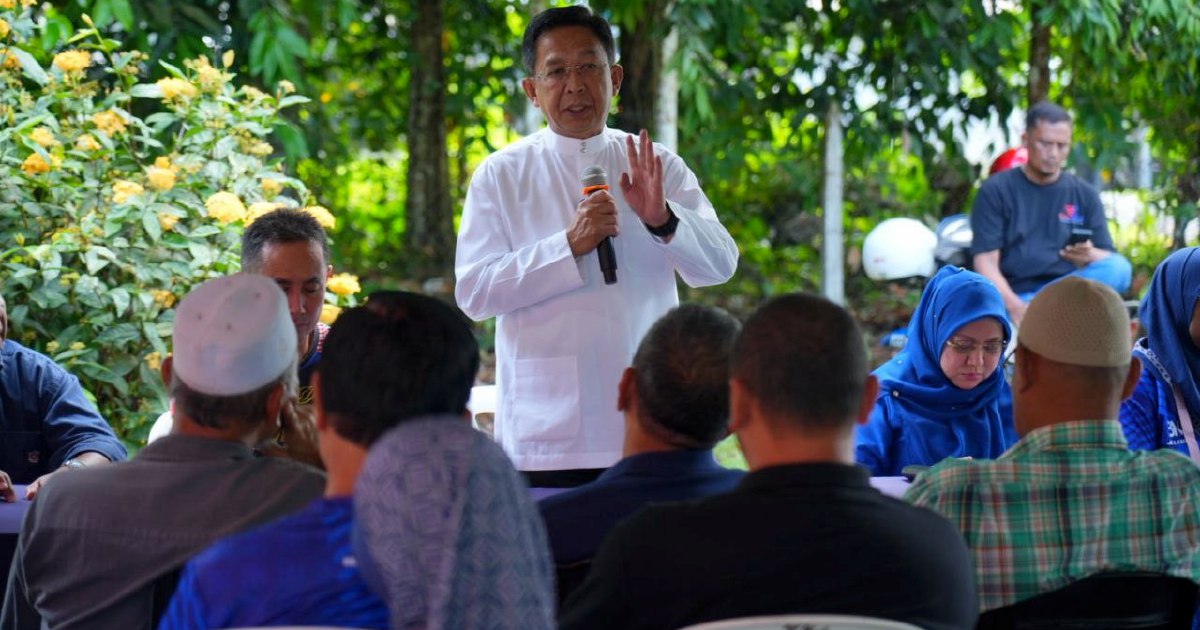
Datuk Seri Jalaluddin Alias, the current chairman of Negri Sembilan's Umno division, has surfaced as one of the frontrunners to become menteri besar should the Perikatan Nasional-Barisan Nasional alliance secure victory in the state election scheduled for August 1. The announcement comes as both coalitions intensify their campaigning efforts across the central Malaysian state, laying groundwork for what analysts expect to be a closely contested contest.
The naming of Jalaluddin represents a significant move in the coalition's pre-election positioning. By publicly identifying potential leadership candidates before polling day, Perikatan Nasional signals both confidence in its electoral prospects and a degree of transparency that party leadership believes will resonate with Negri Sembilan voters. This strategy of advance disclosure differs markedly from previous election cycles, where coalitions typically kept such deliberations confidential until after results were declared.
Negri Sembilan has long held strategic importance within Malaysian politics as a swing state capable of tilting the overall political balance. The state's diverse electorate spans urban centres, manufacturing zones, and agricultural regions, requiring candidates with demonstrated ability to address varied economic interests. Jalaluddin's profile as a long-established figure within Umno's Negri Sembilan machinery suggests the coalition views him as equipped to bridge these different constituencies.
The timing of this disclosure reflects broader coalition dynamics. Perikatan Nasional and Barisan Nasional have maintained an electoral understanding at the federal level following the 2022 general election, though their relationship remains pragmatic rather than ideologically unified. By projecting shared candidates and leadership arrangements at the state level, the two coalitions attempt to demonstrate stability and unified vision to voters potentially fatigued by political volatility.
For Negri Sembilan specifically, the election carries implications extending beyond state governance. The state assembly composition influences broader parliamentary mathematics, particularly regarding support for the federal government. A decisive victory by either coalition would strengthen its negotiating position in Putrajaya while a fragmented result could produce complications for whoever forms the next state administration.
Jalaluddin's background within Umno spans decades, providing him with established networks across the state's political machinery and administrative apparatus. Such depth of experience typically proves valuable for menteri besar candidates, who must immediately navigate complex relationships with federal ministries, statutory bodies, and local authorities. His tenure as Negri Sembilan Umno chairman demonstrated capacity to manage intra-party dynamics within Malaysia's largest political organisation.
The coalition's decision to name potential leaders before rather than after election day reflects evolving campaign sophistication. Rather than allowing opposition parties to dictate the narrative around leadership continuity or change, Perikatan Nasional seeks to control this discussion proactively. This approach enables the coalition to frame its candidate as qualified, experienced, and ready rather than allowing such characterisations to emerge organically or through critical lenses.
Yet the coalition's strategy carries inherent risks. By identifying Jalaluddin publicly, Perikatan Nasional invites scrutiny of his record and suitability. Opposition parties will likely focus campaign messaging on questioning his vision for Negri Sembilan and highlighting any perceived weaknesses in his administrative or legislative accomplishments. Voters may also use the menteri besar question as a secondary consideration when evaluating their choices, potentially deprioritising it relative to local issues affecting their daily lives.
Negri Sembilan's economic profile centres on manufacturing, mining heritage, and increasingly, services and technology sectors. The next menteri besar will inherit a state seeking to balance development ambitions with environmental sustainability concerns. Agricultural constituencies maintain political significance despite urbanisation trends, requiring leadership attuned to rural economic challenges. Jalaluddin's previous roles and public statements will come under examination regarding his positions on these matters.
The coalition's apparent confidence in its electoral prospects reflects polling assessments and ground intelligence regarding voter sentiment. However, state elections frequently produce unexpected outcomes, with local grievances and personalities sometimes overriding national political trends. Negri Sembilan voters may ultimately prioritise concerns specific to their state rather than broader coalition identity, making predictions premature regardless of leadership positioning.
Historically, menteri besar transitions in Negri Sembilan have occasionally proven contentious even within victorious coalitions. By announcing Jalaluddin's candidacy in advance, Perikatan Nasional and Barisan Nasional reduce ambiguity but also foreclose flexibility should post-election negotiations require different arrangements. This commitment signals either confidence in Jalaluddin's acceptability to all coalition partners or a firm negotiated agreement already finalised.
The weeks preceding August 1 will likely see both coalitions mobilising their campaigns intensively. Jalaluddin will probably feature prominently in coalition messaging, while opposition parties frame their alternative candidates and visions for the state's future. Voter response to his nomination will provide early indicators of whether the coalition's pre-election transparency strategy enhances or complicates their electoral fortunes in this consequential state contest.

