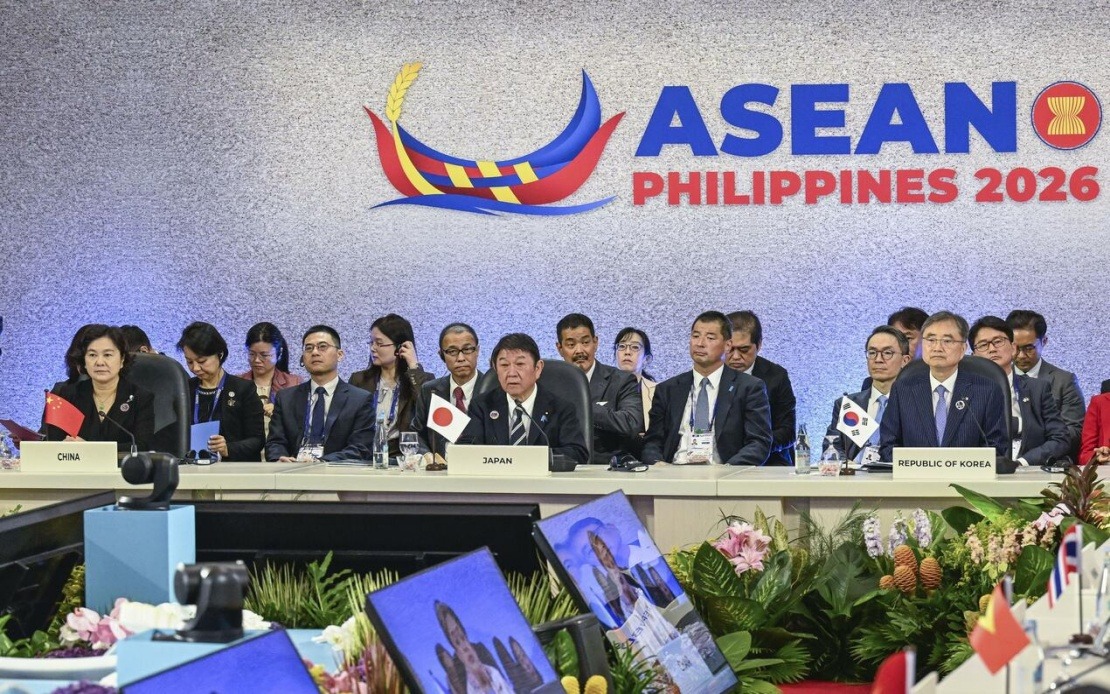
Japan announced a comprehensive package of cooperative measures aimed at bolstering energy security and dismantling networks behind online scams during a high-level gathering of foreign ministers representing ASEAN member states, China, and South Korea in Manila. Japanese Foreign Minister Toshimitsu Motegi articulated Tokyo's strategic priorities at the multilateral forum, which brought together senior diplomatic officials from across East and Southeast Asia to chart a course for expanded regional collaboration.
The emphasis on energy cooperation reflects mounting concerns about supply chain vulnerabilities across Asia following recent geopolitical turbulence affecting the West Asia region. Ministers underscored the critical importance of diversifying and strengthening energy networks to insulate the Asia-Pacific from external shocks. This is particularly significant for Southeast Asian economies like Malaysia, Thailand, and Vietnam, which rely heavily on stable energy imports to sustain manufacturing growth and regional development initiatives.
Motegi highlighted the expanding economic footprint of the ASEAN-plus-three bloc, noting that combined gross domestic product now exceeds one quarter of global economic output. This metric underscores the region's pivotal role in underpinning international financial stability and prosperity. The scale of collective economic influence positions these nations as indispensable stakeholders in shaping global governance frameworks and setting standards for regional commerce.
Japan's foreign minister reaffirmed Tokyo's backing for ASEAN centrality in regional architecture, a positioning that reflects Japan's broader strategic calculus in Southeast Asia. By endorsing ASEAN's guiding principles and institutional frameworks, Japan signals its commitment to respecting the bloc's leadership in matters affecting regional peace and development. This diplomatic stance carries particular weight given Japan's historical influence in the region and its contemporary role as a technological and financial powerhouse.
The Japanese government expressed strong support for the ASEAN Outlook on the Indo-Pacific, a policy framework the association adopted to safeguard freedom of navigation, transparent governance, and equitable economic participation across the maritime space connecting Asia with the Indian Ocean. Motegi drew explicit parallels between Japan's own free and open Indo-Pacific vision and ASEAN's foundational principles, suggesting potential for unified diplomatic messaging and coordinated action on shared concerns. This convergence of strategic visions could translate into joint initiatives addressing maritime security, trade facilitation, and environmental stewardship.
The ASEAN-plus-three mechanism itself represents an institutional innovation born from crisis management. Established following the 1997 Asian financial crisis, the framework evolved from emergency response coordination into a structured platform for sustained economic and political dialogue. The framework's durability across three decades demonstrates the value Asian nations place on multilateral problem-solving tailored to regional circumstances rather than globally prescribed solutions.
Combating online fraud emerged as a significant agenda item, reflecting the escalating sophistication and cross-border nature of digital crimes targeting individuals and businesses throughout Asia. Criminal networks operating scam operations have established sophisticated infrastructure spanning multiple jurisdictions, enabling them to evade prosecution and launder proceeds. The commitment to joint action signals recognition that unilateral law enforcement approaches prove inadequate against threats requiring intelligence sharing, extradition agreements, and harmonised legal standards.
China's representation at the ministerial gathering through Vice Foreign Minister Hua Chunying, substituting for Wang Yi, maintained diplomatic continuity while suggesting scheduling complexities in coordinating among regional heavyweights. The participation of all three major East Asian powers underscores the multilateral nature of contemporary regional challenges, which increasingly transcend bilateral relationships and require forum-based engagement.
Motegi's subsequent bilateral meeting with British Foreign Secretary Ed Miliband signalled Japan's commitment to maintaining strategic partnerships with Western democracies while simultaneously deepening Asian regional integration. The incoming British government under Prime Minister Andy Burnham represents an opportunity for Tokyo to recalibrate London's Indo-Pacific engagement and reinforce shared commitments to rules-based international order. This engagement pattern reflects Japan's balancing act between regional consolidation and Western alliance maintenance.
The summit outcomes carry specific implications for Malaysian stakeholders navigating an increasingly complex security environment. Energy cooperation initiatives could involve investment in liquified natural gas infrastructure and renewable energy projects benefiting ASEAN members. Cybersecurity collaboration might establish joint taskforces targeting scam operations targeting Malaysian financial institutions and individuals. Malaysia's position as a major ASEAN economy and strategic maritime gateway amplifies its interests in both energy security frameworks and transnational crime prevention.
Looking ahead, the momentum generated by this ministerial engagement should translate into concrete operational arrangements. Working groups addressing energy supply chain resilience, standardised protocols for cybercrime investigation, and intelligence-sharing mechanisms represent tangible deliverables Southeast Asian governments expect. The challenge lies in converting diplomatic pledges into institutional capacity, particularly given varying development levels and technical capabilities across ASEAN member states.
The broader significance extends to demonstrating that despite geopolitical tensions between China and Western-aligned powers, pragmatic cooperation remains achievable in functional domains benefiting all participants. Energy security and cybercrime prevention transcend ideological divides, offering template examples for expanded collaboration on climate change, pandemic preparedness, and sustainable development. This functional cooperation, even if limited in scope, preserves dialogue channels and prevents deterioration into confrontational posturing.
The ASEAN-plus-three framework's relevance in contemporary Asia hinges on its capacity to address transnational challenges while respecting members' sovereignty and diverse strategic preferences. Japan's latest pledges reaffirm this balancing approach, positioning Tokyo as a constructive partner committed to ASEAN-led regionalism rather than imposing external solutions. Whether these commitments translate into measurable improvements in energy resilience and cybersecurity will ultimately determine the framework's continued relevance.

