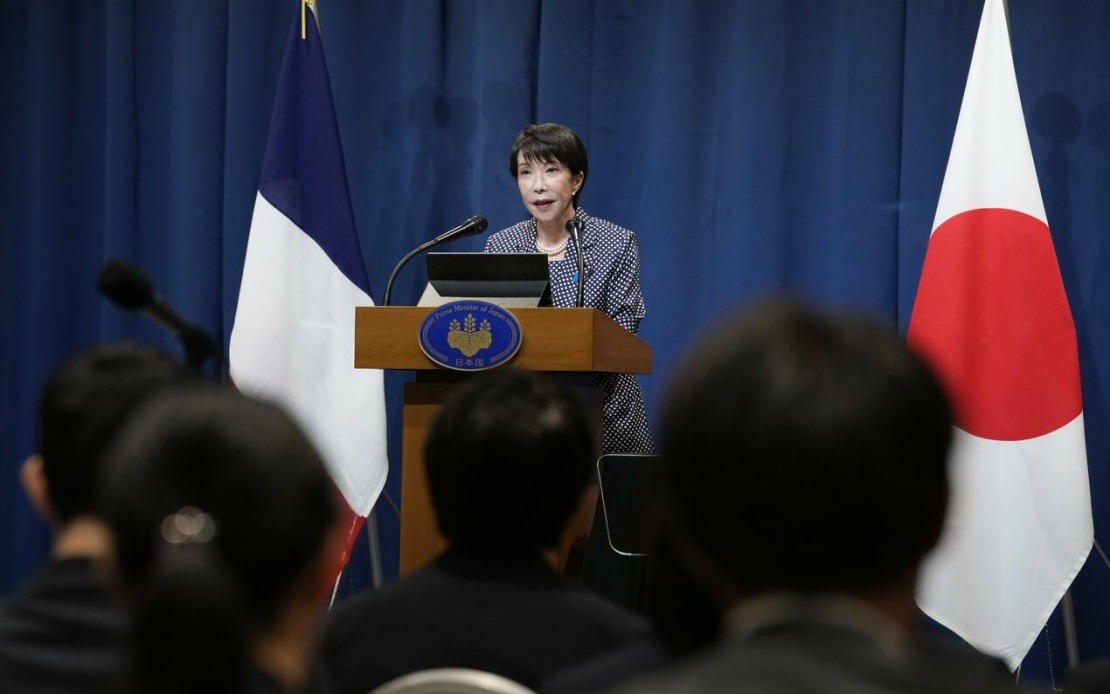
Prime Minister Sanae Takaichi's administration faces mounting political headwinds as public confidence continues to erode, with her cabinet's approval rating sliding to 55.8 per cent according to the latest Kyodo News poll. This represents the weakest showing for her government since she assumed office in October of last year, signalling potential vulnerability as Japan navigates a complex domestic and international landscape. The decline suggests that despite initial honeymoon-period support, Takaichi's cabinet has struggled to maintain public backing as real-world challenges accumulate.
The erosion of cabinet support reflects a constellation of pressures that resonate deeply with ordinary Japanese families. Chief among these is the persistent problem of elevated prices across the economy, which continues to squeeze household budgets and undermine consumer confidence. Many Japanese households find themselves caught between stagnant wages and rising costs, a dynamic that creates palpable frustration with government economic management. This inflationary environment has become a defining political issue, forcing the administration to justify its economic policies and demonstrate tangible progress in addressing cost-of-living concerns that directly affect voters' daily lives.
The timing of this approval decline is particularly significant given recent diplomatic developments in West Asia. The preliminary peace agreement between the United States and Iran, which includes provisions for Tehran to reopen the Strait of Hormuz, has created fresh uncertainty about Japan's regional security posture. As a resource-scarce island nation heavily dependent on imported energy and raw materials, Japan has critical interests in maintaining stable maritime passages through the Middle East. The Kyodo News survey captured public sentiment on this strategic question, revealing a clear split in how Japanese citizens view their country's appropriate role in ensuring shipping security.
Public opinion on military involvement in the Strait of Hormuz presents a notably cautious stance. The poll found that 54.7 per cent of respondents saw no necessity for deploying Japan's Self-Defence Forces to the waterway to safeguard commercial shipping lanes, while 36.6 per cent supported such military deployment. This distribution suggests that a substantial majority of Japanese citizens harbour reservations about expanding Japan's security commitments in distant regions, preferring diplomacy and economic coordination over military solutions. This conservative public sentiment may constrain Takaichi's administration in its diplomatic engagements and regional security decisions, particularly as regional tensions fluctuate.
For Malaysian and broader Southeast Asian observers, Japan's domestic political vulnerability carries regional implications. As the region's second-largest economy and a major security partner for many nations including Malaysia, any weakening of Japanese government capacity affects regional stability, trade relationships, and security cooperation frameworks. A politically weakened Takaichi cabinet might find it more difficult to sustain initiatives in regional institutions or maintain defence partnerships at current levels. The constraints imposed by declining domestic support could influence Japan's regional engagement strategies across economic, diplomatic, and security dimensions.
The consumption tax issue emerged as the most pressing economic concern in the Kyodo News survey, with taxation on essential items becoming a focal point of public discontent. When asked about potential tax relief on food and beverages, 43.9 per cent of respondents indicated that reducing the consumption tax from the current 8.0 per cent to 1.0 per cent would be acceptable if such a reduction accelerated broader economic reforms. An additional 22.6 per cent advocated for eliminating the consumption tax entirely on these essential items, consistent with pledges made by the ruling coalition parties. This substantial combined support—totalling 66.5 per cent—underscores the depth of public demand for tax relief targeting everyday necessities.
The focus on consumption taxation reflects broader public frustration with the unequal impact of Japan's economic challenges. Food and beverages represent non-discretionary spending that affects all households regardless of income, making this category a natural flashpoint for tax policy debates. For lower and middle-income families already struggling with price increases, even modest tax relief on groceries and other essential items could provide meaningful financial relief. The ruling parties' previous tax-relief commitments have created political expectations that the Takaichi administration must now navigate, particularly given the evident public appetite for delivering on these pledges.
The intersection of economic hardship and military spending concerns creates a challenging political environment for the cabinet. As government spending on defence gradually increases—a natural response to regional security challenges—political pressure intensifies to demonstrate that tax revenues are being allocated fairly between security and social welfare. Japanese voters appear unwilling to accept simultaneous increases in defence spending and taxation on essential goods, creating difficult budget trade-offs. The Takaichi administration must ultimately convince voters that security investments serve their interests while simultaneously addressing their immediate economic grievances.
Looking ahead, the cabinet's declining approval ratings suggest that without meaningful progress on cost-of-living pressures, political support could deteriorate further. The 55.8 per cent approval rate, while still above critical threshold levels in Japanese politics, leaves little room for additional erosion. Any major diplomatic misstep, economic setback, or perceived policy failure could trigger more substantial public withdrawal of support. For regional analysts watching Japanese politics, this vulnerability may reshape Tokyo's approach to regional engagement and international commitments in coming months.