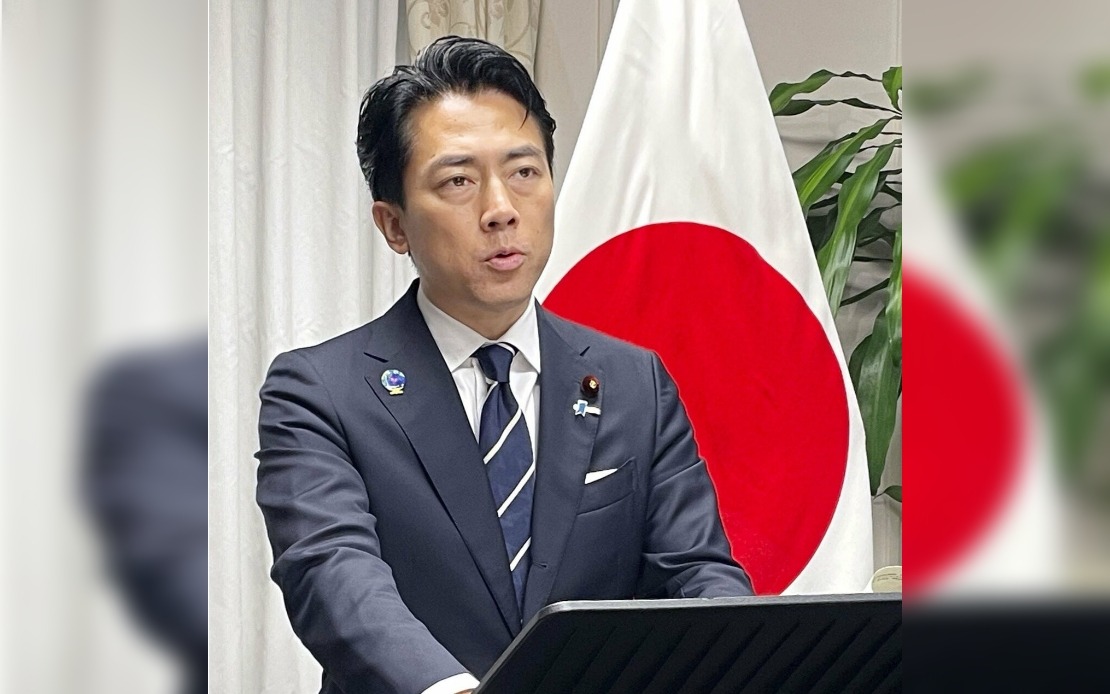
Defence Minister Shinjiro Koizumi has opened a significant door in Japanese political discourse by arguing that his nation cannot shy away from examining nuclear weapons policy. Speaking through an online programme released Friday, Koizumi framed the debate as an inevitable consequence of Japan's changing security landscape, particularly as European allies reassess their own nuclear deterrence strategies. His remarks acquire added weight given that the government intends to revise three cornerstone national security documents before year's end, suggesting that the nuclear question may feature prominently in Tokyo's strategic rethinking.
The timing of Koizumi's intervention reflects a broader recalibration occurring across the Western alliance in response to geopolitical pressures. France and Finland have become focal points in this conversation. Finland's parliament approved legislation in June that would enable nuclear weapons deployment on its territory—a striking development given its historical non-aligned status and recent NATO accession. Simultaneously, French President Emmanuel Macron announced in March that Paris would expand its nuclear warhead stockpile, signalling that even established nuclear powers view current threats as necessitating enhanced atomic capabilities. These European precedents provide the policy backdrop against which Koizumi and others in Tokyo are reconsidering Japan's position.
Japan's security dilemma remains fundamentally distinct from that of European nations, shaped by its unique historical trauma and strategic dependencies. As the sole country to experience nuclear warfare through the atomic bombings of Hiroshima and Nagasaki in 1945, Japan has anchored its post-war identity to the Three Non-Nuclear Principles: not producing, not possessing, and not allowing nuclear weapons on Japanese soil. This framework has enjoyed broad public support and international legitimacy across decades. Yet simultaneously, Japan has relied on the United States nuclear umbrella for security guarantees, creating an implicit tension between renouncing nuclear weapons while depending on their deterrent effect. This structural paradox now faces pressure as regional threats intensify and allied nuclear strategies evolve.
Koizumi's core argument centres on breaking what he characterises as an artificial taboo preventing rational strategic discourse. He contends that Japan's security environment has deteriorated measurably and that refusing to discuss nuclear options represents an intellectual capitulation rather than principled restraint. This framing attempts to reposition the nuclear question from a moral or emotional domain into a pragmatic policy zone where costs and benefits can be systematically weighed. Such recasting is significant because it shifts the conversation's terms, moving it away from whether Japan should possess nuclear weapons toward whether Japan should even be permitted to debate the possibility.
The political ground for such discussions has begun shifting within Japanese leadership circles. In December of the previous year, a government source involved in security policy formulation under Prime Minister Sanae Takaichi's administration explicitly suggested that Japan should acquire nuclear capabilities. The statement generated immediate and intense pushback from opposition parties and foreign governments, yet it also demonstrated that serious figures within Japan's security establishment see nuclear reconsideration as potentially necessary. Former Defence Minister Itsunori Onodera similarly advocated in late 2024 for reconsidering Japan's non-nuclear principles, indicating that the position is gaining incremental acceptance among senior security officials.
For Southeast Asian observers and policymakers, Japan's nuclear debate carries substantial implications. Many regional nations have repeatedly urged Tokyo to maintain its non-nuclear status, viewing Japan's Three Principles as a stabilising force in an already militarised Asia-Pacific environment. A Japanese pivot toward nuclear weapons could trigger cascading security concerns throughout the region, potentially prompting other nations to accelerate weapons programmes or revise strategic partnerships. Additionally, any Japanese nuclear development would profoundly affect the regional balance, particularly in relation to China's existing arsenal and North Korea's nuclear programme. The broader message to Southeast Asia would be one of declining confidence in non-proliferation norms and the efficacy of security alliance arrangements.
The legal architecture surrounding Japan's nuclear status also merits examination. Japan remains a signatory to the Nuclear Non-Proliferation Treaty, binding it against developing nuclear weapons. Withdrawing from the NPT would represent a seismic shift in international law compliance and the rules-based order that Tokyo has historically championed. Such a step would likely trigger severe diplomatic consequences and could undermine Japan's credibility on other international legal matters. These constraints suggest that even if Japanese policymakers develop greater openness to nuclear options theoretically, practical implementation would require overcoming formidable legal, diplomatic, and domestic hurdles.
Domestic Japanese politics adds another complicating layer to this emerging debate. Opinion surveys consistently demonstrate that substantial majorities of the Japanese public oppose nuclear weapons development, reflecting the deep pacifist sentiment embedded in post-war Japanese society. This popular resistance represents an enduring constraint on any government pursuing nuclear acquisition, regardless of how security experts reframe the arguments. Therefore, even as elite circles expand their discussions of nuclear options, grassroots political opposition provides a counterweight that Koizumi and fellow advocates must navigate. The tension between elite strategic thinking and popular anti-nuclear sentiment may prove decisive in determining Japan's actual trajectory.
The international dimension cannot be overlooked. The United States, Japan's primary security guarantor, has maintained ambiguity regarding whether it would support Japanese nuclear development. Washington generally prefers that Japan remain non-nuclear while remaining dependent on American protection, a formula that maximises US influence over regional security matters. However, if the US assessed that Japanese nuclear capacity would enhance containment strategies in Asia, the American calculus could shift. Similarly, reaction from China, Russia, and other powers would shape the feasibility and consequences of any Japanese nuclear programme. Koizumi's call for debate must be understood partly as testing international waters and gauging whether circumstances now permit reconsideration of options that Tokyo officially closed in 1968.
Moving forward, the debate that Koizumi has legitimised will likely intensify as Japan finalises its revised security strategy by year's end. This doctrinal exercise provides an opportunity for Japanese leadership to reaffirm commitment to non-nuclear principles, clarify the role of the US security guarantee, and articulate concrete strategies for addressing regional security challenges without nuclear weapons. Alternatively, it could produce language sufficiently ambiguous to leave future nuclear acquisition theoretically open. For Malaysia and other Southeast Asian nations watching Japan's trajectory, this period represents a critical juncture in which Japan's strategic choices may reverberate across the region for decades. The outcome will substantially influence whether the Asia-Pacific region continues moving toward stricter non-proliferation norms or gradually accepts nuclear proliferation as inevitable among major powers.

