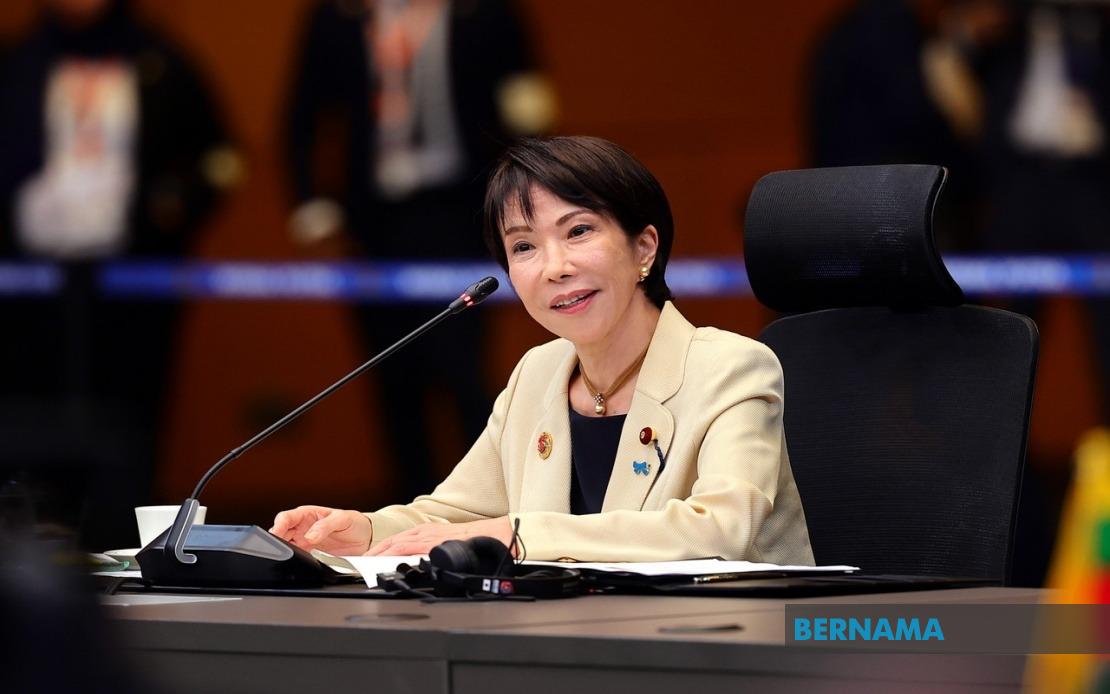
Japanese Prime Minister Sanae Takaichi has escalated Tokyo's diplomatic engagement with Middle Eastern partners by directly appealing to Oman's Sultan Haitham bin Tariq al-Said to safeguard the free flow of maritime traffic through the Strait of Hormuz. The telephone discussion between the two leaders on Monday underscores Japan's mounting concern over the security of one of the world's most critical energy chokepoints, particularly as conventional diplomatic channels between Washington and Tehran remain frozen.
The Strait of Hormuz represents far more than a regional waterway for Japan and most Southeast Asian economies. Through this narrow passage between Oman and Iran flows roughly one-third of all global seaborne petroleum trade, making its integrity essential to energy security throughout Asia. Japan, which depends almost entirely on imported oil and liquefied natural gas to fuel its economy, faces genuine vulnerability whenever tensions rise in the Persian Gulf region. Any prolonged disruption to Hormuz shipping would immediately reverberate through regional supply chains and could trigger commodity price spikes that would ripple across Malaysia, Singapore, and other ASEAN nations reliant on stable energy imports.
Takaichi's outreach to Sultan Haitham reflects Tokyo's sophisticated diplomatic strategy in the Middle East. Rather than engaging directly with either Washington or Tehran—positions that would entail uncomfortable political choices—Japan has strategically cultivated a partnership with Oman, a nation historically respected for its pragmatic neutrality and mediation capabilities. Oman has long served as an unofficial conduit for dialogue between opposing parties in the Gulf, having hosted secret talks between American and Iranian officials in the past. By channelling her concerns through Muscat, Takaichi signals that Tokyo values constructive problem-solving over ideological positioning.
The sultan's response, as relayed by Takaichi to journalists in Tokyo, offered measured encouragement without firm commitments. Haitham indicated that Oman would take into account the perspectives of all nations utilising the waterway before taking positions on the dispute. This diplomatic formulation suggests that Oman intends to maintain its traditional role as an honest broker rather than aligning itself with any single power bloc. For Southeast Asia, this approach carries particular relevance. Nations throughout the region depend on Hormuz transit and therefore have a collective interest in Oman preserving its neutral mediator role, as any dramatic shift in Muscat's positioning could destabilise the delicate equilibrium.
Understanding the current paralysis in US-Iranian negotiations requires recognising the structural impediments that have resisted resolution for years. The 2015 Joint Comprehensive Plan of Action (JCPOA) collapsed when the United States withdrew in 2018, and despite intermittent efforts at reconciliation, fundamental disagreements persist over nuclear programme constraints, sanctions relief, and regional military activities. This extended standoff has created a vacuum where miscalculation becomes increasingly probable, elevating risks for all maritime users in the region.
Japan's particular vulnerability stems partly from its historical reliance on Gulf petroleum and partly from its strategic positioning as a US ally. Unlike some nations that can maintain genuine neutrality in US-Iran disputes, Japan faces pressure to align with American foreign policy while simultaneously protecting its own energy interests. This balancing act has grown more precarious as Washington's approach to Iran has become more confrontational. Tokyo has attempted to thread this needle by maintaining diplomatic channels with both powers while emphasising the universal interest in maintaining freedom of navigation.
Oman's mediation efforts gain credibility from its proven track record. The sultanate's previous hosting of secret US-Iran negotiations demonstrated its ability to facilitate dialogue without being seen as compromised by either party. Additionally, Oman's geographic position—sitting directly on the Strait of Hormuz's south bank—gives it legitimate authority to speak about shipping security. The nation benefits enormously from maintaining the status quo; disruptions to Hormuz traffic would harm Omani commerce and regional stability equally.
Takaichi's intervention also reflects broader Japanese strategy to strengthen ties across the Middle East and North Africa region. Japan has invested considerable diplomatic capital in cultivating relationships with Gulf monarchies and regional powers, viewing these partnerships as essential to securing long-term energy supplies and maintaining influence in global affairs. By personally engaging with Sultan Haitham, the Japanese prime minister elevated the significance of this issue within Tokyo's foreign policy hierarchy.
For Malaysia and other Southeast Asian nations, Japan's diplomatic activism carries important implications. The region's prosperity depends significantly on uninterrupted flow through critical maritime passages. Any precedent of successful mediation in the Hormuz crisis could provide valuable lessons for protecting other vital sea lanes, including the Malacca Strait, through which even more global shipping passes. Moreover, if Oman can facilitate some resumption of US-Iranian dialogue, it would benefit all parties dependent on Gulf stability.
The coming months will test whether Oman's diplomatic efforts, now bolstered by international support including from Japan, can help break the current impasse. Sultan Haitham's commitment to consult with Hormuz users suggests that Muscat recognises the international nature of this challenge. As long as the US-Iran dispute remains unresolved, the threat of accidental escalation or deliberate provocation will persist, keeping regional and global energy markets on edge. Japan's clear articulation of its interests through Takaichi's phone call demonstrates that Tokyo will not remain passive while one of its most vital strategic interests hangs in the balance.

