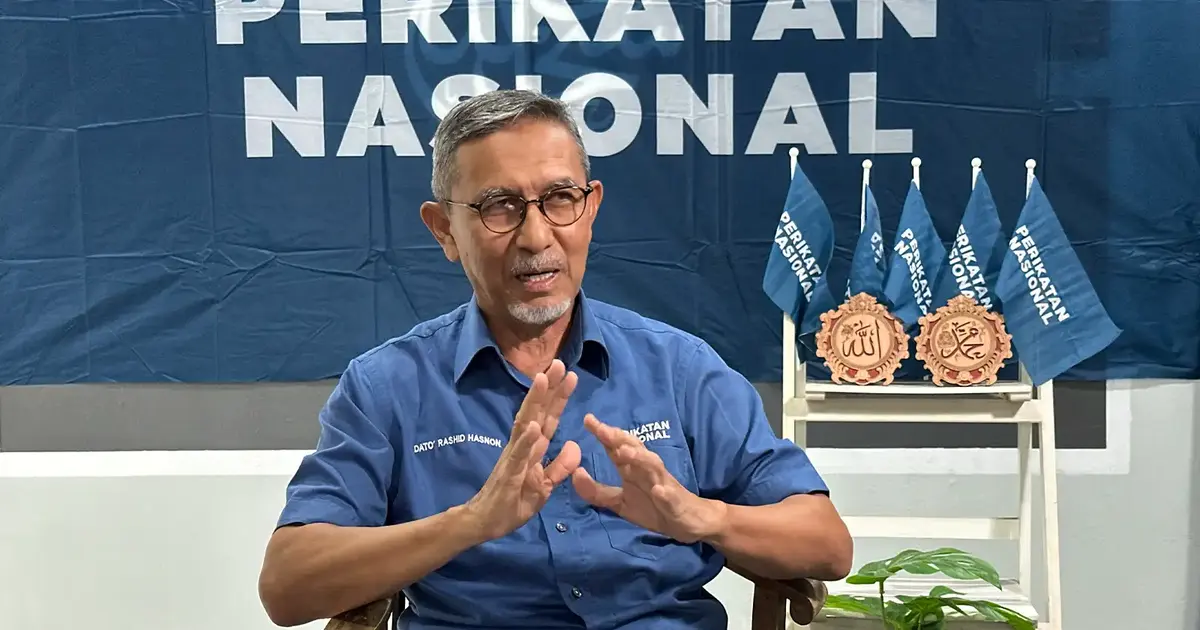
Rashid Hasnon, the number two figure within Bersatu's Johor machinery and a candidate in the Senggarang contest, has moved to ease concerns about internal coalition tensions by dismissing the impact of PAS representatives appearing at a Barisan Nasional function yesterday. The remarks underscore an apparent comfort level among Bersatu's upper ranks despite the visible presence of the Islamic party at what should ostensibly be a show of Barisan unity.
The appearance of the PAS pair at the BN gathering had potentially raised eyebrows among observers tracking the delicate balance of power within Malaysia's dominant coalition, particularly in Johor where electoral fortunes hinge on seamless coordination between partner parties. However, Hasnon's casual dismissal of their attendance suggests that such cross-party appearances are viewed as routine rather than problematic by the Bersatu leadership contesting in this state.
Bersatu's positioning as a relative newcomer to Barisan—having joined after shifting its political alignment—has meant the party must carefully calibrate its standing within the coalition framework. Johor, as one of Malaysia's most electorally significant states and a traditional BN stronghold, carries particular weight in these calculations. The party's number two figure publicly downplaying potential friction signals a degree of confidence in the coalition's stability, at least from the Bersatu perspective.
Rashid's candidacy in Senggarang places him at the frontline of Bersatu's electoral push in the state. His willingness to address and dismiss questions about rival coalition members indicates a tactical choice to project strength and internal harmony, messaging that parties typically employ when they sense an electoral advantage or wish to prevent speculation about cracks in their ranks. By treating the PAS attendance as inconsequential, he effectively reframes what could have been a story about coalition awkwardness into a narrative of coalition confidence.
The dynamic between Bersatu and PAS within Barisan remains notable given both parties' relatively recent histories and distinct constituencies. PAS, with its Islamic-focused base, and Bersatu, which has attempted to position itself as a multiethnic and cross-religious party, occupy different spaces within the coalition. When their representatives appear at the same events, observers often scrutinise the interaction for signs of tension or alignment shifts. Hasnon's casual brush-off suggests Bersatu views such co-presence as entirely normal governance.
For Malaysian voters and political observers, this kind of statement carries weight in assessing coalition stability ahead of electoral contests. The confidence with which Bersatu's deputy conducts himself on the campaign trail contributes to the broader narrative around whether Barisan's component parties view their partnership as sustainable and mutually beneficial. A nervous or defensive tone might have suggested otherwise; Hasnon's relaxed approach projects the opposite impression.
In Johor specifically, where Bersatu has invested significant political capital and fielded candidates across multiple constituencies, maintaining an appearance of coalition cohesion serves practical campaign purposes. Divided messaging from the coalition could confuse voters or appear to validate opposition arguments about Barisan's internal contradictions. By having senior figures publicly demonstrate comfort with cross-party participation at official events, Bersatu effectively inoculates against such criticism.
The Senggarang constituency represents one data point among many in understanding how Bersatu intends to secure and expand its electoral footprint within Johor. Candidates like Hasnon serve as ambassadors for the party's broader campaign strategy, and their public comments often reflect carefully considered messaging that has been aligned with party leadership. His dismissal of PAS's presence, therefore, likely represents a deliberate communication choice rather than an off-the-cuff remark.
Rashid's position as Bersatu's second-ranking official in the state means his statements carry additional significance within party circles and among politically attuned observers tracking leadership dynamics. By taking a relaxed stance toward PAS participation in shared BN functions, he models the kind of coalition pragmatism that the party wishes to project internally and externally. This approach may also serve to pre-empt potential complaints from grassroots Bersatu members who might otherwise fret about rival coalition members' visibility.
The broader context involves Barisan's ongoing efforts to consolidate support and project unity ahead of electoral contests. Within this framework, Bersatu's message discipline around coalition participation—particularly when senior figures publicly endorse the normality of cross-party events—contributes meaningfully to the coalition's electoral strategy. Hasnon's comments thus become part of a larger coordinated effort to control the narrative around Barisan's internal dynamics.

