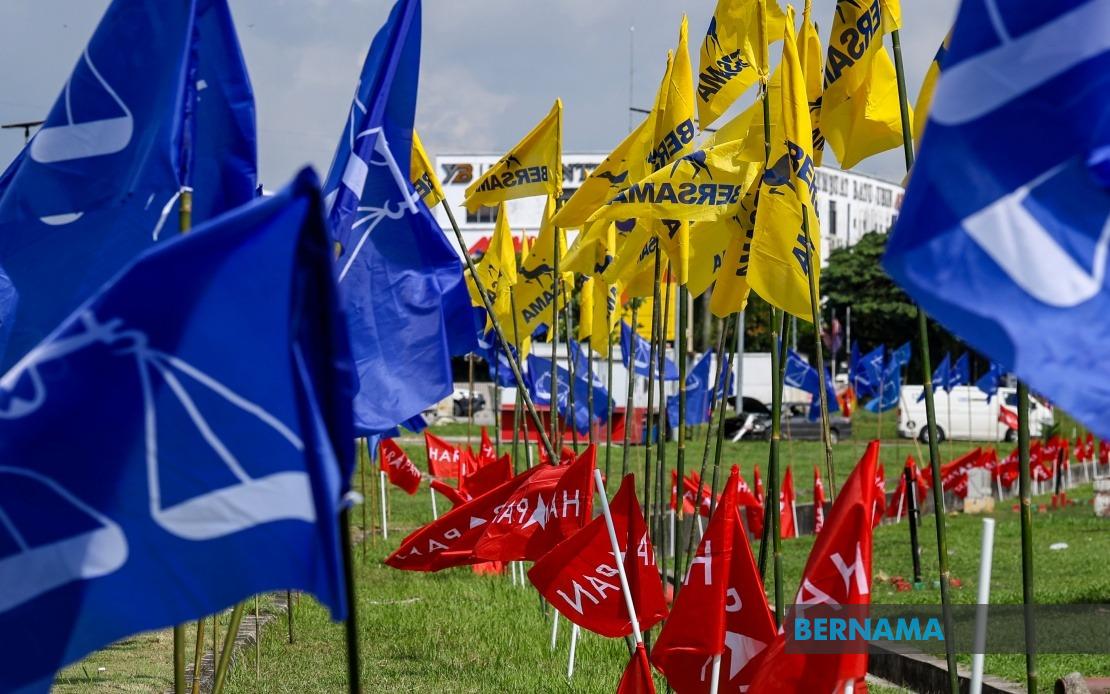
The opening week of Johor's 16th state election campaign has unfolded with notably subdued energy, diverging sharply from the traditional model of high-decibel mass gatherings and public spectacles. Instead, all contesting parties have gravitated towards intimate, constituent-level engagement strategies including residential visits, small discussion groups, and localised community programmes. This methodological shift reflects a broader recalibration of electoral tactics adapted to contemporary political dynamics and resource constraints facing Malaysian political organisations.
According to senior political analyst Prof Datuk Dr Sivamurugan Pandian from Universiti Sains Malaysia, parties are deliberately engineering a gradual escalation of campaign intensity. The current phase prioritises establishing foundational organisational networks and deepening personal connections between candidates and voters—a groundwork essential before mobilising more visible machinery in subsequent campaign phases. By adopting face-to-face methodologies, candidates gain invaluable intelligence about constituent concerns whilst simultaneously reinforcing party organisational capabilities and demonstrating more efficient deployment of electoral resources before the anticipated second-phase acceleration.
Dr Sivamurugan emphasises that the initial week serves primarily as a constructive phase rather than the definitive contest. Party hierarchies have deliberately withheld full organisational strength, reserving senior leadership deployment and escalated rally activity for the second week onwards, coupled with intensified digital campaigns targeting persuadable electorates. This tactical sequencing suggests calculated confidence in the ability to surge momentum once foundational preparations have been consolidated.
The evolution towards data-driven, hybrid campaign methodologies reflects global electoral trends increasingly evident across Southeast Asia. According to Dr Azmi Hassan, a geostrategist at the Nusantara Academy for Strategic Research, modern campaigns diverge fundamentally from historical approaches centred on large-scale public gatherings. Contemporary strategies employ sophisticated voter categorisation—segmenting electorates into committed supporters (white), persuadable moderates (grey), and opposition constituencies (black)—enabling precisely targeted messaging and direct persuasion attempts through deployed campaign teams engaging voters individually or in intimate settings.
Thematic analysis of early campaign messaging reveals substantial consistency across contesting coalitions and individual parties. Researcher Mujibu Abd Muis from the Ilham Centre identifies three dominant narrative pillars: institutional track records demonstrating past governance effectiveness, forward-looking policy pledges promising future development, and claims regarding each coalition's superior capacity to deliver political stability. Nevertheless, these narratives have yet to crystallise into sufficiently compelling frameworks capable of fundamentally reshaping the electoral landscape or dominating public discourse.
Crucially, campaign narratives achieve substantive electoral impact only when successfully translated into issues directly affecting voters' lived experiences. Mujibu underscores that voter receptiveness depends fundamentally on message relevance to daily economic realities—encompassing cost-of-living pressures, employment availability, local infrastructure development, and public service delivery standards. Generic assertions regarding stability or competence fail to penetrate unless anchored to tangible constituent concerns experiencing direct policy impact.
Geographic deployment patterns reveal sophisticated strategic prioritisation reflecting each coalition's competitive assessments. Northern Johor constituencies—including Muar, Tangkak, Segamat, and portions of Batu Pahat and Kluang—have witnessed disproportionate campaign machinery concentration. This geographic focussing indicates rational resource optimisation targeting constituencies anticipated to prove electorally decisive or intensely competitive. The conspicuous presence of senior national leadership in northern Johor constituencies signals strategic importance transcending routine campaign visibility-raising, communicating organisational priority determinations to both candidates and local supporters.
Coalitional dynamics reflect asymmetric regional strength assessments. Barisan Nasional maintains anticipated dominance across eastern coastal constituencies, particularly Mersing and Kota Tinggi, whilst Pakatan Harapan demonstrates anticipated competitive advantages in southern and western Johor districts. These regional strength differentials directly determine campaign machinery deployment patterns, with each coalition concentrating resources where electoral outcomes remain genuinely uncertain or where unexpected gains appear feasible. Campaign mobilisation patterns therefore serve as transparent indicators of each coalition's genuine competitive confidence and realistic electoral assessments.
Political analysts universally acknowledge that voter participation rates will disproportionately influence final electoral outcomes in Johor. The capacity of party machinery to effectively mobilise supporter turnout—particularly in constituencies where each coalition maintains competitive positioning—will ultimately determine seat distributions and coalition control prospects. This emphasis on turnout mechanics underscores that electoral victory increasingly depends less on persuading opposition supporters or motivating weakly committed supporters than on engineering superior supporter activation and participation rates.
The 16th Johor state election encompasses 172 candidates contesting 56 state assembly seats across the state. Early voting was scheduled for July 7, with polling day set for July 11. The election's compressed timeline intensifies the strategic importance of early campaign momentum—allowing insufficient time for narrative recovery should initial messaging prove ineffective or events alter electoral perceptions.
For Malaysian observers and regional political analysts, Johor's campaign methodology shift carries broader significance beyond state-level electoral considerations. The apparent efficacy of targeted, community-focused engagement versus traditional mass-assembly approaches will inform campaign strategy evolution across Malaysia's forthcoming electoral contests. Should Johor's measured, data-driven approach produce competitive results for participating coalitions, it may accelerate adoption of similar methodologies in federal and other state elections, fundamentally reshaping Malaysian electoral campaign norms across the political spectrum.

