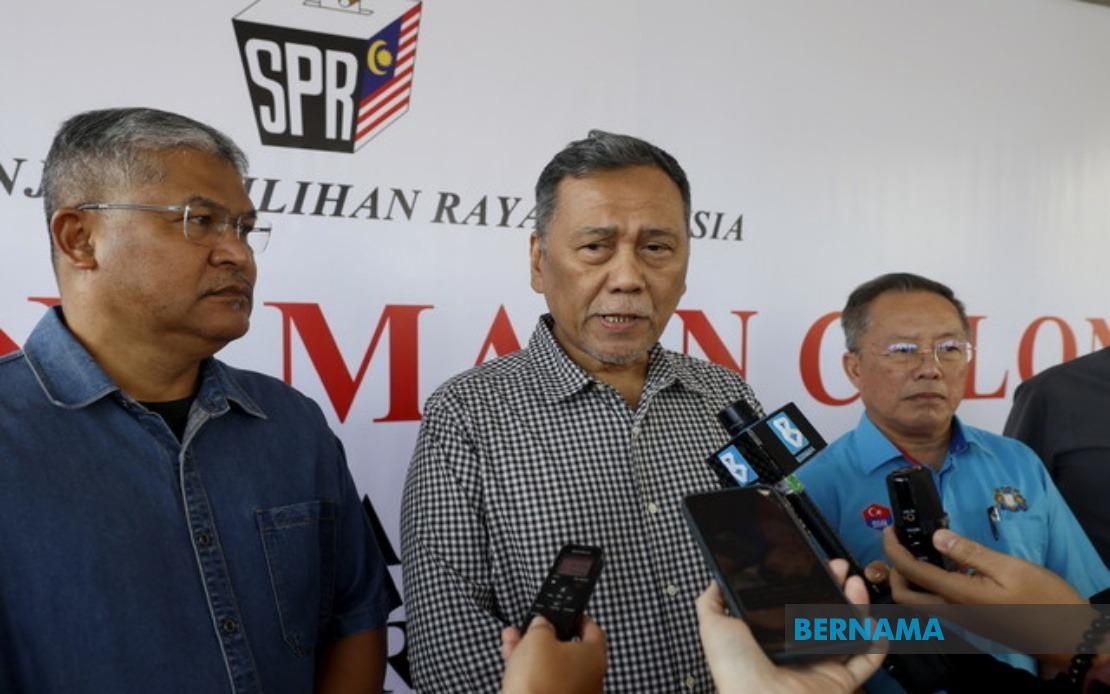
With the Johor state election nomination process set to commence on June 27, the Election Commission has distributed 593 nomination forms across the state, yet confirmed participant numbers remain modest at 133 candidates who have paid their deposits. Election Commission chairman Datuk Seri Ramlan Harun indicated that the uptake reflects the ongoing period before nomination day, during which aspirants can still complete their formal entry requirements. He expressed confidence that additional candidates would register their intentions before the morning deadline, allowing the nomination process to unfold without logistical strain.
The relatively modest deposit payment rate—approximately 22 percent of those who obtained forms—underscores the traditional pattern in Malaysian state elections where many candidates file applications without committing funds until the final hours. Ramlan's remarks suggest the Election Commission anticipated this rhythm and has structured the timeline to accommodate last-minute registrations. The 56 nomination centres positioned throughout Johor have undergone consecutive trial runs to ensure operational readiness, reflecting institutional preparation for what could be a substantial surge in submissions.
The Election Commission's emphasis on procedural smoothness and advance payments speaks to a broader administrative concern: managing large-scale nomination processes without congestion. By encouraging early deposit payments, the Commission seeks to distribute the candidate verification workload across multiple days rather than concentrating it into a compressed final window. This approach has precedent in previous Malaysian elections and reflects lessons learned about bottlenecks in nomination procedures.
Security protocols governing the nomination centres reveal the tension between permitting campaign participation and preventing disorder during what are historically sensitive moments in electoral cycles. The returning officer for Maharani, Zainal Eran, outlined measures restricting physical access to nomination centres—only candidates, proposers, and one representative per party may enter the actual venue. All other party supporters will occupy segregated outdoor areas demarcated by barriers, a configuration designed to prevent physical confrontations while allowing visible party presence.
These security arrangements carry particular weight in Johor, a state where electoral contests often generate intense partisan mobilisation. The geographic separation of supporters reflects administrative acknowledgment that nomination day gatherings can become flashpoints for inter-party tensions, particularly when rival coalitions perceive advantages or disadvantages in seat allocations. The barrier system effectively creates buffer zones that maintain order whilst preserving the symbolic importance of nomination day gatherings for political organisations.
Pakatan Harapan's decision to field candidates across all 56 seats represents an ambitious approach from the opposition coalition, which has allocated nominations strategically across its constituent parties: PKR contesting 20 seats, Amanah 19, and DAP 17. This distribution reflects internal negotiations about electoral viability and geographic strongholds, with each component party receiving seats where it possesses organisational infrastructure or demographic advantages. The allocation signals Pakatan Harapan's determination to contest comprehensively despite governing in Selangor and Penang, where their focus has concentrated.
Barisan Nasional's matching commitment to contest all 56 seats underscores the coalition's refusal to cede any constituency unopposed, a strategic posture essential for maintaining appearance of electoral dominance. The coalition's distribution—36 UMNO candidates, 16 MCA, and four MIC—reflects UMNO's preponderance within the Barisan Nasional framework and the diminished electoral representation of component parties representing Indian and Chinese communities. This composition has attracted occasional criticism from smaller coalition members regarding equitable seat allocation.
Perikatan Nasional's more selective approach, contesting only 33 of 56 seats through PAS (11), Bersatu (16), the Malaysian Indian People's Party (5), and Pejuang (1), indicates the coalition's strategic focus on winnable contests. PAS's concentration on specific constituencies reflects its traditional strongholds within Johor, whilst Bersatu's substantial allocation demonstrates the faction's determination to establish electoral relevance in a critical state. This differentiated approach contrasts with the all-in strategies of Pakatan Harapan and Barisan Nasional, suggesting Perikatan Nasional views the contest as secondary to other political priorities.
The participation of smaller political movements adds complexity to the electoral landscape. The Malaysian United Democratic Alliance's four-seat participation, Parti Sosialis Malaysia's single candidacy, and Parti Bersama Malaysia's electoral debut with 15 seats reflect diverse motivations—some seeking genuine electoral traction, others pursuing visibility or organisational development. Parti Bersama Malaysia's inaugural contest carries particular significance as a new entrant attempting to establish credentials within Malaysia's competitive multiparty environment.
The Johor election timeline—established following the June 1 dissolution of the state assembly—concentrates key dates within a compressed schedule: nomination on June 27, early voting on July 7, and general polling on July 11. This abbreviated campaign period limits the duration for candidate mobilisation and issue development compared to longer election cycles. The compressed timeline particularly advantages established parties possessing existing organisational infrastructure, potentially disadvantaging newer entrants or candidates running as independents who require extended periods to build name recognition.
For Malaysian and Southeast Asian observers, the Johor election represents a significant test of coalition durability and electoral strategy. Barisan Nasional's performance—whether it retains traditional dominance or encounters Pakatan Harapan advances—will provide indicators for upcoming federal and state contests. The results will clarify whether Johor remains a Barisan Nasional stronghold or whether opposition consolidation has eroded the coalition's historical advantage in the state.

