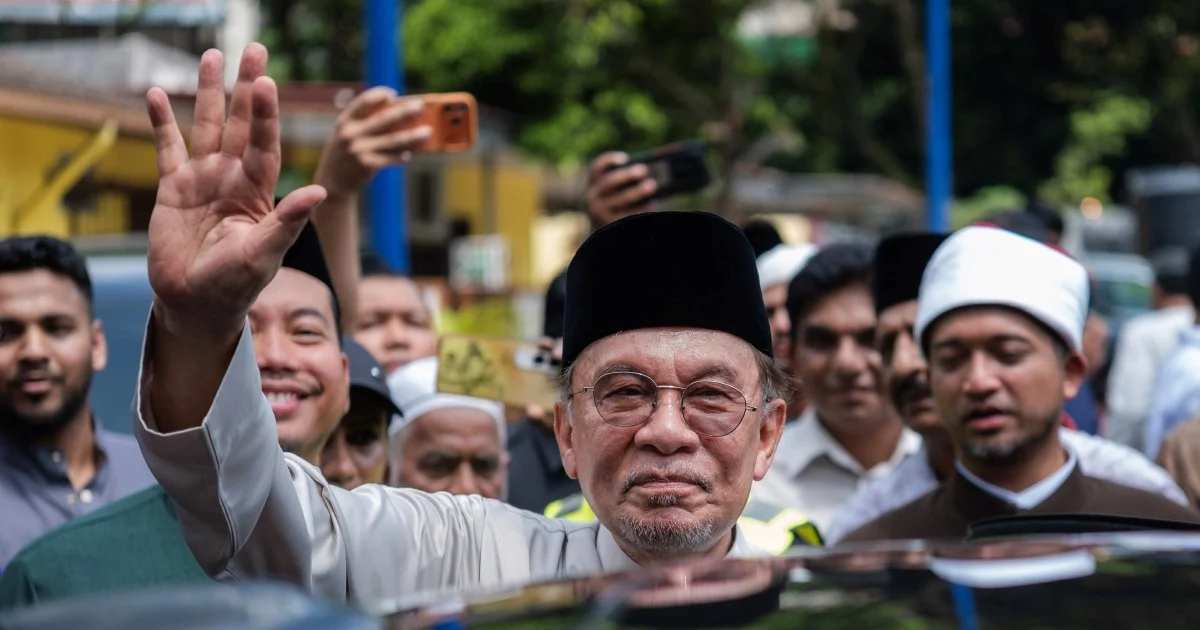
The Johor state election campaign has reached a decisive turning point, with Prime Minister Anwar Ibrahim, Deputy Prime Minister Zahid Hamidi and other prominent national political figures preparing to descend on the state for a concentrated weekend of campaign rallies and community engagement sessions. The convergence of top-tier leadership signals that political parties view Johor as a crucial battleground that could significantly shape the broader political landscape in Malaysia heading into the general election cycle.
Johor's electoral significance extends beyond state-level politics. As Malaysia's second-largest state by population and a major economic centre in the southern region, voting patterns here often reflect broader national sentiment. The state has historically been a stronghold of certain political coalitions, making it a bellwether for assessing public opinion and testing campaign messaging before scaling efforts nationwide. The presence of multiple senior leaders in a single weekend reflects the intensity with which both ruling and opposition coalitions are treating this contest.
Prime Minister Anwar Ibrahim's participation in Johor campaign activities underscores the federal government's stake in the outcome. His direct involvement signals that the administration views the election not merely as a local matter but as a referendum on its performance and policy direction. Anwar's presence is likely to focus on economic development achievements, infrastructure projects and governance improvements attributed to his administration. For Malaysian voters in Johor, his campaigns typically emphasise themes of economic inclusion and political reform aligned with his broader national agenda.
Deputy Prime Minister Zahid Hamidi's participation introduces a more complex dynamic. As a senior figure within the ruling coalition and a politician with deep roots in Johor, his campaign involvement carries particular weight within state political circles. His engagement reflects intra-coalition dynamics and his own political positioning within the government structure. Zahid's credentials as a long-time Johor figure give him credibility with local voters and internal party structures, making his weekend activities essential for mobilising grassroots support.
Beyond these two figures, other senior leaders are also expected to participate in the campaign schedule. The breadth of national leadership participation indicates that multiple political parties and coalition members view the Johor election as a litmus test for their organisational capacity and voter appeal. This multi-level engagement creates an intensive campaign environment where voters will be exposed to competing visions for the state's future articulated by figures with substantial national platforms.
The timing of this concentrated campaign push reflects strategic calculations about voter mobilisation and media attention. Concentrating leadership visits within a single weekend generates significant media coverage while maximising the impact of senior leaders' limited schedules. For political analysts observing Malaysian politics, such concentrated campaign deployments often precede voting and indicate which constituencies or regions parties consider most competitive or winnable.
For Johor voters, the influx of national leaders offers opportunities to directly engage with decision-makers on state-level concerns and federal policies affecting their livelihoods. However, it also reflects the extent to which state elections in Malaysia have become entangled with national political rivalries and coalition positioning. The weekend's activities will likely showcase competing narratives about economic management, development priorities and governance models.
The campaign events, including formal ceramahs and broader community engagement sessions, serve multiple purposes beyond simple voter persuasion. They demonstrate party organisational strength, test messaging resonance with different demographic groups and generate footage for social media and traditional media distribution. In contemporary Malaysian politics, these weekend campaign blitzes function as both direct voter engagement exercises and broader media spectacles designed to shape national political discourse.
The escalation evident in the weekend campaign schedule reflects the increasing polarisation within Malaysia's political landscape and the stakes parties perceive in state-level contests. Johor's election is no longer viewed primarily through a state governance lens but as a competition with direct implications for federal power dynamics, coalition stability and political momentum heading toward the next general election cycle. The convergence of national leaders this weekend marks a shift from preliminary campaign phases toward the decisive period where highest-ranking officials deploy their credibility and political capital most strategically. How voters respond to these intensive campaign efforts will offer significant insights into political sentiment across Malaysia's southern region and potentially influence broader electoral calculations at the federal level.

