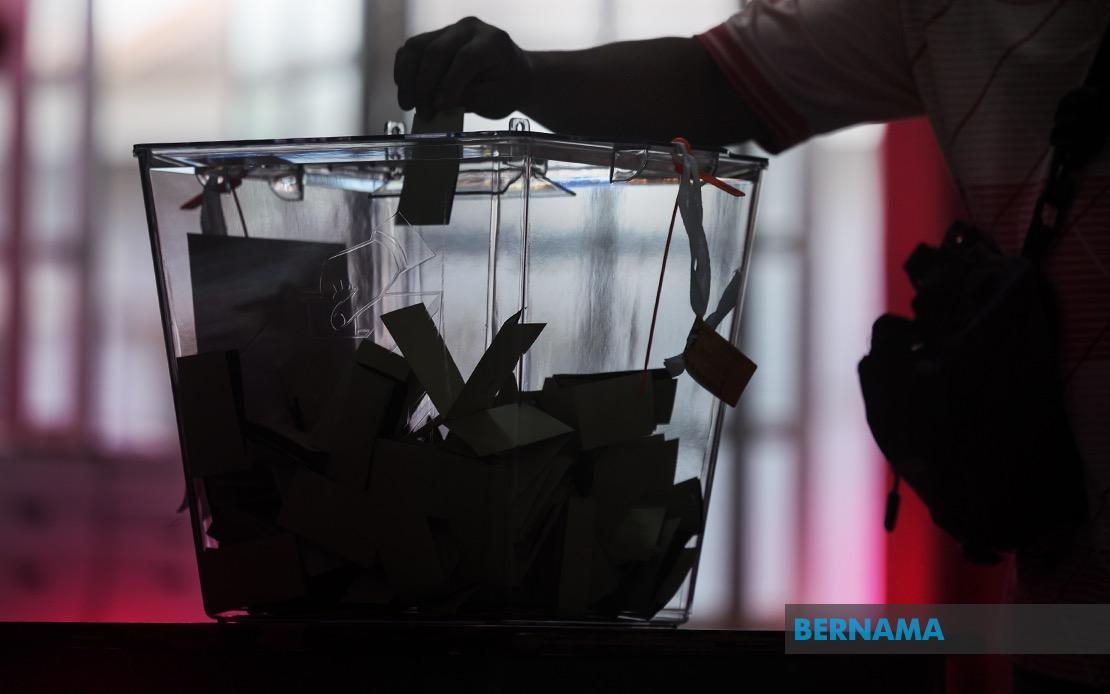
The forthcoming 16th Johor state election stands to be decided substantially by which voters show up to cast their ballots, according to political analysis from Universiti Teknologi Malaysia. Associate Professor Dr Mazlan Ali contends that elevated participation rates among outstation, young, and uncommitted voters would likely favour Pakatan Harapan candidates in urban and semi-urban districts, reversing the dynamics that shaped the previous state-level contest held in 2022.
The underlying logic rests on what voters currently perceive as working in their favour at the national level. Dr Mazlan identifies federal political stability, improving economic metrics, and targeted government spending—encompassing fuel subsidies and direct financial assistance—as catalysts encouraging PH-aligned voters to prioritise returning home for the election. These voters, he suggests, recognise they have benefited from the incumbents' stewardship and wish to preserve that arrangement across both federal and state governance structures. The continuity argument, anchored in tangible economic relief measures, resonates particularly with those living beyond Johor's borders who maintain electoral registration there.
History provides instructive contrast. When Johor held its 2022 state election, turnout languished just above 50 percent, fundamentally reshaping the competition's terrain. The COVID-19 pandemic discouraged many voters residing outside the state from making the journey home, effectively handing organisational advantage to Barisan Nasional, which possesses deeper roots among permanent local constituencies and inherited voter loyalties. BN capitalised on this disparity to secure 40 seats, a commanding position built substantially on demographic proximity rather than broader electoral appeal. The lesson was elementary: structural disadvantages favouring decentralised support bases amplify when participation skews toward committed localised blocs.
Yet that same year witnessed a marked transformation. When Malaysia held its 15th General Election later in 2022, voter turnout climbed to approximately 75 percent, fundamentally reordering the competitive landscape. Pakatan Harapan's parliamentary haul in Johor reached 14 seats, a result that reflected underlying strength concealed by the earlier state election's participation patterns. More strikingly, PH's total vote tally more than doubled, expanding from roughly 350,000 votes in the state election to 830,000 in the general election. This mathematical reality illuminates what dormant support exists when outstation voters mobilise: translating such participation into the state assembly context logically suggests PH could capture considerably more seats were comparable turnout achieved.
Dr Mazlan emphasises that current circumstances differ markedly from 2022's pandemic-constrained environment. Pandemic-related mobility restrictions have been lifted, societal conditions have normalised, and early indicators suggest outstation voters harbour greater willingness to return and participate. This changed operational context removes practical impediments that previously suppressed turnout, potentially unleashing latent demand from voters who remained disengaged not through apathy but through circumstantial barriers now dissolved.
The demographic composition of likely PH support provides further analytical leverage. Urban and semi-urban constituencies emerge as pivotal battlegrounds where the coalition competes most favourably. Voters concentrated in these areas demonstrate greater responsiveness to current governance questions, economic policy evaluation, administrative performance, and justice-centred political messaging. Conversely, Barisan Nasional's support remains more concentrated among voters influenced by racial and religious appeals, constituencies less densely populated in urbanised Johor districts. The geographical and ideological mismatch creates conditions where turnout composition directly determines outcomes.
Dr Mazlan further characterises PH's base as disproportionately comprised of outstation residents, persuadable voters with malleable preferences, younger citizens, educated cohorts, and individuals highly engaged via digital platforms. These constituencies gravitate toward PH's articulated programme emphasising fairness and equitable treatment. Their relative mobility and engagement with modern information channels means that when they do participate, they tend to align cohesively with the coalition's messaging. This bloc differs fundamentally from those primarily responsive to communal or religious identity appeals, meaning their activation carries outsized consequences for competitive outcomes.
The concentration of these voters outside Johor itself presents both opportunity and vulnerability for PH. Should outstation supporters mobilise and return to vote in substantial numbers, they could determine results in several contested seats, potentially shifting legislative control. However, converting voter inclination into actual ballot-casting behaviour requires effective campaign execution. PH's critical strategic challenge in the election's final phase involves ensuring registered voters who live elsewhere understand the stakes and overcome the transaction costs of returning home to vote.
The 2022 versus 2024 comparison frames the election as a test of whether structural participation dynamics have genuinely shifted or whether 2022 reflected an unusual pandemic-driven aberration. If turnout approaches the 75 percent achieved during the general election, historical precedent and demographic analysis suggest PH would substantially improve its seat count compared to the 2022 baseline. Conversely, if participation again hovers near 50 percent, BN's organisational advantages among geographically stable voters would likely reassert themselves. The election outcome may ultimately hinge less on policy arguments than on the prosaic question of who manages to transport supporters to polling stations.

