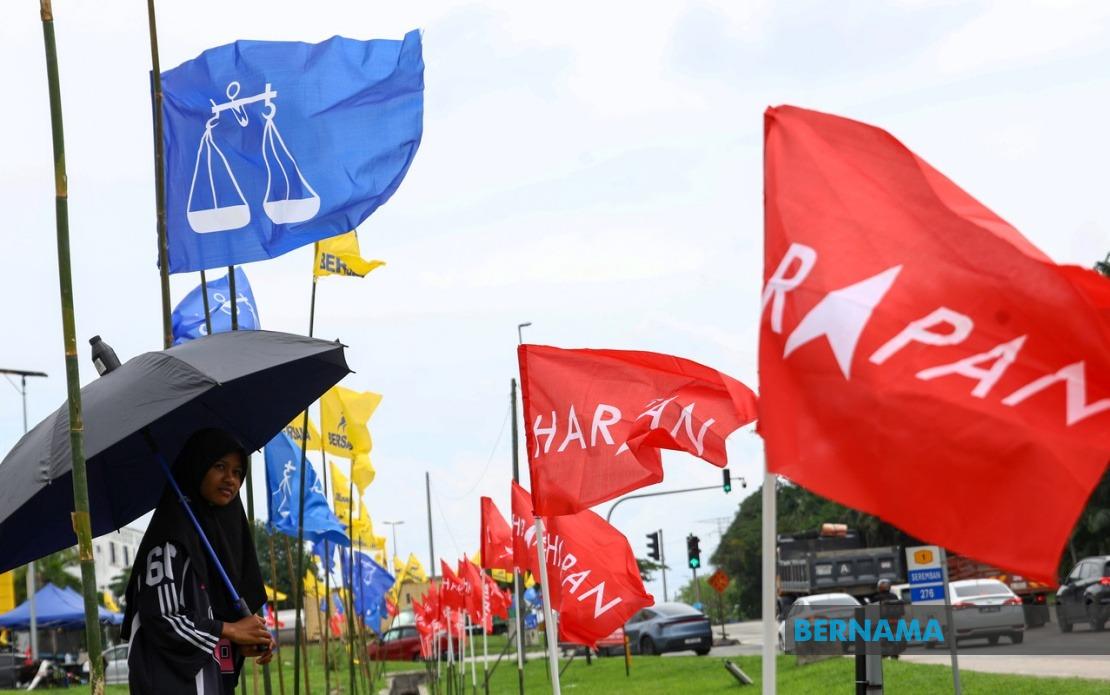
The second week of campaigning for Johor's 16th state election has crystallised a starkly different approach between Malaysia's two main political coalitions, each attempting to mobilise voters through methods that reflect their perceived strengths. Pakatan Harapan and Barisan Nasional, competing across all 56 state seats, have adopted competing narratives and tactical approaches as voters prepare to cast ballots on Saturday, July 11. The contest underscores how Malaysian political engagement continues to fragment, with no single messaging strategy guaranteed to resonate uniformly across the electorate.
Pakatan Harapan's campaign apparatus has concentrated its efforts on substantive policy propositions designed to address the immediate material concerns of ordinary Johoreans. The coalition's manifesto, titled "Johor For All," presents an integrated framework centred on raising domestic wage levels, ensuring affordable housing accessibility, nurturing employment quality, and establishing robust welfare protections. This positioning represents a deliberate pivot away from broader macroeconomic metrics—investment volumes and headline growth figures—towards demonstrable improvements in household purchasing power and living standards. Political analysts observe that this strategy reflects PH's assessment that voters have grown sceptical of development narratives that prioritise headline indicators without translating into tangible personal benefit.
Dr Mohammad Tawfik Yaakub from Universiti Malaya articulated PH's underlying logic: the coalition believes that Johor's advancement must ultimately be measured by its capacity to deliver genuine income growth, housing affordability, and equitable wealth distribution to its residents. The manifesto's emphasis on integrated wage strategies signals PH's confidence that comprehensive policy design—rather than symbolic gestures or personality-driven appeals—will persuade voters that the coalition understands and can address their lived economic anxieties. This approach presumes a voting public sophisticated enough to evaluate concrete policy offerings and sufficiently frustrated with previous governance to reward detailed programmatic alternatives.
Barisan Nasional's campaigning strategy has diverged markedly, centring instead on the mobilisation of prominent political personalities to amplify the coalition's reach and credibility. The return of Datuk Seri Hishammuddin Tun Hussein and Khairy Jamaluddin to active UMNO roles through the "Rumah Bangsa" initiative has provided BN with recognisable faces to anchor its messaging. Both figures enjoyed substantial influence during previous political cycles, and their reemergence signals BN's belief that personality recognition and established networks remain potent electoral assets. The coalition appears to be banking on the gravitational pull of familiar, respected figures to draw wavering supporters back into the fold and energise traditional party loyalists.
However, contemporary political analysis suggests that the efficacy of personality-driven campaigns may have diminished substantially compared to previous electoral contests. Dr Mohd Yusry Ibrahim, chief researcher at Ilham Centre and an academic at Universiti Malaysia Terengganu, cautioned that modern voters have become considerably more discerning consumers of political messaging. Contemporary electorates, he observed, now evaluate candidates and parties not merely on the basis of speaker recognition during campaign ceramah events but through a more rigorous lens encompassing policy clarity, candidate credibility, and demonstrated responsiveness to voter concerns. This shift represents a fundamental evolution in how voters engage with political persuasion, one that potentially favours substance over celebrity.
Nevertheless, Hishammuddin's participation carries particular strategic weight within the Johor context. His established provincial influence and reputation within UMNO's traditional support base create genuine potential to reactivate previously disengaged or disillusioned party members who may have drifted from BN during recent political turbulence. Hishammuddin functions as both a symbolic figure—embodying a version of UMNO associated with stability and institutional continuity—and as a mechanism for reconnecting with core constituencies that BN has struggled to maintain across successive electoral cycles. His presence effectively signals to wavering traditionalists that the coalition retains capacity for institutional renewal and leadership renewal.
Khairy Jamaluddin's contribution to BN's strategic calculus operates along a distinctly different axis. His consistent popularity among younger voters represents a deliberate attempt to breach demographic cohorts that have proven resistant to conventional BN messaging and brand loyalty. Khairy's appeal transcends conventional party affiliation; younger voters report attraction to his public persona, perceived authenticity, and visibility within media ecosystems beyond traditional party structures. His candidacy embodies BN's recognition that contemporary youth voting patterns have become fundamentally more fluid and personality-responsive, with generational cohorts displaying markedly weaker institutional party loyalty than their predecessors. This younger demographic's voting inclinations increasingly hinge on identification with charismatic individuals rather than inherited family political traditions.
The divergence between PH's policy-centric approach and BN's personality-focused strategy reflects deeper uncertainties within Malaysian political realignment about what actually persuades contemporary voters. Neither coalition can assume that their chosen tactical emphasis will prove decisive; the contest essentially becomes a test of whether voters prioritise detailed programmatic alternatives to current governance or respond more powerfully to recognition of trusted political personalities. The election thereby functions as a proxy referendum on voter priorities—do Johoreans demand better-articulated solutions to material concerns, or do they credit established figures with capacity to deliver institutional competence and stability?
The composition of the Johor electorate itself adds complexity to campaign calculus. With 172 candidates competing across 56 seats, individual candidate quality and local constituency connections may ultimately supersede either coalition-wide messaging strategy. Voters frequently evaluate electoral choices through hyperlocal lenses, assessing specific representatives' attentiveness to neighbourhood concerns rather than accepting wholesale the party-level narratives constructed in state capital campaign operations. This granular dimension of electoral behaviour complicates both PH's national policy messaging and BN's reliance on high-profile personalities with limited direct presence in numerous constituencies.
The demographic evolution of Johor's voter base adds another complicating factor. The state contains substantial younger cohorts with limited memory of BN governance dominance and substantial urban populations less tethered to traditional party networks. These groups' voting patterns require targeted engagement that acknowledges their distinct material preoccupations—whether that manifests through PH's policy specificity or through BN's cultivation of modern personality brands like Khairy. Early voting scheduled for July 7 will provide initial indicators of turnout patterns and potentially reveal which messaging approach resonates more powerfully across different voter segments.
Looking beyond this immediate contest, the Johor election will generate important intelligence about the future trajectory of Malaysian electoral politics. A decisive PH victory might validate policy-oriented campaigning and signal voter appetite for detailed programmatic alternatives. Conversely, a BN resurgence could suggest that personality recognition and institutional connectivity remain paramount electoral currencies. Most likely, results will prove mixed, reflecting the reality that Malaysian voters increasingly segment themselves by demographic and issue interest, rendering single-axis campaign strategies insufficient for commanding majority support across entire state electorates.

