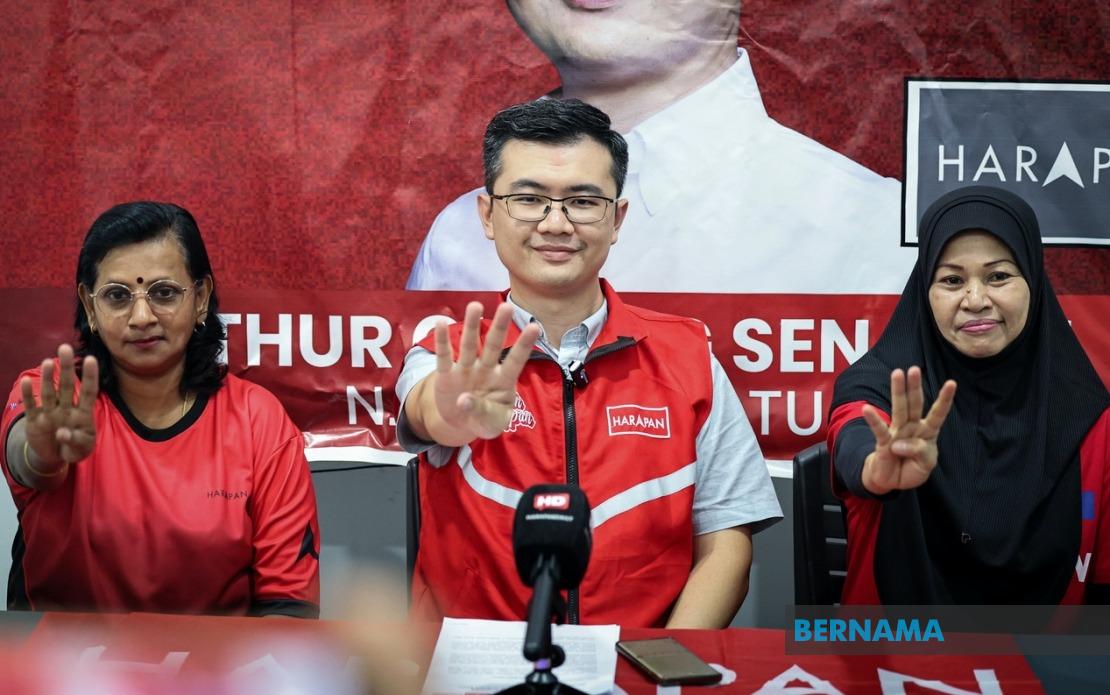
Arthur Chiong Sen Sern, the incumbent Pakatan Harapan assemblyman for Bukit Batu, is mounting an intensified campaign push as the Johor state election approaches on July 11, with a strategic focus on surpassing the 60 per cent voter participation mark. The effort carries particular weight for Chiong, who retained his seat in 2022 with an uncomfortably narrow margin of just 137 votes—a result that underscores the competitive nature of the constituency and the critical importance of mobilising his support base in the coming poll.
Speaking at the Bukit Batu campaign operations centre, Chiong outlined a multi-pronged approach to maximise turnout, emphasising that robust participation would significantly strengthen his chances of defending the seat. His strategy reflects an understanding that in razor-thin contests, voter engagement becomes the decisive factor. The Pakatan Harapan machinery in Bukit Batu has reportedly intensified ground operations, with daily campaigning now the norm rather than exception. Chiong characterised the feedback from constituents across different ethnic backgrounds as notably positive, suggesting momentum is building behind his candidacy.
The significance of the 60 per cent target becomes clear when contextualised against recent history. The previous Johor state election in 2022 recorded an overall voter turnout of approximately 54.9 per cent, meaning Chiong and his team are aiming to exceed historical participation levels by a meaningful margin. Achieving this would require mobilising voters who traditionally sit out state elections, a challenging task that demands sophisticated ground organisation and sustained messaging resonance. Higher turnout scenarios typically benefit incumbents with established community networks and track records of delivery, positioning Chiong favourably if his turnout objective materialises.
Beyond the mechanics of voter mobilisation, Chiong has sought to frame the contest within a broader narrative of political maturity and constructive competition. He praised the conduct of all candidates in the area, noting instances of mutual respect and goodwill exchanged during campaign encounters. This positioning carries strategic value, potentially appealing to swing voters and undecided constituents who may feel fatigued by adversarial political campaigns. By emphasising the possibility of vigorous yet dignified competition, Chiong distinguishes himself as a statesman-like figure, a perception that can translate into crossover appeal beyond his core coalition.
Chiong's campaign platform centres on seven interconnected development initiatives designed to address constituency-level concerns spanning infrastructure, health, youth welfare, and education. The proposals include establishing a data centre industry training initiative, upgrading the critical FT001 road corridor with modern traffic management systems, enhancing primary healthcare clinic facilities, launching youth anti-vape and anti-drug programmes, developing the local tourism sector, expanding school infrastructure, and providing free Malay and History tuition classes. Collectively, these commitments span economic development, public health, youth prevention, and educational access—a portfolio reflecting diverse constituent needs.
Notably, Chiong frames these determinations not merely as election-time promises but as extensions of work he claims to have already initiated or implemented during his current term. This approach carries important implications for voter credibility assessment. Rather than presenting entirely new commitments, he positions himself as a custodian of ongoing projects with proven capacity for execution. This framing is particularly potent for incumbents contesting in closely contested seats, as it allows them to claim credit for partial progress while committing to completion should they be returned to office.
The assemblyman's emphasis on the continuity dimension of his campaign reflects a broader understanding of electoral dynamics in Malaysian state elections. He explicitly connected experienced leadership, positive governmental relations, and sustained commitment to addressing community issues as prerequisites for sustainable development. This messaging targets a specific voter cohort—those prioritising delivery and competence over partisan rhetoric. By highlighting institutional relationships and administrative experience, Chiong appeals to pragmatic voters concerned with constituency service quality regardless of broader political colour.
The Bukit Batu contest exemplifies the intensely competitive nature of contemporary Malaysian state elections, where single-digit margins of victory have become increasingly common. The 137-vote margin of victory that Chiong secured three years ago places his seat squarely in the swing category, vulnerable to shifts in voter sentiment or fluctuations in turnout. His campaign strategy acknowledges this precarious position by prioritising turnout maximisation rather than assuming base consolidation. This reactive posture, while perhaps unavoidable given the margins involved, suggests Chiong recognises the fragility of his position.
For Malaysian and regional observers, the Bukit Batu contest and Chiong's campaign approach illustrate broader trends in Southeast Asian competitive politics. State elections in Malaysia increasingly function as barometers of national political sentiment, with local contests serving as proxies for assessing voter satisfaction with incumbent governing coalitions. The Johor election carries particular significance given the state's economic importance and its status as a traditional political bellwether. Turnout patterns in seats like Bukit Batu will inform analysis of whether Pakatan Harapan can sustain its 2022 resurgence or faces erosion of support.
Chiong's campaign strategy also reflects evolving approaches to political communication in Malaysia's maturing electoral environment. The emphasis on cross-ethnic voter engagement, substantive policy discussion, and respectful inter-party discourse suggests shifting expectations among constituents regarding campaign conduct. These developments could indicate broader maturation of voter preferences towards issue-based rather than personality-driven or divisive campaigns, particularly in urban and semi-urban constituencies like Bukit Batu.
The election machinery in Bukit Batu will be tested on July 11, with early voting scheduled for July 7. Chiong's success in achieving his 60 per cent turnout target will depend on the effectiveness of his ground operations, the resonance of his development agenda, and broader voter sentiment towards Pakatan Harapan's stewardship. Whether the constituency exceeds the previous 54.9 per cent participation rate will carry implications extending far beyond Bukit Batu, providing clues to national political trajectories as Malaysia's electoral cycle continues to evolve.

