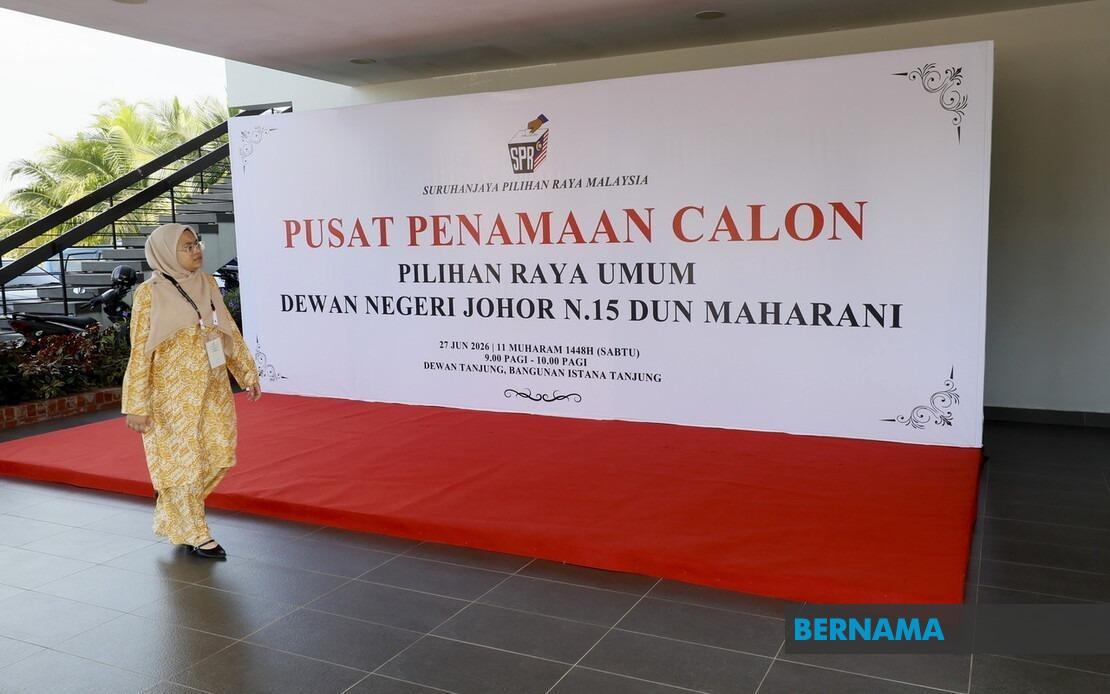
The 16th Johor State Election formally commenced today with the opening of nomination centres across all state constituencies, marking the official start of the electoral race for control of Malaysia's southern powerhouse. Beginning at 9 am at 56 separate nomination centres distributed throughout Johor, prospective candidates have until 10 am to lodge their nomination papers with Returning Officers, after which the Election Commission will publicly announce the list of cleared candidates eligible to contest. This procedural milestone represents a critical juncture in the state's political calendar, triggering a two-week intensive campaign period that will unfold until just before midnight on July 10, immediately preceding the early voting opportunity on July 7 and the main polling day scheduled for July 11.
The scale of voter participation demonstrates Johor's significance within Malaysia's broader political landscape. The state's electoral roll encompasses 2,727,926 registered voters, comprising 2,703,175 ordinary citizens eligible to cast ballots, alongside 12,041 military personnel and their families and 12,710 police officers and their families. This substantial electorate translates into meaningful political weight, making Johor contests closely watched by national observers seeking insights into voter sentiment and shifting political allegiances across the country's second-most populous state.
Interest in contesting these 56 state assembly seats has demonstrated considerable momentum. As of yesterday, 593 nomination forms had exchanged hands, whilst 133 prospective candidates had formally committed to their candidacies by submitting the required election deposits. These figures suggest a moderately contested election with multiple parties competing seriously for seats, though the final lineup will only crystallise once the Returning Officers complete their verification processes and the Election Commission publishes the certified candidate list.
The major political coalitions have fully mobilised their machinery across all available seats. Pakatan Harapan is contesting the complete slate of 56 constituencies through a tripartite formula: PKR fielding 20 candidates, Amanah contributing 19, and DAP deploying 17. This unified approach by the opposition alliance signals their determination to mount a comprehensive challenge to the incumbent administration. Barisan Nasional similarly maintains a complete presence, with UMNO contesting 36 seats, MCA standing 16 candidates, and MIC fielding four representatives. The combination of traditional BN dominance in UMNO-heavy areas with the symbolic participation of MCA and MIC underscores their commitment to retaining power following their commanding position in the outgoing assembly.
Perikatan Nasional presents a more fragmented configuration reflecting the coalition's post-2022 realignment. PAS contests 11 seats, Bersatu fields 16 candidates, the newly-registered Malaysian Indian People's Party (MIPP) stands five candidates, and Parti Pejuang Tanah Air (Pejuang) contests a single seat. This distribution reflects PAS's consolidation in traditional constituencies balanced against Bersatu's broader statewide presence under Dr Mahathir's wing, whilst the smaller parties signal PN's attempt to broaden appeal across demographic groups. The fragmentation across multiple parties, however, raises questions about coordination and vote efficiency compared to the more streamlined BN and PH strategies.
Several smaller parties are utilising the election as a platform to build their presence. MUDA, which captured one state seat in the previous election, is contesting four constituencies this time, suggesting confidence in expanding their youth-oriented political footprint. Parti Sosialis Malaysia (PSM) is fielding a single candidate, maintaining its niche presence. Most notably, Parti Bersama Malaysia (Bersama) is making its debut electoral appearance at the state level, contesting 15 seats, representing an attempt by a new political entity to establish credibility and organisational networks in Johor.
The outgoing political composition provides crucial context for understanding what shifts might occur. Before the State Legislative Assembly's dissolution on June 1, Barisan Nasional held a dominant 40 of the 56 seats, providing a comfortable governing majority. Pakatan Harapan controlled 12 seats as the principal opposition force, whilst Perikatan Nasional managed three seats and MUDA held one. These figures reveal BN's commanding position heading into this election, yet the entrance of new parties and the energised competition from both PH and PN suggest a potentially more competitive contest than these numbers might initially suggest.
The nomination day experience itself carries particular significance in Malaysian electoral culture. These centres traditionally transform into vibrant focal points where party supporters congregate to demonstrate backing for their preferred candidates, creating scenes of enthusiasm and political mobilisation that help set the tone for the campaign ahead. The Election Commission has issued reminders to all candidates and their supporters to strictly observe regulations under the Election Offences Act 1954, with specific prohibitions against using musical instruments and vehicle-mounted loudspeakers during campaign activities, regulations designed to maintain public order and prevent disturbances in surrounding areas.
Logistical and security preparations underscore the election's importance to authorities. The Malaysian Meteorological Department is forecasting morning rainfall in several Johor areas with afternoon thunderstorms, conditions that may influence turnout at nomination centres and affect campaign scheduling in subsequent weeks. The police have deployed 4,832 personnel statewide to maintain security and manage traffic congestion, with plans for road closures and diversions affecting 19 major roads serving nomination centres. This substantial security presence reflects both precautionary planning and the sensitive nature of state elections in Malaysia's competitive electoral environment.
The election's timing and structure contain implications extending beyond Johor's borders. The state represents a critical test ground for coalition strategies and voter preferences in a relatively economically developed, ethnically diverse region. Results will offer insights into whether Pakatan Harapan can erode Barisan Nasional's traditional dominance, whether Perikatan Nasional can maintain or expand its foothold following its 2022 general election surge, and whether emerging parties like Bersama can translate initial registration into meaningful electoral support. The 14-day campaign period now underway will witness intensive politicking, candidate visibility, and policy advocacy as parties attempt to persuade the 2.7 million voters to support their visions for Johor's future development and governance.

