The race to govern Johor entered its decisive final hours as all contesting parties launched concentrated efforts to persuade voters before the official campaign period ended on July 10. With polling day imminent, coalition leaders and candidates deployed varied strategies ranging from high-profile public rallies to intimate community engagements, each attempting to consolidate support among an electorate that will decide which of the competing coalitions and parties will control 56 state legislative seats across the state.
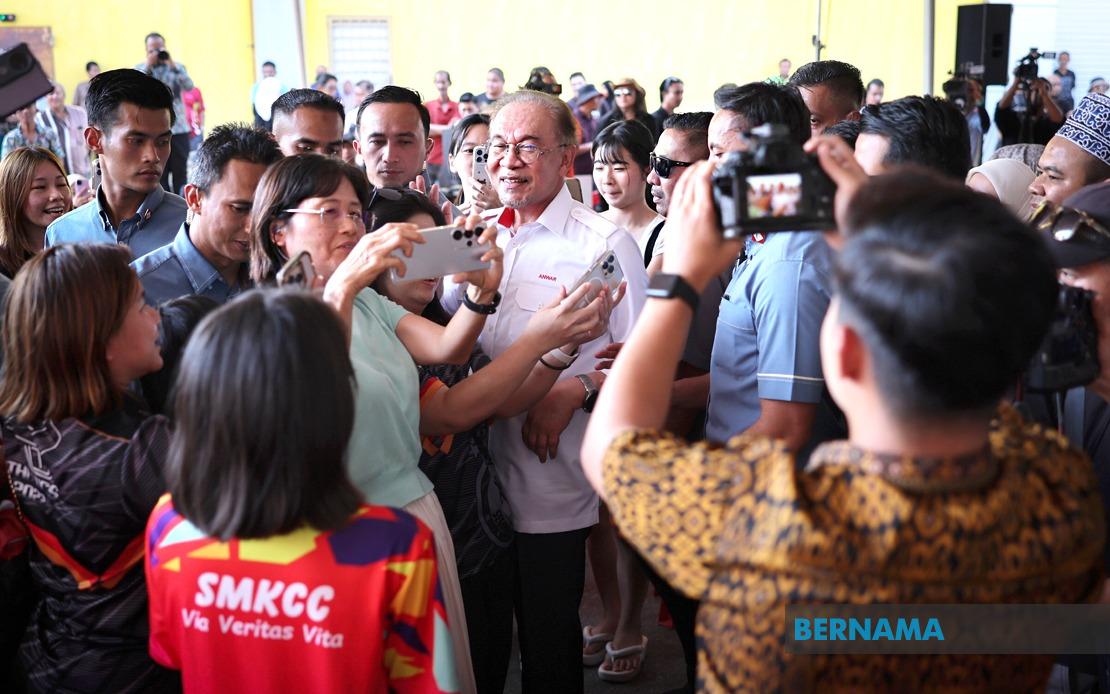
Packatan Harapan's leadership pursued an aggressive closing strategy centred on momentum-building across multiple constituencies. Prime Minister Anwar Ibrahim orchestrated a tour encompassing five significant electoral battlegrounds, beginning in the Bukit Gambir state assembly district and extending through Bukit Batu and Layang-Layang before culminating with a large-scale finale rally branded as the "Johor Ke Depan, Undi Harapan Grand Finale Programme" in the Pasir Gudang constituency. The coalition chairman's intensive itinerary underscored PH's determination to energise its candidate network and mobilise its supporter base during the crucial closing window. In parallel messaging distributed via social media, Anwar framed the upcoming election spiritually, calling for divine assistance in securing victory for the coalition's nominees.
Within the PH framework, individual candidates adopted personalised engagement approaches tailored to their constituencies. The Larkin state seat contender, Suhaizan Kaiat, eschewed formal rallies in favour of direct voter contact, conducting an impromptu shopping mall walkabout accompanied by Amanah Vice President Dr Dzulkefly Ahmad. This retail politics methodology represented an attempt to build personal rapport with undecided voters through casual conversation rather than stagecraft. Suhaizan publicly acknowledged that the accumulated perspectives gathered throughout the campaign constituted a substantial responsibility should voters grant him electoral victory, signalling his awareness of accountability expectations.
Barisan Nasional adopted a notably divergent tactical approach infused with spiritual and conciliatory elements. Coalition Chairman Ahmad Zahid Hamidi, simultaneously serving as Deputy Prime Minister, participated in a "BN Grand Supplication & Doa Selamat" prayer event in Kulai district, positioning his campaign in religious rather than purely political terms. This strategem appealed to Johor's Muslim-majority electorate through frameworks of faith and collective petition. More significantly, incumbent Menteri Besar Onn Hafiz Ghazi, the BN candidate defending the Machap seat, released a candid video message acknowledging shortcomings throughout his administrative tenure and tendering an explicit apology to Johor residents. This defensive posturing suggested BN recognition of vulnerability on governance performance grounds and an attempt to neutralise criticism through humble acknowledgment rather than rebuttal.
Bersatu, which contests separately from BN despite recent coordination arrangements, deployed leadership positioning as its closing message. Party President Muhyiddin Yassin urged Johor voters to synthesise campaign-period information and apply rational decision-making criteria when selecting which party should govern the state. His appeal to reasoned judgment implied confidence that Bersatu's platform would withstand comparative scrutiny against rival offerings, while simultaneously suggesting that less disciplined campaigns had obscured substantive policy distinctions among contenders.
Bersama, representing a smaller coalition player, concluded its campaign with a leadership-heavy finale event featuring co-chairs Rafizi Ramli and Nik Nazmi Nik Ahmad. Rafizi committed to delivering a comprehensive summation of electoral themes that had dominated the two-week campaign period, framing his closing address as an opportunity to synthesise, analyse, and counter arguments advanced by opposing coalitions. This rhetorical positioning suggested Bersama's strategy centred on presenting itself as the thoughtful, analytical alternative to larger but allegedly less intellectually rigorous competitors.
MUDA, Malaysia's youngest significant political force, similarly structured its closing event around empowerment messaging. The "Puteri Wangsa Grand Finale Lecture" featuring MUDA President Amira Aisya Abd Aziz attempted to mobilise youth and progressive voters by emphasising their democratic agency and electoral influence. MUDA's messaging implicitly critiqued establishment politics by foregrounding citizen power and suggesting that routine political arrangements had underestimated voter capacity for transformative choice.
The electoral scope encompassed 172 candidates competing for 56 state assembly seats, with vote distribution across multiple coalitions and independent candidates creating a fragmented political landscape. This splintered contestant field meant that plurality victories rather than majority support could determine outcomes in numerous constituencies, potentially producing coalition-building imperatives after voting concluded. The Johor contest therefore represented not merely a referendum on incumbent performance but a fundamental reconfiguration of the state's political architecture and factional alignments within Malaysian politics.
Weather considerations provided a subtle logistical dimension to election day prospects. The Malaysian Meteorological Department forecast clear morning conditions across most Johor regions, but predicted afternoon rainfall and potential thunderstorms. Such conditions could influence voter turnout patterns, as rain often suppresses polling in rural areas with limited weather protection infrastructure. Parties with superior grassroots mobilisation machinery and voter transportation networks could therefore gain marginal advantages if afternoon downpours materialised.
The compressed final campaign day reflected broader Malaysian political volatility, where coalition alignments and leadership priorities shift rapidly in response to electoral dynamics and factional repositioning. Johor's position as Malaysia's second-largest state by population and economy meant that its electoral outcome carried implications extending beyond regional governance to national political balance and coalition viability. Control of Johor's state apparatus offered substantial resources, patronage apparatus, and narrative momentum that could influence subsequent federal-level electoral competitions and prime ministerial succession calculations within competing coalitions.

