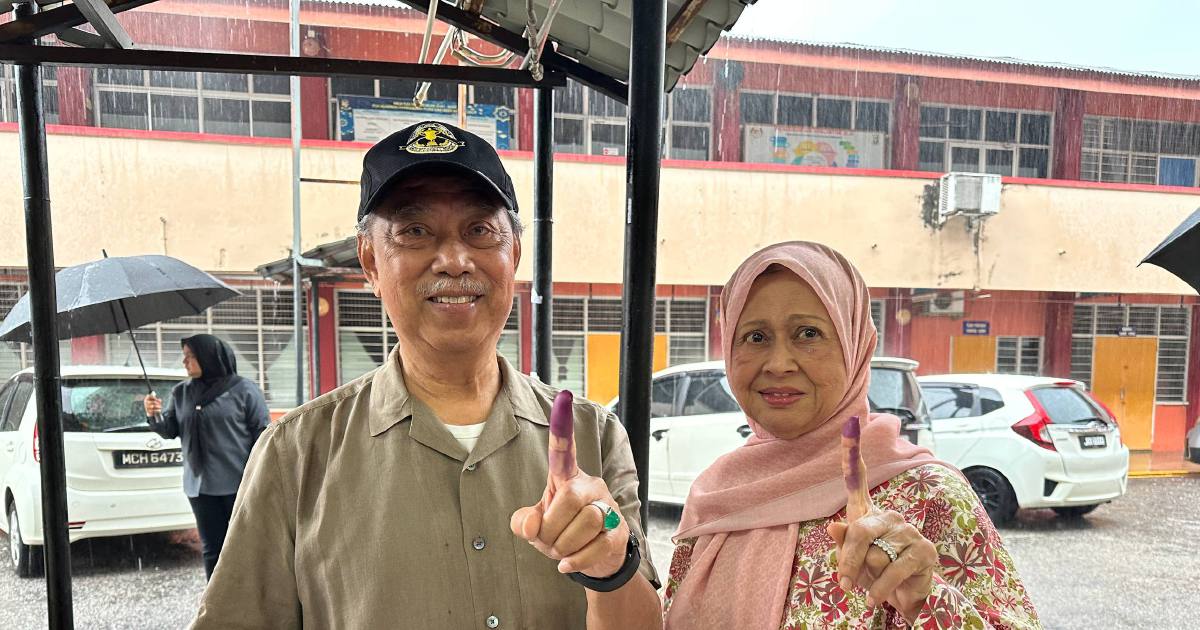
Bersatu party leadership is banking on strong voter engagement today as polling stations open across Johor for the state election, with the coalition hoping to mobilise more than 70 per cent of eligible voters despite unfavourable weather conditions dampening turnout prospects in several parts of the state.
Heavy rainfall swept through multiple districts this morning, creating challenging conditions at polling stations and potentially discouraging voters from making the journey to cast their ballots. Such weather patterns have historically impacted electoral participation, particularly in more rural constituencies where transportation difficulties compound the weather challenges. The timing of the downpours during the crucial early voting hours raises questions about whether Bersatu's turnout expectations remain realistic given the practical obstacles voters face.
The 70 per cent threshold represents an ambitious target for a state election in contemporary Malaysia, where voter enthusiasm has become increasingly variable across elections. For context, recent state elections in the region have delivered turnout figures ranging considerably, influenced by factors including incumbent performance, campaign momentum, and voter confidence in the electoral process. Achieving such a benchmark would require substantial participation not only in urban centres where accessibility is generally better, but also in semi-rural and rural areas most affected by this morning's weather.
Bersatu's optimism about achieving this target may reflect confidence in its ground operations and campaign resonance with Johor voters. The party has invested considerable resources in mobilisation efforts leading up to today's poll, attempting to convert support into actual votes through enhanced party machinery and volunteer coordination. Their projection suggests they believe their messaging has connected with the electorate, translating sentiment into action sufficient to overcome the friction created by adverse conditions.
The significance of this election extends beyond merely registering voter preference. For Bersatu, which has experienced significant political turbulence in recent years, a strong performance in Johor carries implications for the party's standing within Malaysia's coalition politics and its ability to shape federal policy discussions. Johor remains strategically important as one of the country's most populous states with substantial economic output, making its electoral result influential in broader political calculations.
Weather management presents an unconventional but genuine challenge to election commissions worldwide. While Election Commission officials typically prepare contingency plans for inclement conditions, the human element—voters deciding whether the effort is worth the inconvenience—often proves difficult to predict. Historical precedent shows that rain particularly suppresses turnout among voters with lower motivation or commitment to specific candidates, potentially skewing electoral outcomes toward more engaged constituencies.
Bersatu's public statements regarding turnout expectations serve a dual purpose: they communicate confidence to party supporters whilst setting benchmarks against which their performance will ultimately be measured. Should actual turnout fall significantly short of the 70 per cent target, it may raise questions about campaign effectiveness or voter enthusiasm, providing ammunition for political opponents. Conversely, achieving or exceeding the figure would provide narrative momentum for the party heading into subsequent political engagements.
The institutional infrastructure supporting Malaysian elections has generally proven robust, with polling stations typically remaining operational regardless of weather conditions. However, logistical challenges such as voter transportation, poll worker attendance, and administrative continuity can all degrade during severe weather, indirectly affecting turnout without technically preventing anyone from voting. These systemic friction points compound the individual voter's rational calculation about whether conditions warrant making the effort.
For Malaysian observers and analysts, today's election offers data points about contemporary voter behaviour in a large, diverse state with mixed urban-rural characteristics. Whether voters prioritised casting ballots despite weather obstacles or deferred turnout will provide insights into the strength of voter attachment to the electoral process and the effectiveness of party machinery in converting that attachment into participation. These patterns carry implications for how parties strategise ahead of future electoral contests.
As counting gets underway later today, the actual turnout figure will become one of the key metrics by which today's election is assessed and analysed. Beyond determining which parties form the next state government, the participation rate itself reveals something about electoral health and voter sentiment in Johor—information of interest not only to Bersatu but to political strategists across the Malaysian political spectrum seeking to understand shifting patterns in voter behaviour and engagement.

