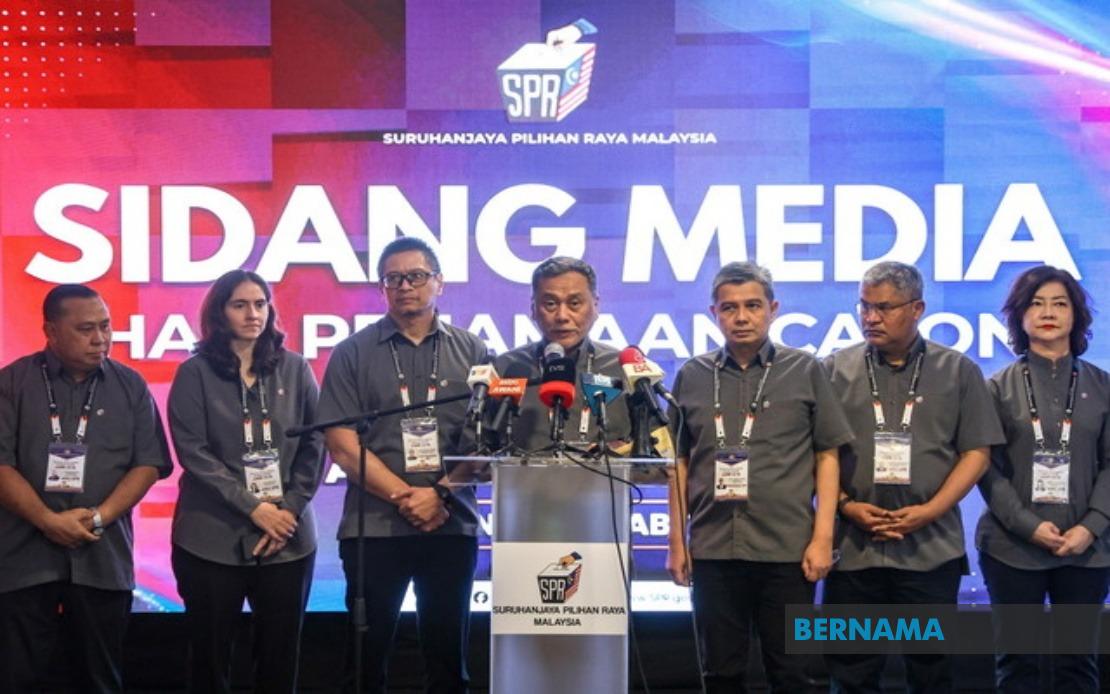
The Election Commission has given the green light for 172 candidates to participate in Johor's 16th state election following the completion of the nomination process across all 56 polling centres on June 27. EC chairman Datuk Seri Ramlan Harun announced that every submission received met the commission's requirements, with no candidates being rejected or disqualified during the vetting procedure that concluded at 10 am. The confirmation marks a significant threshold in the state electoral process, setting the stage for what promises to be a competitive campaign across the peninsula's southern region.
Gender representation among the candidates reflects ongoing efforts towards greater political inclusion, though with notable disparity. The 172 hopefuls comprise 138 men and 34 women, indicating that female participation remains substantially below parity. This composition mirrors broader patterns seen in Malaysian electoral contests, where women candidates consistently represent a minority despite growing calls for improved gender balance in political representation across all parties and coalitions.
The competitive landscape features multiple power centres vying for control of Johor's legislature. Barisan Nasional and Pakatan Harapan command the largest contingents, each deploying the full slate of 56 candidates across all state constituencies. This symmetrical positioning suggests both coalitions view Johor as strategically essential, with neither willing to concede ground to the other. Perikatan Nasional, which has emerged as a formidable force in Malaysian politics following recent federal developments, enters the contest with 33 candidates, representing a substantial third force that could alter traditional two-coalition dynamics.
Beyond the three major blocs, smaller parties have seized the opportunity to build political infrastructure in Johor. Parti Bersama Malaysia fields 15 candidates, while MUDA, the youth-oriented reformist party that gained prominence in recent years, contests with four representatives. Two parties with narrower constituencies each put forward single candidates: Parti Orang Asli Malaysia, reflecting indigenous representation concerns, and Parti Sosialis Malaysia, representing left-wing political ideology. Additionally, six independent candidates will contest without party affiliation, providing voters with non-partisan alternatives in their respective constituencies.
The distribution of contests across different competitive scenarios reveals a moderately fragmented electoral environment. Fourteen constituencies will feature straight fights between two candidates, the simplest and most decisive format. Twenty-seven seats will witness three-cornered contests involving three candidates, creating scenarios where vote splitting becomes strategically significant. Twelve constituencies will see four candidates competing, while three seats will present voters with five different options. This variation in candidate numbers creates vastly different campaign dynamics across the state, with straight fights allowing clear binary choices while multi-candidate races introduce greater complexity and potentially more unpredictable outcomes.
For Malaysian political observers, the Johor election holds particular significance given the state's historical importance as an economic and demographic powerhouse. The state has traditionally been a Barisan Nasional stronghold, though recent years have witnessed competitive challenges from opposition coalitions. The composition of candidates nominated suggests both establishment and opposition forces remain committed to competing seriously for control of the state government, with no major boycotts or strategic withdrawals visible in the final candidate listings.
The participation of Perikatan Nasional at this scale represents a notable factor in Johor's electoral algebra. The coalition has positioned itself as an alternative to both Barisan Nasional and Pakatan Harapan, appealing to voters dissatisfied with traditional political choices. With 33 candidates, Perikatan Nasional has sufficient presence to influence outcomes in multiple constituencies, potentially drawing support from both centre-right and conservative-leaning voters who might otherwise default to Barisan Nasional.
The presence of smaller parties and independent candidates, while numerically modest, reflects Johor's political diversity and the willingness of smaller political movements to contest state-level elections. These candidates often lack the organisational machinery and financial resources of major parties but provide ideological alternatives and can mobilise specific voter segments based on localised issues or principles that larger parties may not emphasise.
The Election Commission's successful completion of the nomination process without rejections or disqualifications suggests a smooth administrative process. This contrasts with occasional controversies in previous electoral cycles when nomination disputes arose or candidates faced last-minute disqualifications. The clean clearance of all 172 papers indicates both careful preparation by participating parties and effective administrative oversight by the electoral authority, setting a professional tone for the campaign period ahead.
As Johor voters prepare for the ballot, the range of choices across constituencies will determine how competitive individual races become. The presence of multiple candidates in most seats means plurality voting rules will apply, potentially allowing candidates to win with substantially less than 50 per cent of the vote. This feature of Malaysia's electoral system often generates strategic voting considerations, with supporters of weaker candidates sometimes shifting preferences tactically to prevent least-favoured alternatives from winning.

