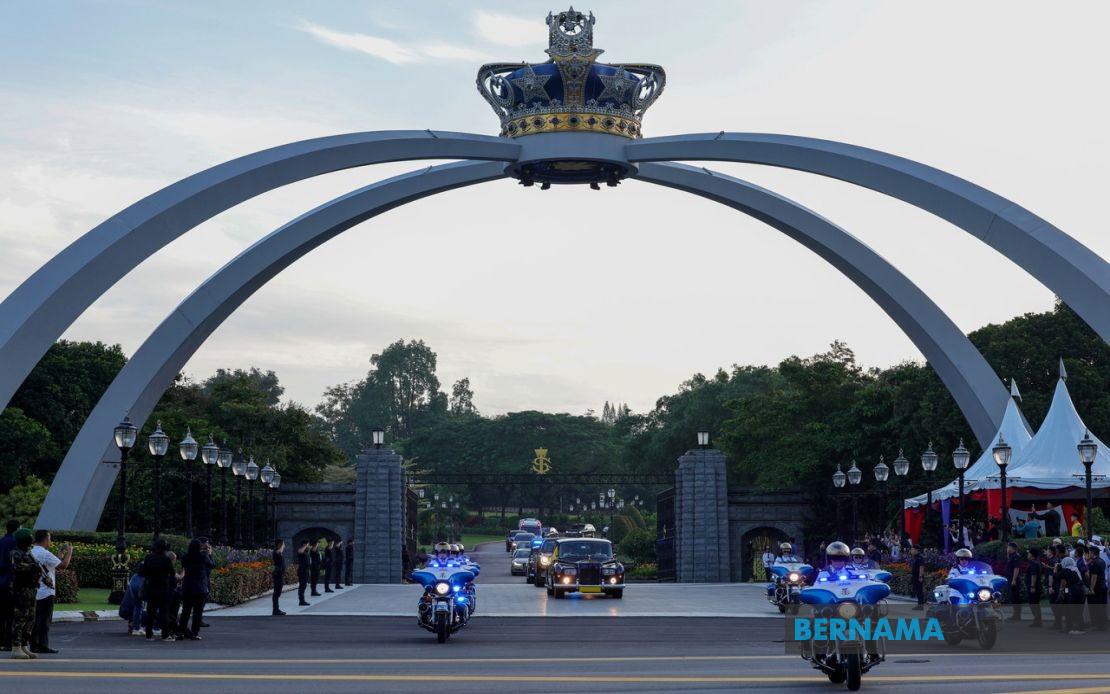
The swearing-in of Johor's State Executive Council has been rescheduled to Saturday, with the official ceremony now to take place at Istana Bukit Serene in Johor Bahru rather than on Friday as originally planned. Media representatives received notification of the change early this week, though no public statement elaborated on the reasons behind the delay. The revised schedule means the official investiture will proceed the day after its intended date, a relatively minor but notable adjustment to the state's governance calendar following recent electoral developments.
The ceremony is expected to proceed under the oversight of Tunku Mahkota Ismail, the Regent of Johor, with Menteri Besar Datuk Onn Hafiz Ghazi presiding alongside senior officials including Johor Royal Council president Datuk Dr Rahim Ramli and State Secretary Datuk Mohammed Ridha Abd Kadir. This formal occasion marks an important institutional moment as the newly constituted executive body formally assumes its constitutional responsibilities in the state administration.
Datuk Onn Hafiz, who represents the Machap state constituency, secured his position as Menteri Besar for a consecutive second term following last weekend's swearing-in ceremony. His reappointment came in the wake of Barisan Nasional's commanding performance in the recent state election, which delivered the coalition a substantial parliamentary majority that now underpins his administration's legislative strength.
The Johor State Election held last Saturday delivered a decisive mandate to the ruling Barisan Nasional coalition, which captured 48 of the 56 seats in the Johor State Legislative Assembly. This comfortable electoral victory represents a significant consolidation of support across the southern state and provides Datuk Onn Hafiz's administration with a robust foundation to pursue its governance agenda without serious parliamentary obstruction during the coming term.
While the exact membership composition of the executive council has not been extensively detailed in public announcements, the swearing-in ceremony itself represents a critical procedural step in the formal constitution of the state's highest executive authority. The Executive Council functions as the principal decision-making body for state administration, wielding authority over budgetary allocation, policy implementation, and routine governance matters affecting Johor's population of over three million residents.
For Malaysian political observers, the administrative mechanics of state government formation merit attention as they reveal the institutional rhythms of Malaysia's federal system. State-level executive councils operate with considerable autonomy in matters of land, agriculture, local governance, and state-level infrastructure development, making their composition and operational approach significant to residents and business communities within each state. Johor, as Malaysia's second-most populous state and an economic engine of the southern region, particularly merits close scrutiny regarding its governance structures and policy directions.
The postponement, though unexplained, appears to reflect routine administrative considerations rather than any substantive political complication. In Malaysian governance contexts, minor scheduling adjustments to ceremonial functions are common occurrences arising from logistical coordination, official availability, or protocol requirements. The stability of the Barisan Nasional majority and the uncontested nature of Datuk Onn Hafiz's reappointment suggest no underlying political discord necessitated the delay.
Barisan Nasional's electoral performance in the recent Johor contest carries broader implications for Malaysia's political trajectory. The coalition's ability to secure 48 seats from a 56-seat legislature reflects continued electoral competitiveness in a state that has historically served as a bellwether for national political sentiment. For opposition parties, the result underscores the challenges of displacing entrenched incumbents in state competitions where local development records and grassroots organization often outweigh national political movements.
The Saturday swearing-in ceremony will mark the formal institutional beginning of the new executive council's term, establishing the configuration of ministerial portfolios and administrative responsibilities that will guide Johor's governance priorities until the next state election cycle. State exco members typically assume portfolios including education, infrastructure, health, agriculture, and economic development depending on their constituencies and political backgrounds, creating a cabinet-style structure mirroring federal arrangements but focused on state-specific challenges and opportunities.

