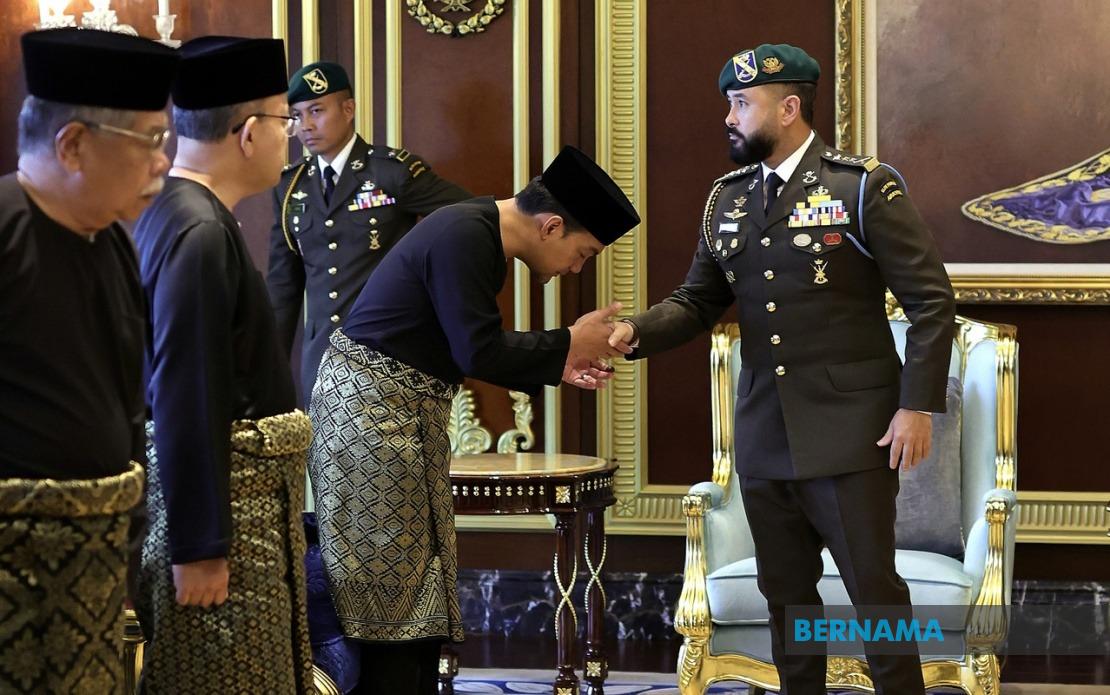
The newly appointed members of Johor's State Executive Council will be formally inducted into office during a ceremonial swearing-in at Istana Bukit Serene in Johor Bahru, with the proceedings scheduled to take place on July 17. The formal occasion will be presided over by Tunku Mahkota Ismail, the Regent of Johor, underscoring the constitutional significance of the event and the state's continued adherence to the institution of monarchy in governance. This ceremonial moment represents both the conclusion of the electoral process that concluded days earlier and the official commencement of the new administration's term, establishing the legal framework within which the executive council will operate.
The guest list for the swearing-in ceremony reflects the hierarchical structure of Johor's state administration and the various institutional actors involved in the transition of power. Menteri Besar Datuk Onn Hafiz Ghazi, who was formally inaugurated in his new position just four days prior, will be accompanied by senior figures including Datuk Dr Abdul Rahim Ramli, who holds the presidency of the Johor Council of Royal Court, and state secretary Datuk Mohammed Ridha Abd Kadir. The presence of these officials alongside the Regent demonstrates the collective nature of state governance and the importance placed on maintaining institutional continuity even as leadership changes occur.
Public access to this ceremonial proceeding has been extended to media representatives, allowing for transparent documentation of the state's governance transition. The palace has arranged for press access from both main entrances beginning at 9.30 am, facilitating comprehensive coverage of an event that carries significance beyond the immediate circle of participants. This openness reflects contemporary expectations for accountability and public awareness of governmental procedures, particularly in the context of state-level administrations where citizens have a direct stake in understanding how their elected representatives are formally taking on their constitutional responsibilities.
The swearing-in ceremony occurs within the broader context of Barisan Nasional's commanding performance in the sixteenth Johor State Election, held eight days earlier. The coalition secured 48 of the state assembly's 56 seats, delivering a substantial electoral mandate that far exceeds the 28 seats required for a simple majority. This overwhelming victory provides the administration with considerable latitude in legislative matters and reflects voter confidence in the BN's vision for the state's direction. Such decisive electoral outcomes typically translate into stable governance periods with reduced legislative obstruction, allowing administrations to pursue their policy agendas with relative predictability.
Menteri Besar Onn Hafiz Ghazi's elevation to a new term represents a validation of his leadership during the preceding period and continuity in the state's executive direction. His formal reinduction, having already taken the oath as Menteri Besar on July 12, now extends to his executive council as a collective body, ensuring that all members of the decision-making inner circle are formally bound by their constitutional oaths. This two-stage swearing-in process reflects Malaysia's constitutional practice, where chief ministers are individually sworn in followed by their appointed cabinet members.
For Johor particularly, the administration's fresh mandate carries implications for the state's economic trajectory and developmental priorities. As Malaysia's southern gateway and a significant economic contributor to the national economy, governance transitions in Johor receive scrutiny not only from state residents but from investors and regional observers monitoring Malaysia's overall political and economic stability. A decisive electoral result and smooth institutional transition signal confidence to stakeholders and may facilitate the administration's ability to attract investment and execute infrastructure projects without legislative gridlock.
The formal ceremonial aspects of this swearing-in serve important constitutional and cultural functions within Malaysia's Westminster-derived system. By conducting these proceedings at the Regent's palace and under his ceremonial supervision, the state government reinforces the constitutional primacy of the monarchy in legitimizing executive authority. This practice, maintained consistently across Malaysian states regardless of which political coalition holds power, underscores that ultimate constitutional authority remains vested in the institution of the ruler, with elected representatives exercising delegated powers within that framework.
The timing of this ceremony also reflects standard administrative practice following state elections in Malaysia. The period between election results and the formal swearing-in of executive councils typically involves negotiations over portfolio allocations, determination of which assemblymen will be appointed to the executive council, and resolution of any outstanding constitutional or procedural matters. By mid-July, these arrangements have been finalized, permitting the ceremonial formalization that the swearing-in represents.
From a broader Southeast Asian perspective, Johor's political developments merit attention as indicators of electoral trends and governance dynamics in Malaysia. The region has experienced varying degrees of political volatility in recent years, and stable transitions of power with clear electoral mandates contribute to the perception of institutional resilience. Johor's status as one of Malaysia's largest and economically significant states means that its governance trajectory influences broader perceptions of the country's political trajectory and investment climate within Southeast Asia.

