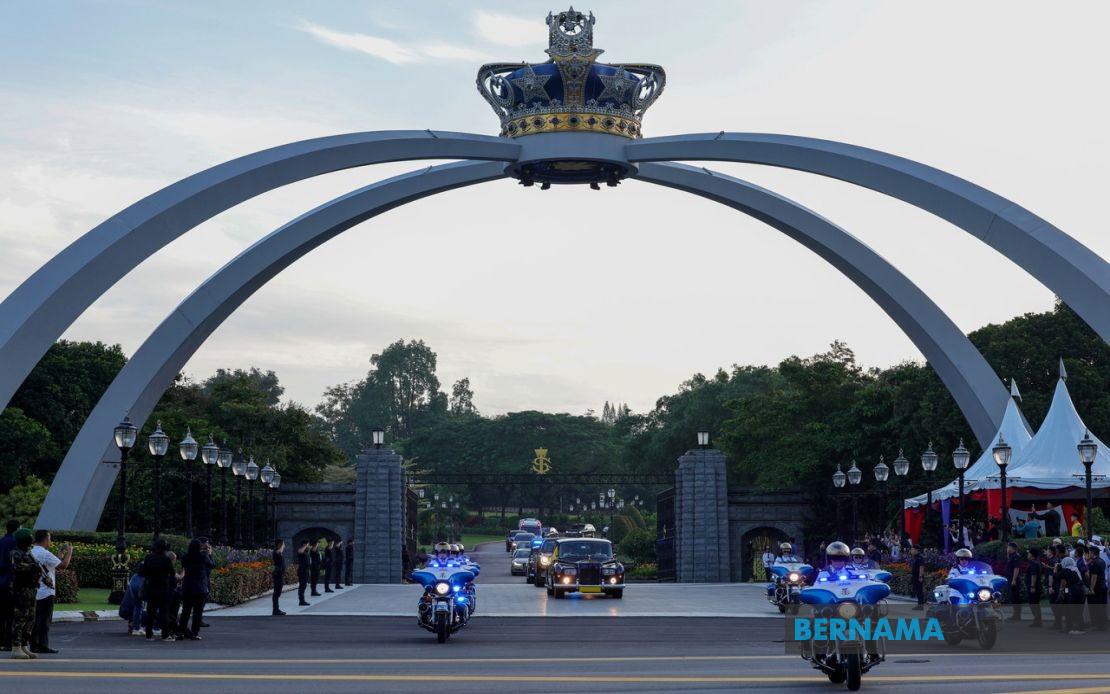
A formal swearing-in ceremony for Johor's next Menteri Besar is set to unfold at Istana Bukit Serene this afternoon at 3 pm, the Johor Palace announced via a media invitation distributed through WhatsApp. The ceremonial proceedings will take place within the palace grounds, with members of the press permitted to document the event from the Crown Arch entrance. Despite the official confirmation of timing and venue, palace officials have maintained discretion over the identity of the incoming chief minister, leaving observers to await the formal announcement during the ceremony itself.
The gathering of journalists at key locations suggests considerable anticipation surrounding the appointment. Since midday, media personnel have positioned themselves outside the Menteri Besar's official residence in Saujana and at the palace gates, monitoring developments as the state navigates its leadership transition. This attentiveness reflects the political significance of the moment, as Johor moves toward consolidating governance following its recent electoral exercise.
The swearing-in ceremony represents the formal conclusion of a leadership selection process that began with Barisan Nasional's commanding performance in yesterday's state election. The coalition captured 48 of the 56 available state assembly seats, delivering a decisive mandate that has positioned the incoming administration to govern without coalition complications. This substantial majority provides the new Menteri Besar with considerable parliamentary leverage to advance the state's agenda across the coming term.
Sultan Ibrahim Iskandar received Barisan Nasional chairman Datuk Seri Ahmad Zahid Hamidi at Istana Pasir Pelangi earlier today, signalling the formal engagement between the palace and the winning coalition. The audience, which extended nearly an hour, included Johor BN chairman Datuk Onn Hafiz Ghazi and appeared to focus on the transition proceedings. Such direct consultation between the ruler and BN leadership underscores the traditional constitutional choreography through which Malaysian states formalize their executive appointments.
For Malaysian political observers, Johor's developments carry broader regional significance. As one of the country's most economically developed and politically consequential states, the composition and direction of Johor's government influences the trajectory of national coalition politics. The state's government frequently sets policy precedents that other administrations adopt, from economic development initiatives to governance approaches. Consequently, the identity and priorities of the incoming Menteri Besar will likely reverberate beyond Johor's borders.
The election's outcome reflects the electorate's endorsement of continuity under Barisan Nasional stewardship in this crucial southern state. The 48-seat majority provides the incoming government with substantial room to implement its manifesto commitments without requiring external parliamentary support. This stability contrasts with the fractious political environments that have characterized several other Malaysian states in recent years, potentially allowing Johor's administration to concentrate on substantive governance priorities rather than managing precarious coalition mathematics.
The formal investiture of Johor's leadership arrives at a moment when Malaysian politics continues navigating post-2023 general election reconfiguration. State-level developments like today's ceremony influence the broader competitive dynamics between Barisan Nasional and Pakatan Harapan, particularly in territories where the two coalitions compete directly for governmental control. Johor's government will inevitably feature prominently in calculations about coalition strength and popular support heading toward future electoral contests.
With the palace having orchestrated the consultation process and the winning coalition having secured an overwhelming electoral mandate, the swearing-in ceremony formalizes the democratic and constitutional transition that began at the ballot box. The timing and solemnity of the occasion underscore the significance Johor attaches to this transition moment, with the palace's direct involvement ensuring that customary protocols receive appropriate observance. The afternoon ceremony will transform electoral success into formal executive authority, completing the cycle through which democratic mandates become governmental power in Malaysian constitutional practice.

