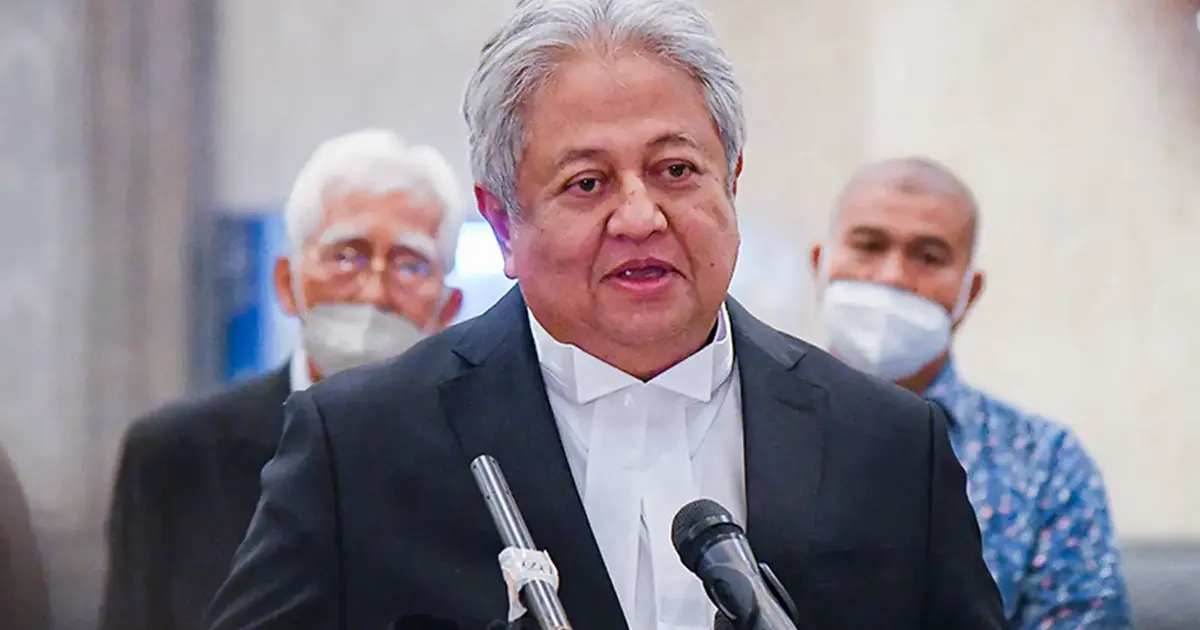
A judicial recusal has cleared the path for a refresher hearing in the ongoing defamation dispute between prominent lawyer Zaid Ibrahim and the Malaysian Bar, with the Court of Appeal scheduling a case management session for July 13 to organise proceedings before an alternate bench. Justice Latifah Tahar's decision to step aside from the matter signals a reset in what has become a protracted legal engagement involving questions of professional conduct and institutional accountability within Malaysia's legal fraternity.
The withdrawal of the judge addresses what appears to have been a procedural concern sufficient to warrant her removal from the case. Judicial recusal typically occurs when a judge identifies grounds that might reasonably lead an observer to question their impartiality or ability to render an unbiased decision. In high-profile cases touching on sensitive professional relationships, such precautions serve to strengthen public confidence in the judiciary's independence and the integrity of proceedings.
Zaid Ibrahim, whose career has spanned senior positions within the Malaysian legal establishment and latterly prominent public commentary on governance and constitutional matters, has been embroiled in this dispute with Malaysia's primary legal professional body. The nature of the defamation allegations and the counterclaims speak to broader tensions that periodically surface within the legal profession regarding institutional power, professional standards, and the boundaries of permissible criticism.
The Malaysian Bar, as the statutory body responsible for regulating lawyers and maintaining professional standards, occupies a uniquely powerful position within the legal ecosystem. When disputes arise between such institutions and individual practitioners, particularly those with public profiles, the cases often carry implications beyond the immediate parties involved. Questions of procedural fairness and the appearance of impartial adjudication become especially significant in such circumstances.
The July 13 case management hearing will serve a critical administrative function in the litigation's progression. Such sessions allow the court to establish a realistic timeline for the substantive hearing, clarify the scope of issues before the new panel, address any outstanding procedural matters, and ensure both sides are adequately prepared. For practitioners and observers tracking the case, this date represents a definitive point at which the matter's trajectory will become clearer.
The assignment of a fresh judicial panel introduces a degree of unpredictability into the proceedings, as new judges will approach the evidence and legal arguments without prior involvement in the case. This represents a double-edged development: while it ensures a fresh perspective untainted by any prior exposure to the matter, it also means some time may be consumed as the incoming judges familiarise themselves with the case's history and complexities. From the perspective of Malaysian jurisprudence on professional conduct and institutional disputes, the fresh hearing offers an opportunity for thorough reconsideration of the underlying legal principles at stake.
The defamation claim itself touches on issues central to professional regulation in Malaysia. Lawyers occupy a distinctive position in society as officers of the court with defined ethical obligations. When allegations of defamation arise between lawyers and the professional body that regulates them, courts must carefully weigh competing interests: protecting individual reputation against preserving the institutional capacity of professional bodies to maintain discipline and standards. The balance between these considerations has evolved over time and continues to generate jurisprudential debate across common law jurisdictions.
For the Malaysian legal community, this case serves as a reminder of the formal mechanisms through which professional disputes are resolved. Rather than settling matters through informal mediation or internal Bar procedures, the parties have pursued adversarial litigation in the appellate courts. This approach, while protective of individual legal rights, also exposes professional disagreements to public scrutiny and judicial scrutiny in ways that may not always serve the profession's broader reputation or cohesion.
The broader context of lawyer-regulator disputes in Southeast Asia reveals patterns worth noting for Malaysian observers. Tensions between individual practitioners and professional bodies occasionally reflect generational differences in approaches to legal ethics, disagreement over the scope of permissible public commentary by lawyers, or more fundamental questions about institutional governance and democratic accountability within professional bodies. These tensions, while sometimes uncomfortable, also drive evolution in professional standards and governance practices.
As the case moves toward renewed substantive hearing before a reconstituted panel, both the Malaysian Bar and Zaid Ibrahim will need to prepare comprehensive presentations of their respective positions. The outcome, whatever direction it ultimately takes, will inform future understanding of the boundaries between defamation liability and professional regulation in Malaysia. The legal principles established through this matter may resonate through subsequent disputes involving lawyers, institutions, and questions of permissible speech within the profession.
From a systemic perspective, the recusal and reassignment underscore the judiciary's commitment to procedural propriety in sensitive professional disputes. Malaysian courts have consistently demonstrated attentiveness to the appearance of impartiality, particularly in matters touching on institutional relationships. The July 13 session will mark the beginning of a new chapter in this litigation, one that provides an opportunity for thorough judicial examination of the underlying legal and factual questions in dispute.

