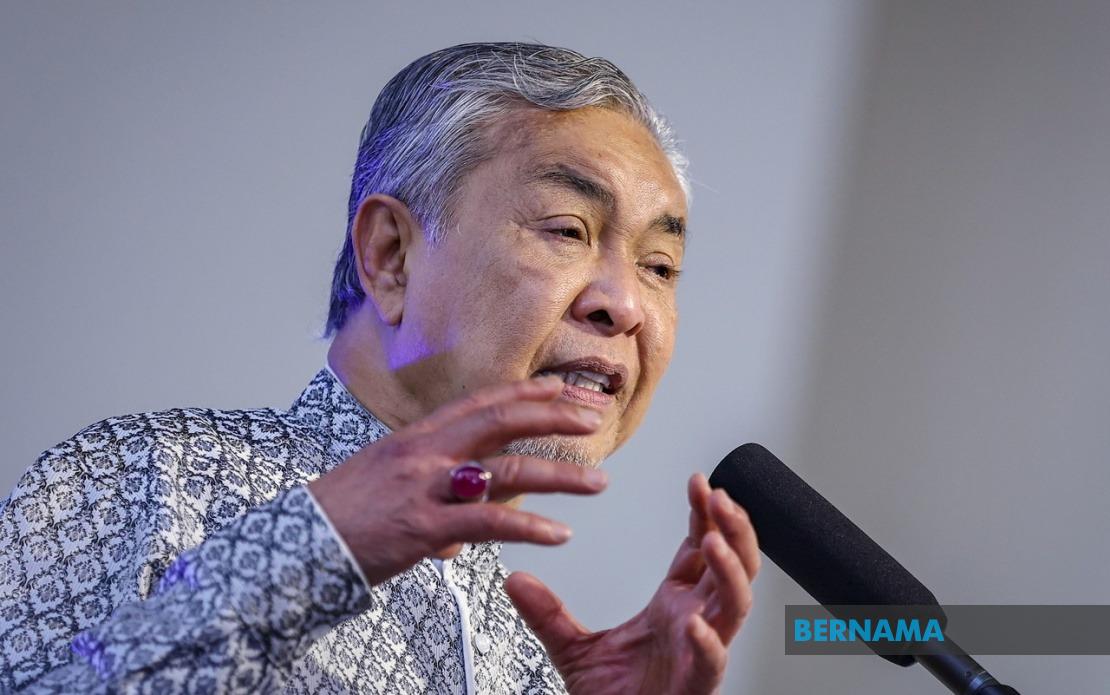
The Johor state election campaign should pivot away from historical disputes and focus instead on substantive policy offerings, Barisan Nasional chairman Datuk Seri Dr Ahmad Zahid Hamidi said on July 3. Speaking in Johor Bahru after attending a community event in the Kempas constituency, the Deputy Prime Minister appealed for a mature and respectful political contest, noting that raising old grievances unrelated to the state's immediate concerns would undermine the quality of democratic engagement.
Ahmad Zahid's remarks carry particular weight given the intricate coalition dynamics in Malaysian politics. While BN competes vigorously against other parties in state-level contests, several of these rivals maintain coalition partnerships with BN at the federal level, serving together in Cabinet and coordinating government business. This creates an unusual tension—competitors by day, colleagues by night—that Ahmad Zahid seemed keen to defuse. His concern about preventing awkwardness in Cabinet meetings suggests the coalition leadership recognises how campaign rhetoric can poison working relationships necessary for governing the nation.
The call for campaign discipline reflects broader anxieties within BN about the Johor electoral landscape. Rather than projecting confidence, Ahmad Zahid framed his party as the underdog, citing significant shifts in the state's political composition since the last election. This strategic humility may serve multiple purposes: it manages expectations, motivates supporters to work harder, and potentially disarms critics who might attack BN for arrogance. The party captured 40 seats in the previous contest and recognises it must improve substantially to maintain dominance in a state where more than half of all voters are now young people.
The youth demographic bulge represents both challenge and opportunity. Younger voters, who have come of age during a period of significant political upheaval and economic transition, respond to different messaging than their elders. They prioritise immediate employment prospects, skills development, and career progression rather than historical grievances or identity-based appeals that animated previous electoral cycles. Understanding this shift, BN has repositioned its offering accordingly, with Menteri Besar Datuk Onn Hafiz Ghazi's manifesto emphasising job creation and vocational training.
Ahmad Zahid pointed to the national unemployment rate of 2.9 per cent as evidence of the government's economic management, yet acknowledged that headline jobless figures mask a more nuanced employment challenge. Young people need access to quality, well-remunerated positions, not merely any work. This insight drives BN's emphasis on Technical and Vocational Education and Training (TVET) programmes, which promise to equip younger voters with skills commanding premium wages in Malaysia's evolving labour market. The strategy tacitly recognises that generic employment statistics feel hollow to school-leavers and graduates facing precarious contract work or positions beneath their qualifications.
The timing of Ahmad Zahid's appeal also reflects awareness of how social media amplifies campaign rhetoric. In previous election cycles, controversial statements made in campaign rallies would circulate among a limited audience. Today, a single inflammatory remark can reach millions within hours, generating outrage and dominating news cycles for days. By explicitly requesting that rival parties avoid old disputes, BN may be attempting to establish a norm that constrains all competitors, preventing the viral escalation of attacks that can erode coalition cohesion.
The decision to field candidates in all 56 seats signals BN's ambition to reclaim influence throughout Johor, not merely defend existing strongholds. This comprehensive approach demands significant organisational resources and suggests BN views the contest as winnable, despite Ahmad Zahid's rhetorical positioning as underdog. The party understands that ceding seats without vigorous competition would signal weakness to supporters and embolden opposition movements.
For Malaysian voters observing this contest, the messaging carries implications beyond Johor's borders. BN's emphasis on youth employment and skills training reflects a nationwide concern about whether economic growth translates into tangible opportunities for younger generations. If BN's TVET initiatives gain traction in Johor, the model may expand to other states where BN contests. Conversely, if young voters remain unconvinced that BN's offerings adequately address their aspirations, the setback could influence federal-level perceptions of the coalition's capacity to govern for contemporary Malaysia.
The election itself unfolds across a compressed timeline: early voting occurs on July 7, with polling day on July 11. This compressed schedule leaves limited time for sustained campaigning and potentially advantages parties with established machinery and ground networks. BN's long tenure in Johor provides substantial organisational advantage, yet the party cannot take this for granted given the demographic and political shifts Ahmad Zahid acknowledged.
Ahmad Zahid's call for civility also reflects growing recognition within BN that divisive campaigns exact costs even for victorious coalitions. Bitter electoral contests can wound relationships needed to govern effectively, demoralise segments of the electorate, and create openings for opposition parties to present themselves as above political theatre. By advocating restraint, the BN chairman attempts to establish himself as the statesman seeking to elevate political discourse, potentially inoculating the coalition against accusations of dirty campaigning should rivals engage in aggressive tactics.
Ultimately, whether other contesting parties heed Ahmad Zahid's appeal remains uncertain. Some may view his call for restraint as advantageous to BN, given the ruling coalition's superior media access and campaign resources. Others may calculate that historical grievances resonate with their core supporters regardless of Ahmad Zahid's entreaties. The coming campaign period will test whether Malaysian political actors can maintain the working relationships demanded by federal coalition governance while simultaneously competing vigorously for state power—a balancing act that continues to define the peculiar character of Malaysian electoral politics.

